Drainage Disasters No More
Ever feel like your pond has a mind of its own?
Or wonder why it refuses to hold water, even after those intense spring storms that sweep across the Kansas City area and the Great Plains?
In this post, you’ll learn what pond drainage repair is, the most common problems we diagnose, and how our team fixes them with long-lasting solutions.
By the end, you’ll understand exactly what types of acreage pond or lake repairs you’ll need to restore healthy water levels and bring your pond back to life.
If you want expert help with your pond or lake, reach out to Bulletproof Pond and Lake by giving us a call or filling out the contact form.
We’re here to make your pond problems easy to fix.
What Is a Pond Drainage Repair?
Pond drainage repair is the process of identifying and addressing issues that prevent a pond or lake from holding water, directing water correctly, or capturing runoff from surrounding land.
Repairs often include stopping leaks, rebuilding dam structures, reshaping the basin, restoring depth, improving drainage systems, and correcting the watershed.
A repair plan may also involve restoring the basin with clay or artificial liners, installing a core trench, shaping swales for improved drainage, or regrading the land to prevent water from seeping past the pond.
Bulletproof Pond and Lake solves these problems with soil testing, topographic mapping, excavation work, and dam reconstruction that uses the right tools and the right systems for long-lasting results.
Our goal is to restore healthy water levels, enhance function, and prevent costly repairs in the future.
Common Drainage Problems We Diagnose in Ponds and Lakes
Wondering why your pond or lake is leaking?
Here are the most common drainage issues we diagnose.
Pond Will Not Hold Water
A pond that refuses to fill or stay full usually has one of these problems:
- Seepage through the dam or basin
- Poor soil quality or a lack of clay
- Root intrusion from trees or brush
- An aging or poorly built dam core
These leaks can reduce depth, lower water quality, and limit fishing or swimming enjoyment over time.
Water Bypassing the Pond Instead of Entering It
Even a well-built basin will struggle if the surrounding land does not provide it with sufficient water.
Common issues include:
- Missing or poorly shaped swales
- Incorrect watershed grading
- Stormwater channels that guide water around the site instead of into it
This type of problem is very common in older pond projects that were not planned with the landscape in mind.
Water Levels Drop Quickly After Rain
If the pond fills after a storm but drains again within days, the problem may be:
- A spillway that is too small or positioned incorrectly
- A breach forming on the backside of the dam
- Compaction failure from the original building
Addressing these factors early helps protect the dam, avoid costly repairs, and maintain long-term value.
How We Diagnose Drainage and Water Retention Issues
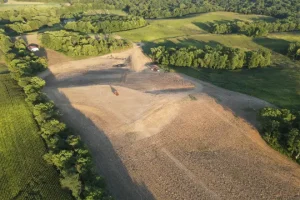
Drone-Based Topographic Survey
We start by mapping slopes, watershed flow, high and low points, and erosion paths.
Drone surveys give our team a clear view of the entire site and help create a precise repair plan for both residential and agricultural properties.
Soil Sampling and Analysis
Good pond repair begins with understanding the soil.
We test the ground to measure clay content and decide whether the pond needs imported clay or an artificial liner.
These soil results guide the excavation and rebuilding process.
Dam and Spillway Inspection
We inspect the dam for leaks, burrows, cracks, and other weak points that may have been created by vegetation or erosion.
The spillway, or pond overflow system, is also reviewed for design flaws that may cause water loss or long-term maintenance issues.
Water Movement Tracking
We study how rain travels across the land to determine whether water is entering or escaping the pond.
This step helps locate drainage problems caused by improper grading or unexpected wet areas around the structure.
Historical Rainfall and Watershed Review
By reviewing the amount of rainfall the location receives and how the watershed drains into the pond, we can determine whether the system captures enough water to stay full during regional weather patterns, such as Oklahoma’s summer droughts or heavy spring rains in Missouri.
Core Causes of Pond Drainage Issues
Dam Leakage
Dam failure is one of the most common causes of pond leaks.
Issues often include:
- Missing or inadequate clay core
- Root intrusion from trees
- Poor construction or uncompacted soil lifts
A leaking dam lowers water levels and harms the health of the entire water feature.
Basin Seepage
A pond with the wrong soil type may lose water through the bottom.
These problems develop when:
- The subsoil does not contain enough clay
- Drought cycles cause cracks in the basin
- Animals create burrows in the bank
Improper Spillway Design
A faulty spillway can undermine the entire structure.
Problems appear when:
- Overflow washes out the dam
- Pipes or culverts are too small
- Elevations are set incorrectly
Watershed Problems
If the land does not support proper drainage, the pond will not stay full.
This can happen when:
- Surface water bypasses the basin
- No swales or diversions are installed
- Erosion cuts new paths around the pond
Silt and Muck Buildup
Over many years, sediment takes up space meant for water.
This buildup:
- Reduces storage capacity
- Makes water warm and evaporates faster
- Impacts wildlife and fishing
- Often requires dredging or a full muck-out
How We Fix Pond Drainage Problems (Primary Repair Methods)
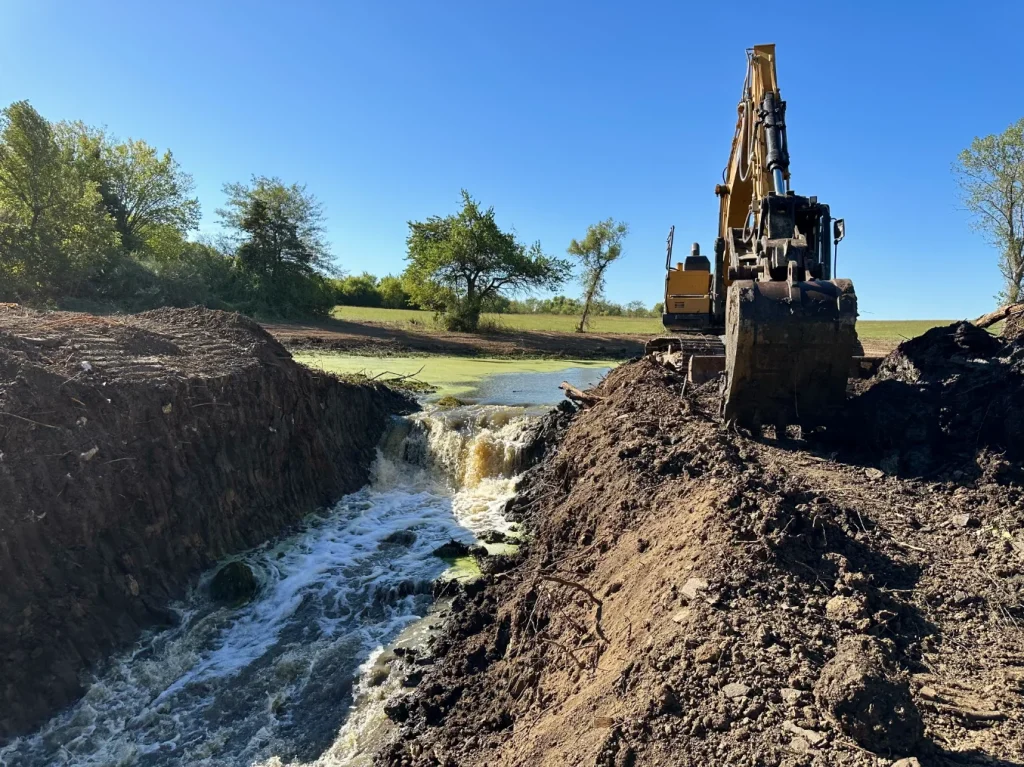
Rebuilding the Dam or Installing a Core Trench in the Dam
Bulletproof uses an innovative sealing method that makes pond dams far more water-tight than older approaches.
This technique uses less soil movement, avoids unnecessary excavation, and is more affordable for clients who want a long-term fix for leaks.
Pricing for this service usually ranges from $120 to $150 per linear foot.
For the best results, we advise repairing the entire dam instead of treating only one section.
A core trench repair may include:
- Excavating into stable subsoil
- Installing high-plasticity clay
- Compacting the material in several lifts
- Blocking all seepage paths beneath the dam
Installing a Compacted Clay Liner
Clay liners are an effective option for existing ponds that were built without enough natural clay.
The clay or artificial liner is:
- Spread across the pond floor
- Mechanically compacted with scrapers or rollers
- Designed to reduce leaks and maintain water levels
Fixing Water Bypass With Drainage Swales
If the watershed drains away from the pond, we correct the land by:
- Regrading the soil
- Creating channels that guide runoff into the basin
- Preventing erosion and water loss
Correcting Spillway Problems
A spillway that is too small or set too low can drain the pond.
Repairs may include:
- Resizing the spillway
- Fixing erosion and reshaping the outlet
- Adjusting elevations to protect the dam
When Drainage Issues Require a Full Dam Rebuild
Dam Is Leaking Through the Base
This usually means the dam was built without a functional core trench.
Water escapes through the foundation and can weaken the entire structure.
Dam Slopes Are Failing
Slumping, cracking, or soft wet areas on the slopes signal that the soil was not compacted correctly or has been damaged by erosion.
Spillway Washout
Heavy storms, poor design, or outdated construction can cause the spillway to wash out.
This can cause a sudden drop in water level and serious structural damage.
Tree-Damaged Dam Walls
Root systems can break apart the dam soil, create leaks, and allow water to escape.
In most cases, a complete rebuild is the safest option.
Additional Pond Problems That Often Appear With Drainage Issues
Loss of Depth From Silt
Sediment from the surrounding landscape settles in the pond over time.
This:
- Decreases overall depth
- Raises water temperature
- Increases algae growth
- Often requires dredging or muck removal
Excess Nutrients Leading to Algae
Poor drainage, shallow water, and erosion all contribute to high nutrient levels.
This leads to algae blooms that affect water clarity and pond health.
Murky or Brown Water
When runoff carries clay, silt, or organic matter into the pond, the water appears brown or cloudy.
This problem is often a sign of shoreline instability or watershed issues that need attention.
When to Choose Professional Pond Drainage Repair
Persistent Water Loss Despite Rainfall
If your pond refuses to hold water even after storms, a deeper issue is likely present.
Pond Never Reaches Full Levels
This is a sign of seepage, a faulty spillway, or watershed problems.
Visible Seepage or Wet Areas Below the Dam
Wet spots on the backside of the dam almost always indicate active leaks.
Water Bypassing the Pond Instead of Entering
Improper grading or missing drainage systems can cause water to avoid the basin entirely.
Erosion Around Spillway or Backside of the Dam
This type of erosion typically indicates structural failure and should be repaired as soon as possible.
Ready for a Pond That Works the Way It Should? Bulletproof Pond and Lake Can Make It Happen
Now that you know what causes drainage issues, how to spot leaks, and which repair methods actually work, you have a clear picture of what it takes to restore a healthy, functional pond on your property.
This gives you the confidence to protect your investment and avoid problems that get worse over time.
If you want a team of pond experts who know how to rebuild dams, correct drainage, restore depth, and bring your acreage pond or lake back to life, Bulletproof Pond and Lake is ready to help.