Key Points
- Common Causes of Pond Leaks: Pond leaks often result from permeable soil layers, improper pond construction, natural geological issues, or structural damage caused by tree roots, burrowing animals, or cracks in embankments.
- How to Identify a Leaking Pond: Distinguish between natural evaporation and leaks by monitoring water levels, conducting a bucket test, and inspecting for signs like wet spots around the pond, cracks in the dam, or structural instability.
- Effective Solutions for Fixing Leaks: Repair methods include applying compacted clay or bentonite, installing a pond liner for long-term sealing, or using polymer sealants for hard-to-reach leaking areas. Structural repairs such as filling dam cracks or addressing tree root damage are also essential for restoring water retention.
Plugging the Leaks: A Guide to Fixing Your Pond
Is your pond losing water faster than you can refill it? Have you noticed soggy ground near the edges or water levels dropping for no apparent reason?
If so, you’re not alone—pond leaks are a common headache for property owners in Kansas and neighboring states.
In this guide, you’ll discover the most common causes of pond leaks, how to pinpoint the problem, and effective solutions to restore your pond to its former glory.
By the end, you’ll know how to stop the pond and lake leak, protect your investment, and even prevent future issues.
Ready to take the first step toward a healthier, more functional pond?
Keep reading for expert advice about pond and lake repair, or reach out to Bulletproof Pond and Lake by filling out our contact form or giving us a call.
Let’s get your pond back on track!
Why Is Your Pond Leaking?
Identifying the root cause of a leaking pond is the first step toward a lasting solution.
Ponds in Kansas and nearby states face unique challenges due to regional soil types, weather patterns, and construction practices.
Below, we explore the most common reasons pond water may be escaping and what to look out for.
Common Causes of Pond Leaks
- Permeable Soil Layers
- Sandy or gravelly soils in the pond basin allow water to seep out.
- Fractured rock beneath the surface can also lead to water loss, especially in deeper ponds.
- If the entire pond is constructed in permeable soil, leaks can occur across the pond bottom.
- Improper Pond Construction
- Poorly compacted soil during construction results in a pond that is not properly sealed, making it prone to leaks.
- Inadequate bonding between embankments and the foundation allows water to escape along these weak points.
- Natural Geological Issues
- Springs or underground water flow can draw pond water away from the pond site.
- Layers of sand or gravel below the pond bottom can act like a drain, allowing water to filter out.
- Structural Damage
- Tree roots can penetrate the dam or embankments, creating openings for water to escape.
- Burrowing animals, such as muskrats, create holes in the dam, further destabilizing the structure.
- Cracks or slumping embankments compromise the pond’s integrity, allowing water to leak.
- Excessive Water Pressure
- In deeper ponds, the pressure from the water above can force leaks through porous soil or small openings.
- This is especially problematic in farm ponds or new pond installations that lack proper sealing.
Understanding these causes helps pond owners take the necessary steps to fix a leaky pond and prevent future issues.
In the next section, we’ll explain how to identify whether your pond is leaking due to evaporation or structural problems.
How to Identify a Pond Leak
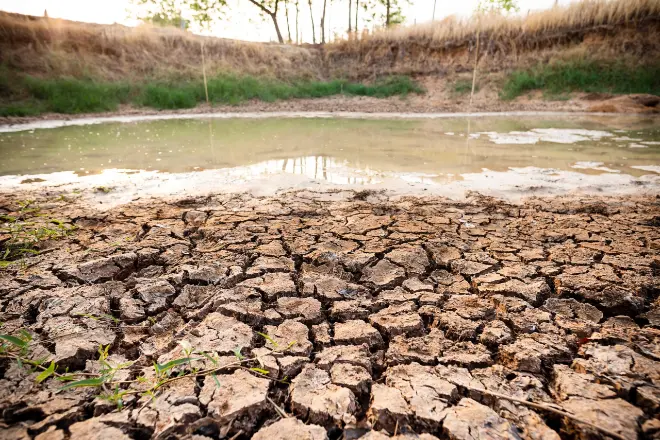
Pinpointing the cause of pond leaking is crucial for applying the right fix.
Many pond owners in Kansas struggle to determine whether their pond is leaking or simply losing water due to natural evaporation.
By understanding the signs of a leaking pond and conducting proper inspections, you can uncover the source of the problem and take appropriate action.
Evaporation vs. Leakage
Not all water loss in a pond indicates a leak.
Understanding evaporation rates and monitoring your pond level can help you identify whether you’re dealing with a leaking pond or normal water loss.
- Understanding Normal Evaporation Rates
- In Kansas, evaporation rates range from 4 to 6 feet annually, with up to 0.5 inches lost daily during hot, dry, and windy weather.
- During summer, smaller ponds and those with shallow water depth are particularly vulnerable to rapid evaporation.
- Testing for Leakage
- Perform a bucket test to determine if your pond has a leak:
- Fill a bucket with pond water and place it in the pond so that the water levels inside and outside the bucket match.
- Mark the water line inside the bucket and on the pond surface.
- After 24 hours, compare the water loss inside the bucket (from evaporation) with the loss in the pond.
- If the pond level drops significantly more than the bucket, it indicates a leaking area within the pond basin or embankment.
- Perform a bucket test to determine if your pond has a leak:
Signs of a Leaking Pond
If evaporation isn’t the culprit, look for these common signs of pond leakage:
- Wet Spots Around the Pond
- Saturated soil or puddles near the dam or embankments could indicate seepage.
- Areas of dampness that don’t dry out, even during extended periods without rain, are red flags.
- Unusual Water Drops
- A sudden drop in the water level, especially during mild weather conditions, often points to a leak.
- Monitor the pond bottom for cracks or unstable soil that might be allowing water to escape.
- Structural Damage
- Inspect the dam for cracks, muskrat holes, or other breaches that could compromise the pond’s ability to hold water.
- Tree roots growing into the dam or embankments can create pathways for water leaving the pond.
Soil and Geological Inspections
To identify the exact location of a leak, professional soil testing and structural analysis are essential.
- Soil Testing
- Evaluate the existing soil for clay content and permeability. If sandy or gravelly layers are present, water retention will be compromised.
- Consider applying bentonite to improve the soil’s sealing ability if the leak is localized in the pond bottom.
- Structural Analysis
- Examine the embankments, dam, and pond basin for visible cracks, slumping, or erosion.
- Check for improper compaction during pond construction, which can leave weak spots allowing water to escape. This is why professional pond excavation is so crucial for pond longevity.
Case Study: Leaking Pond Project in Missouri
One recent project involved a farm pond with multiple leaks due to improper construction:
- Inspection Findings:
- Dam filled with topsoil instead of clay.
- Tree roots penetrating the embankment.
- Gravel layers allowing seepage.
- Solution:
- Removed topsoil and replaced it with compacted clay to form a watertight clay blanket.
- Installed a core trench to strengthen the dam and stop the leaks.
- Restored the pond to hold water effectively, eliminating seepage issues.
Properly identifying the source of a pond leak can save time, money, and frustration.
In the next section, we’ll explore proven methods for fixing leaks and restoring a healthy, functional pond.
How to Fix a Leaking Pond or Lake
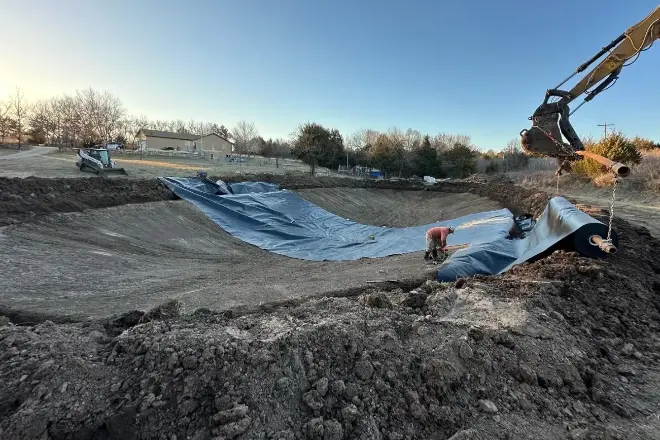
When a leaking pond becomes more than a minor issue, the right repair approach can restore its ability to hold water and enhance its longevity.
From sealing the pond bottom to addressing structural damage, there are proven techniques to fix leaks effectively.
Below are methods tailored to the unique challenges faced by farm ponds, recreational ponds, and other water features in Kansas and surrounding states.
Repair Methods for Pond Leaks
Clay Soil Application
Clay is a natural and reliable material for sealing pond basins with poor soil.
- How It Works: A layer of high-clay-content soil is applied to the pond bottom and compacted to create a watertight seal.
- Process:
- Remove debris and excavate the affected area if necessary.
- Apply a 1- to 2-foot-thick clay blanket across the leaking area.
- Compact the clay thoroughly to ensure it bonds with the existing soil.
- Best For: Leaks caused by permeable soil layers or improper pond construction.
Bentonite Clay Treatment
Bentonite is a versatile sealing material that expands when wet, creating a barrier to stop water loss.
- Dry Application: Mix bentonite with existing soil in the leaking area and compact it for a tight seal.
- Slurry Application: Create a bentonite slurry and spread it over the pond bottom to fill cracks and seal permeable zones.
- Advantages:
- Cost-effective solution for repairing leaks.
- Ideal for smaller ponds or specific leaking areas.
Synthetic Pond Liners
A pond liner provides a long-term solution for ponds with significant soil or geological issues.
- Installation:
- Drain the pond to expose the entire pond bottom.
- Smooth the surface to remove debris and sharp objects that might puncture the liner.
- Place and secure the liner, ensuring edges are anchored with soil or large rocks.
- Benefits:
- Prevents water from seeping through sandy or rocky soil.
- Works well for new pond installations or when other methods fail.
- How to fix a leaking pond dam with a synthetic pond liner:
- Bulletproof Pond and Lake has developed an industry-leading technique that uses a pond liner to seal a pond dam.
Polymer Sealants
Modern polymer solutions are highly effective for sealing leaks without the need for extensive excavation.
- How They Work: Polymers bond with the soil to create a flexible, watertight layer.
- Application: Spread the polymer over the surface of the pond basin or inject it into the leaking area.
- Best For: Leaks in hard-to-reach spots or ponds where draining isn’t practical.
Fixing Structural Issues
Leaks caused by structural damage require targeted repairs to restore the pond’s integrity.
- Repairing Dam Cracks:
- Fill cracks with compacted clay or bentonite to reinforce the dam.
- Address any erosion or weak spots that might worsen over time.
- Tree Root and Animal Damage:
- Remove tree roots that have penetrated the pond dam or embankments.
- Fill muskrat holes or other animal burrows with compacted clay to prevent further damage.
- Install barriers to deter future intrusion by animals or tree growth.
Each of these methods provides a targeted solution to stop leaking and restore the pond’s ability to hold water.
In the next section, we’ll discuss preventative measures to avoid leaks before they begin.
Preventing Pond Leaks
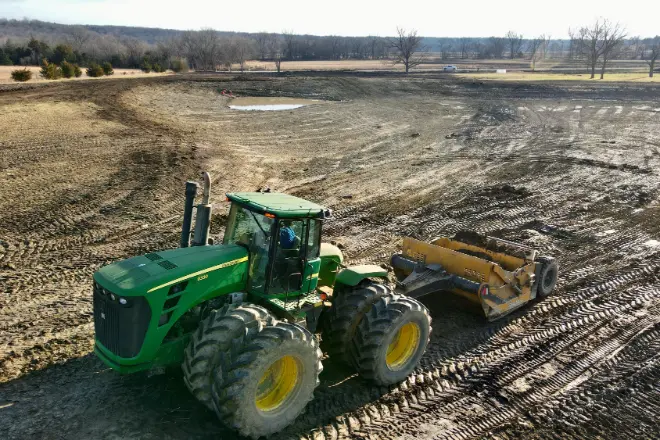
Proper planning and routine maintenance are essential for preventing leaks and ensuring your pond stays healthy for years.
By focusing on construction best practices and regular inspections, pond owners in Kansas and the surrounding states can avoid common pitfalls that lead to water loss and costly repairs.
Proper Pond Construction Practices
Ensuring your pond is built correctly from the start can save significant time and money in the long run.
A well-constructed pond is less likely to suffer from issues like water loss or structural damage.
Follow the link to learn how to dig a pond so it doesn’t leak.
- Site Selection
- Choose a pond site with naturally high clay content and minimal geological risks.
- Avoid areas with sandy soil, significant underground water flow, or fractures that might drain the pond basin.
- Core Trenches for Embankments
- Install clay-filled core trenches beneath the dam to create a watertight barrier.
- This technique prevents water from seeping through the base of the dam, especially in farm ponds where water retention is critical.
- Bulletproof Pond and Lake have also pioneered an innovative solution for sealing dams that use an HDPE liner instead of clay to seal the dam.
- Follow the link to learn how to build a dam for a pond.
- Soil Compaction
- Compact the soil thoroughly during pond construction to create a stable and sealed basin.
- Layers of compacted clay help ensure the bottom of the pond can hold water effectively.
Routine Maintenance
Regular upkeep helps identify and address small issues before they become major problems.
- Pond Inspections
- Check the dam, embankments, and pond basin for cracks, muskrat holes, or tree roots that might compromise the pond’s integrity.
- Look for wet spots or unexplained drops in the pond level, which could indicate a leaking area.
- Managing Vegetation
- Remove tree roots near the dam and embankments to prevent them from damaging the structure.
- Maintain a vegetation-free zone around the pond to discourage burrowing animals like muskrats.
Erosion Control
Erosion can weaken your pond’s structure over time, making it more susceptible to leaks.
Follow the link to learn how to prevent soil erosion in pond construction.
- Shoreline Stabilization
- Use rip-rap (large rocks) or native grass to prevent soil erosion around the pond’s edges.
- This is especially important for ponds with significant surface area, where wind or wave action can erode the shoreline.
- Overflow Systems
- Install an overflow pipe or spillway to manage water levels during heavy rain, reducing stress on the dam.
Taking these proactive measures ensures your pond remains functional, aesthetically pleasing, and capable of holding water for years to come.
In the next section, we’ll cover the costs involved in fixing and maintaining a leaking pond.
How Much Does It Cost to Fix a Leaking Pond or Lake?
Understanding the costs of repairing a leaking pond is crucial for effective budgeting and planning.
The final price depends on factors like the size of the pond, the severity of the leak, and the repair method used.
Below is a breakdown of typical expenses pond owners in Kansas and neighboring areas might encounter.
Pond and Lake Repair: Starting at $20,000
Repairing a leaking pond can range widely in cost, but for most projects, the starting point is approximately $20,000.
- What’s Included:
- Diagnosing the cause of the pond leakage.
- Repairing leaks in the dam, pond basin, or embankments.
- Completing repairs within 1–12 weeks, depending on the complexity of the project.
- Factors Influencing Cost:
- Size and depth of the pond.
- Type of repair, such as applying bentonite or installing a pond liner.
- Accessibility of the leaking area and any additional excavation needed.
Dam Leak Repair: $120–$150 per Linear Foot
If the leak originates in the dam, specialized sealing solutions are required.
- Costs: Repairing a leaking pond dam typically costs $120–$150 per linear foot.
- Process:
- Cracks and holes in the dam are sealed using bentonite or compacted clay.
- Core trenches may be added for enhanced water retention. Bulletproof Pond and Lake uses compacted clay or an HDPE liner to repair a dam leak.
Overflow Replacement: $15,000–$25,000
Overflow pipes are vital for managing water levels and preventing stress on the pond structure.
- Cost Breakdown:
- Small ponds: $15,000 for basic overflow replacements.
- Larger farm ponds or recreational lakes: Up to $25,000 for complex overflow systems.
- When Needed:
- Damaged or corroded overflow pipes.
- Inadequate drainage leading to pond overflow or erosion.
When to Call a Professional
While some pond repairs can be managed by dedicated property owners, there are situations where expert intervention is essential.
Professionals have the tools, expertise, and experience to diagnose complex issues and implement effective solutions that ensure your pond holds water for years to come.
When DIY Efforts Aren’t Enough
If your efforts to stop a leaking pond aren’t yielding results, it may be time to bring in a professional.
- Persistent Leaks
- Despite applying bentonite or other sealing techniques, water loss continues.
- The leaking area cannot be pinpointed or effectively sealed with DIY methods.
- Structural Damage
- Significant cracks in the dam or embankments require specialized equipment and materials, such as compacted clay or a pond liner.
- Tree roots or burrowing animals have extensively damaged the dam, compromising its integrity.
For Complex Repairs
Larger-scale repairs often demand professional equipment and expertise to ensure success.
- Rebuilding or Strengthening the Dam
- Adding a core trench or sealing the bottom of the pond with a clay blanket.
- Incorporating advanced materials like a liner for long-term water retention.
- Addressing Soil Challenges
- If the existing soil is too sandy or porous to hold water, professionals can recommend or apply the best solution, such as bentonite or synthetic liners.
To Ensure Proper Analysis
Determining why your pond is leaking and identifying the best fix isn’t always straightforward.
Professionals can conduct thorough inspections to save time and additional costs.
- Site Analysis
- Evaluate soil conditions, groundwater flow, and the slope of the pond basin.
- Leak Detection
- Locate hidden issues beneath the surface, such as seepage zones or unsealed joints.
The Benefits of Expert Help
Hiring a professional not only guarantees quality results but also minimizes risks of further damage.
- Custom Solutions
- Tailored approaches to fit your specific pond design and soil type.
- Advanced Techniques
- Use of industrial-grade equipment and materials for efficient repairs, such as applying bentonite or installing a durable pond liner.
If your pond dry spells are becoming all too frequent or you’re dealing with significant water loss, reaching out to an expert can save you time, money, and frustration.
FAQs About a Leaking Pond
What is the difference between a lake and a pond?
The difference between a pond and a lake is that a lake is typically larger and deeper than a pond, with more significant temperature stratification and ecological zones. In contrast, a pond is smaller, shallower, and often allows sunlight to penetrate throughout its entire depth, fostering dense aquatic plant growth.
How do you fix a leaking pond dam?
Repairing a leaking pond dam often involves sealing cracks or breaches with compacted clay or bentonite. For more severe cases, a clay core trench (keyway) may be added to reinforce the dam’s structure and ensure long-term water retention.
What is a clay core trench or keyway?
A clay core trench, or keyway, is a water-tight barrier installed within the dam. It consists of high-quality clay compacted into a trench dug along the dam’s centerline, preventing water from seeping through the structure and maintaining the pond’s water level.
Restore Your Water Feature with Bulletproof Pond and Lake
Understanding the causes of pond leaking and how to fix it empowers you to maintain a functional, beautiful pond for years to come.
From identifying signs of a leak to exploring effective repair methods like bentonite applications or installing a pond liner, you now have the knowledge to address leaks effectively.
When it comes to ensuring long-lasting repairs, trust the experts at Bulletproof Pond and Lake.
Whether your pond needs a structural overhaul or precise sealing solutions, our pond contractor team is ready to provide professional, tailored services that restore your pond to its full potential.