Key Points
- Assess and Prepare the Dam Site
Inspect the dam for erosion, leaks, or structural damage. Clear debris, remove unstable soil, and compact the foundation to create a solid base for reconstruction. - Rebuild with Proper Materials and Techniques
Use high-quality clay soil for the dam core to prevent water seepage. Apply materials in layers, compacting each thoroughly to ensure stability and longevity. - Install Effective Drainage and Maintain the Dam
Set up an overflow pipe with anti-seep collars to regulate water flow and prevent erosion. Conduct regular inspections, control vegetation, and manage burrowing animals to preserve the dam’s integrity.
Dam Good Solutions: Rebuilding Your Pond’s Barrier
Is your pond losing water faster than it should? Noticing signs of erosion or structural issues in your pond dam?
In this guide, we’ll walk you through the essential steps to restore your pond dam’s integrity.
By following these pond and lake repair steps, you’ll ensure a healthier pond ecosystem and prevent future problems.
For personalized assistance, feel free to reach out to Bulletproof Pond and Lake by giving us a call or filling out our contact form.
Let’s dive in!
Rebuilding a Pond Dam
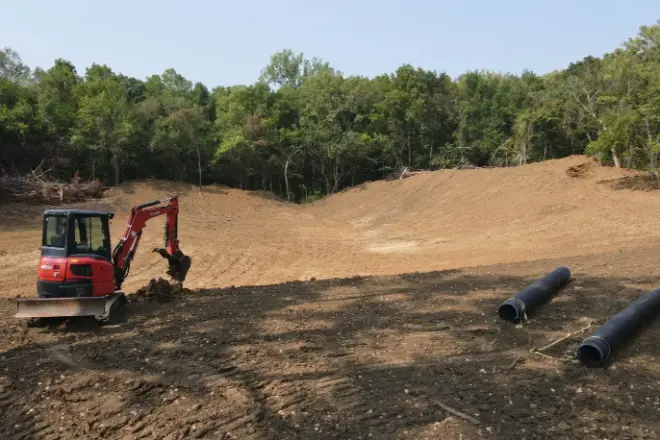
Restoring a pond dam is essential for maintaining your pond’s health and preventing water loss.
If you are building a dam from scratch, follow the link to learn how to build a dam for a pond.
Here’s a concise guide to help you through the process.
1. Assessing the Damage
First, evaluate the extent and cause of the damage.
Look for signs of erosion, animal burrows (especially beaver), or structural weaknesses.
Understanding these issues will guide your repair strategy.
2. Implementing Safety Measures
Before starting repairs, ensure the area is safe.
Establish protocols to protect yourself and any helpers during the restoration.
3. Temporary Diversion Methods
To work effectively, you’ll need to manage the water flow:
- Lower the Water Level: Use a pump to reduce the pond’s water level below the damaged area.
- Create a Temporary Channel: Dig a small channel to divert incoming water away from the repair site.
4. Debris Removal
Clear the damaged section by:
- Removing loose soil, vegetation, and any debris.
- Ensuring the area is clean to provide a solid foundation for repairs.
5. Stabilizing the Breach Area
Prepare the site for reconstruction:
- Excavate Unstable Soil: Remove any weak or eroded soil until you reach firm ground.
- Compact the Base: Use appropriate equipment to compact the soil, creating a stable base.
- HDPE Liner Dam Repair: Bulletproof Pond and Lake has developed a pioneering and cost-effective pond dam leak repair technique that uses an HDPE liner to create a waterproof seal in the dam.
6. Strengthening Techniques
Reinforce the dam’s foundation by:
- Adding Clay Soil: Use well-compacted clay to fill the excavated area, as clay helps prevent water seepage.
- Layering and Compacting: Place the clay in layers, compacting each one thoroughly to ensure durability.
By following these steps, you can effectively rebuild your pond dam, ensuring its longevity and the continued health of your pond.
Repairing the Dam Core Trench / Keyway
The core of your pond dam is crucial for preventing water seepage.
Watch the video above for an explanation of what a core trench is and why your pond dam needs it.
Reconstructing it properly ensures the dam’s integrity and longevity.
7. Material Selection for Dam Core
Choosing the right materials is essential to effectively seal the dam and prevent leaks.
- Clay: Opt for high-quality clay soil, as its dense composition helps block water passage.
- Bentonite Clay: This natural sealant expands when wet, filling gaps and enhancing the dam’s impermeability.
8. Compaction Methods
Proper compaction is vital to eliminate air pockets and ensure a solid structure.
- Layering: Apply the selected material in thin layers approximately 6 inches deep.
- Compacting: After laying each layer, use appropriate equipment to compact it thoroughly, ensuring no voids remain.
By meticulously rebuilding and compacting the dam core with suitable materials, you can effectively prevent water leakage and maintain your pond’s water level.
Installing a Drainage System
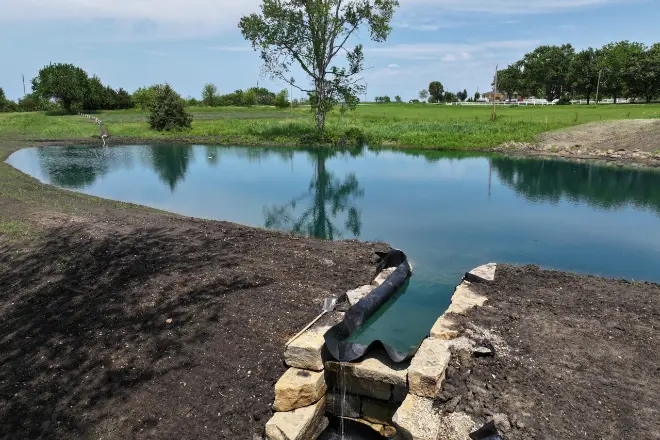
A well-designed drainage system is essential for maintaining your pond’s water level and preventing overflow.
Proper drainage helps manage excess water, especially during heavy rain and reduces the risk of dam failure.
9. Setting Up Drainage
Implementing an effective drainage system involves careful planning and installation.
- Install an Overflow Pipe and Anti-Seep Collars: Place a durable pipe through the dam wall to allow excess water to exit the pond safely. This prevents water from overtopping the dam during periods of heavy rainfall. Anti-seep collars prevent water from leaking around the edges of the drainage tube in the dam.
- Ensure Proper Sizing: Select a pipe size that can handle the maximum expected water flow to prevent blockage and maintain optimal water levels.
- Regular Inspections: Periodically check the drainage system for debris or damage to ensure it functions correctly. Timely maintenance prevents potential leaks and prolongs the system’s lifespan.
By installing an appropriate drainage system and conducting regular inspections, you can effectively manage your pond’s water level and protect the integrity of your dam.
Reconstructing the Outer Shell of the Pond Dam
The outer shell of your pond dam provides essential structural support and helps to prevent soil erosion.
Proper reconstruction ensures the dam’s durability and longevity.
10. Material Selection for Dam Walls
Choosing the right materials is crucial for a sturdy dam wall.
- Suitable Soil: Use high-quality soil free from organic matter and debris to ensure stability.
- Rock Armor: Incorporate rocks or riprap on the downstream slope to prevent erosion caused by water flow.
11. Compaction and Shaping
Proper compaction and shaping are vital to maintain the dam’s integrity and prevent leaks.
- Layering: Apply soil in thin layers, compacting each to eliminate air pockets and ensure a solid structure.
- Shaping: Grade the dam’s slopes to a gentle incline, reducing erosion risk and promoting vegetation growth.
By carefully selecting materials and meticulously compacting and shaping the outer shell, you can enhance your pond dam’s resilience and functionality.
Final Steps and Maintenance
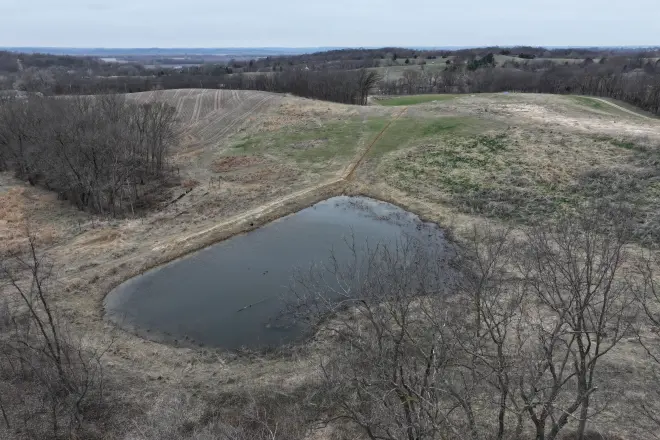
Completing the reconstruction of your pond dam is a significant achievement, but ongoing maintenance is crucial to ensure its long-term stability and functionality.
12. Inspection
Regular inspections help identify potential issues before they become major problems.
- Scheduled Checks: Conduct thorough inspections of the dam and its components at least annually.
- Post-Weather Events: Examine the dam after significant weather events, such as heavy rain, to assess any impact.
- Vegetation Control: Keep the dam free from deep-rooted vegetation, like trees, which can compromise structural integrity.
13. Establishing a Maintenance Schedule
A proactive maintenance plan ensures the dam remains in optimal condition.
- Routine Tasks: Regularly mow the grass on the dam to prevent woody plant growth.
- Erosion Control: Monitor for signs of erosion and address them promptly to prevent further damage.
- Wildlife Management: Control burrowing animals, such as beavers and muskrats, to prevent structural damage.
By adhering to a consistent inspection and maintenance routine, you can ensure the longevity and safety of your pond dam, preserving the health of your pond ecosystem.
Case Study Example: Pond Dam Reconstruction in Perry, KS
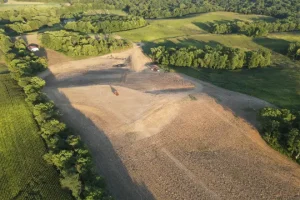
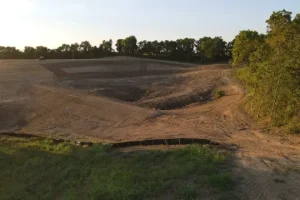
In Perry, Kansas, a neglected farm pond faced significant challenges due to its original dam being too narrow and constructed from topsoil.
This poor design led to water seepage and instability, compromising the pond’s functionality.
Recognizing these issues, the construction team decided to build a new dam with a compacted clay core in front of the existing leaking dam to enhance stability and water retention.
This approach ensured a more robust and reliable pond structure.
By reconstructing the dam with proper materials and design, the team transformed the pond into a durable and functional water feature, significantly improving its performance and longevity.
Discover the Secret to a Bulletproof Pond with Bulletproof Pond and Lake!
By following this guide, you’ve learned how to rebuild a pond dam to ensure its strength and longevity.
Implementing these steps will help maintain a healthy pond ecosystem.
For expert assistance with your pond and lake repair needs, trust the pond contractors at Bulletproof Pond and Lake.
Their experience and dedication ensure your water features remain in top condition.