Washed Out, Blown Away, and Breaking Down—Let’s Dig Into Erosion
Is your land losing its shape, soil, or shoreline faster than you expected?
Wondering why certain spots erode while others stay solid?
In this post, you’ll learn the main types of soil erosion—from splash to gravity—and what causes each one to take hold.
By the end, you’ll know how to spot the signs early and what to do to prevent long-term damage.
Curious how erosion could affect your acreage pond installation or excavation project?
Call Bulletproof Pond and Lake or fill out our contact form—we’re happy to talk dirt.
What Are the Main Types of Soil Erosion?
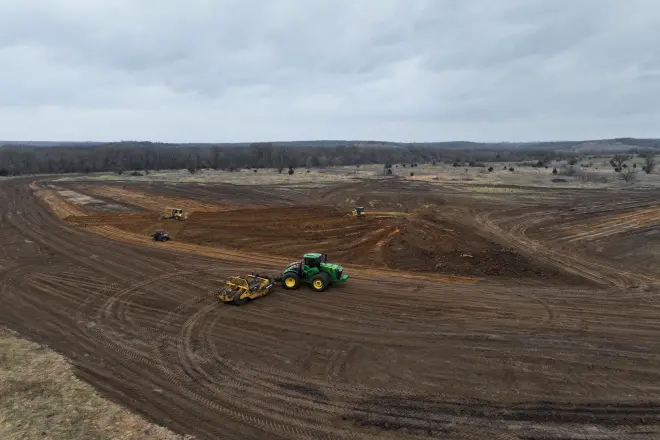
Soil erosion happens when wind, water, or gravity removes soil particles from the land.
Here are the most common types of soil erosion you’ll see across farms, construction sites, and natural landscapes:
- Splash erosion: Raindrops hit bare soil and scatter particles in all directions.
- Sheet erosion: A thin, even layer of soil washes away, often unnoticed.
- Rill erosion: Shallow channels form as runoff carves lines through sloped land.
- Gully erosion: Rills deepen into large gullies that cut deep into the soil.
- Wind erosion: Dry, bare ground loses fine soil particles to strong winds.
- Bank erosion: Water wears away the edges of streams, ponds, or lakes.
- Tunnel erosion: Underground water flow creates hidden tunnels that collapse.
- Gravity erosion: Landslides and slumps move soil downhill on steep slopes.
- Abrasion and attrition: As soil moves, particles grind against each other and nearby surfaces.
Water-Based Soil Erosion Types
Splash Erosion
Splash erosion is the first sign of water erosion.
It starts when raindrops hit the soil surface and scatter individual particles.
This loosens the top layer and makes it easier for runoff to carry the soil away.
Sheet Erosion
Sheet erosion occurs when rainfall spreads thinly over land and removes the top layer of soil evenly.
It’s common on bare soil with poor structure and often goes unnoticed until plants start to struggle.
Because the entire layer erodes, it can quickly lead to major soil loss.
Rill Erosion
Rill erosion shows up as small channels—usually less than a foot deep—on exposed or sloped areas.
These rills form when water flows concentrates in low spots.
Over time, they grow wider and deeper, leading to more erosion and damaged drainage lines.
Gully Erosion
Gullies form when rills get too large to fix with normal tilling or grading.
Gully erosion can leave deep cuts across land and may cause serious loss of usable space.
Once gullies appear, the surrounding area often continues to break down unless controlled quickly.
Wind Erosion
Wind erosion happens when dry, loose soil is left uncovered.
Strong winds lift and carry fine particles off the ground, especially in flat, sandy areas.
The removal of topsoil reduces soil fertility and creates dust storms that impact air and water quality.
It’s most common in Kansas and other midwestern states after land use changes or when crops and ground cover are removed.
Erosion Around Ponds, Lakes, and Streams
Bank Erosion
Bank erosion affects the edges of waterbodies like streams, ponds, and lakes.
As water levels rise and fall—or as waves hit the shore—soil at the edges gets pulled away.
Bare banks, steep slopes, foot traffic, and loss of vegetation make the problem worse.
Over time, stream bank erosion can lead to flooding, loss of property, and muddy water.
Tunnel Erosion
Tunnel erosion starts when water flows underground through small paths, like old root channels or cracks. It slowly hollows out the soil from below.
The danger becomes clear when the ground above caves in, forming sinkholes.
Tunnel erosion often occurs without warning and is especially risky around structures or roads.
Follow the link to learn how to prevent soil erosion in pond construction.
Gravity-Driven Erosion Types
Gravity Erosion (Landslides and Slumps)
Gravity erosion occurs when large amounts of soil suddenly move downhill.
This happens most often on steep slopes with saturated soils after heavy rainfall.
Landslides and slumps can damage roads, farmland, and homes, and they’re hard to stop once they start.
Abrasion and Attrition
Abrasion and attrition happen during soil transport.
As water or wind carries particles, they grind against each other and nearby surfaces.
This wears down both the soil particles and the land itself, leading to further erosion over time.
It’s a slow process, but one that compounds the effects of other erosion types.
Environmental and Structural Impacts of Soil Erosion
When erosion occurs, the damage adds up fast.
Here’s what it can cause:
- Topsoil loss reduces crop yields and kills native plants.
- Sediment clogs waterways and lowers water quality for fish and people.
- Infrastructure damage includes broken roads, bridges, and foundations.
- Vegetation loss leads to increased runoff and more erosion during future storms.
- Floodplain erosion can shift stream beds and lead to property loss.
Unchecked erosion leads to long-term soil degradation, threatening ecosystems and natural resources across entire regions.
This is why professional pond excavation is so important for preserving your property.
How to Prevent Different Types of Soil Erosion
Vegetation and Ground Cover
Plants are your best defense against erosion.
Cover crops, native grasses, and trees hold soil in place with their roots.
Avoid leaving large areas of bare soil exposed, especially after clearing land or finishing construction.
Shoreline Reinforcement
To prevent stream bank erosion and floodplain erosion, reinforce banks with rip-rap, boulders, or engineered materials.
Native plants with strong root systems also help stabilize steep banks around ponds and lakes.
Mastering soil management is key to long-lasting pond construction.
Grading and Drainage
Shaping the land properly reduces the speed of water flow.
Terracing, swales, and well-designed drainage lines move runoff water away from vulnerable areas.
This helps reduce soil erosion by spreading the water’s force and direction.
Structural Solutions
For areas at high risk—such as steep slopes or construction zones—install retaining walls, bulkheads, or geotextiles.
Permanent erosion control mats are a great option for places with high rainfall intensity or unstable soil structure.
Stop Erosion Before It Starts: Why Bulletproof Pond and Lake Is Your Go-To for Excavation
Now that you know the major types of soil erosion—and how they wreak havoc on land—you’re better equipped to spot the early signs and prevent long-term damage.
From splash erosion to massive gullies and tunnel collapses, understanding what’s happening beneath your feet is the first step toward protecting your property.
If you’re building a pond, reshaping land, or fixing runoff issues, the excavation experts at Bulletproof Pond and Lake have the excavation experience to do it right.