Shore Up Your Pond: Smart Solutions to Prevent Erosion
Does your pond lose ground after every rainstorm?
Are you worried that soil erosion might be shaving away at your shoreline or muddying your water?
In this post, we’ll cover the best techniques to prevent soil erosion in pond construction, from using vegetation buffers to strategically placing rip-raps.
By the end, you’ll know exactly how to protect your acreage pond installation from losing soil, maintain its depth, and avoid costly repairs down the road.
Ready to safeguard your pond’s future?
Let’s dive into the details.
Causes and Impact of Soil Erosion on Ponds
Soil erosion is a natural process that gradually wears away the pond’s shoreline, affecting the overall health of your pond.
Understanding how erosion occurs and its consequences is key to preventing long-term damage.
The Natural Process of Shoreline Erosion
Erosion happens when wind and water gradually carry away soil particles from the shoreline into the pond.
Over time, this process reshapes the banks and leads to a loss of valuable soil structure.
In Kansas City, frequent rainfall and seasonal weather changes contribute to water erosion, accelerating soil loss around ponds.
- Wind and Water Erosion: Constant wave action and strong winds displace fine soil particles, which get washed into the pond, leading to bank degradation.
- Wildlife Impact: Animals like deer and cattle can further destabilize the shoreline by trampling vegetation and compacting the soil.
Consequences of Uncontrolled Erosion
If left unchecked, soil erosion leads to significant issues that compromise both the function and aesthetics of your pond.
- Water Quality Degradation: As soil particles erode into the water, they cloud the pond, reducing visibility and harming aquatic systems like fish habitats. Follow the link to learn the basic steps of how to build a fishing pond.
- Reduced Pond Depth: Over time, sediment builds up, reducing the pond’s water capacity and making maintenance more difficult.
- Increased Maintenance Costs: The longer erosion continues, the more expensive it becomes to repair bank erosion and restore the pond’s health.
By understanding these impacts, you can take proactive steps toward erosion control to preserve the beauty and functionality of your pond.
Essential Techniques to Prevent Soil Erosion
Preventing soil erosion in pond construction requires strategic methods that strengthen the shoreline and limit the effects of wind and water erosion.
By incorporating effective techniques, you can preserve the structure and functionality of your pond for years to come.
Using Vegetative Buffers
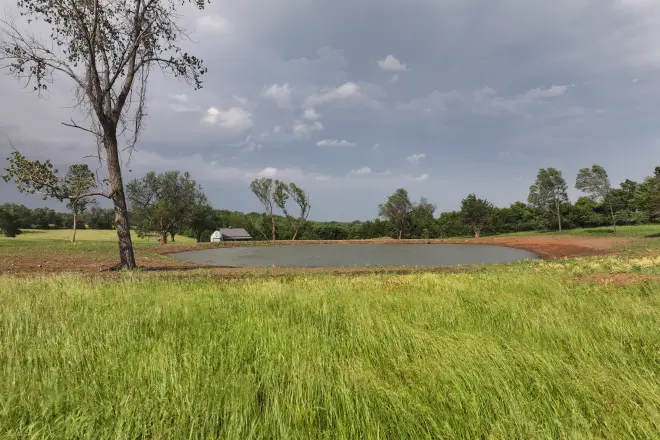
Vegetative buffers are one of the most effective ways to stabilize the soil around your pond.
These buffers use native plants and grasses to naturally hold soil particles in place, slowing surface runoff and reducing the amount of sediment that enters the water.
- Native Planting: Native Kansas plants and grasses like Rose Milkweed and Big Bluestem are great for absorbing excess water and strengthening the pond’s banks.
- Runoff Control: The deep roots of vegetation trap soil particles and prevent them from being washed away during heavy rains.
- Plant Selection: For the Kansas City climate, choose moisture-loving plants that thrive in local conditions and won’t overwhelm the pond’s ecosystem.
Rip-Rap Installation: Strengthening the Shoreline

Rip-rap involves placing large rocks along the pond’s edges to break up the force of flowing water and prevent soil erosion.
This method provides a physical barrier that keeps the soil intact, even during strong winds or heavy rainfall.
- What is Rip-Rap?: Large stones are placed along the shore to reduce erosion by absorbing the energy of waves and water runoff.
- Proper Placement: Rip-rap should be positioned both above and below the high-water line to shield the shore during storms and dry periods.
- Additional Benefits: It discourages animals like deer and livestock from accessing the pond, further preventing soil loss from trampling.
Limestone Shoreline Rock
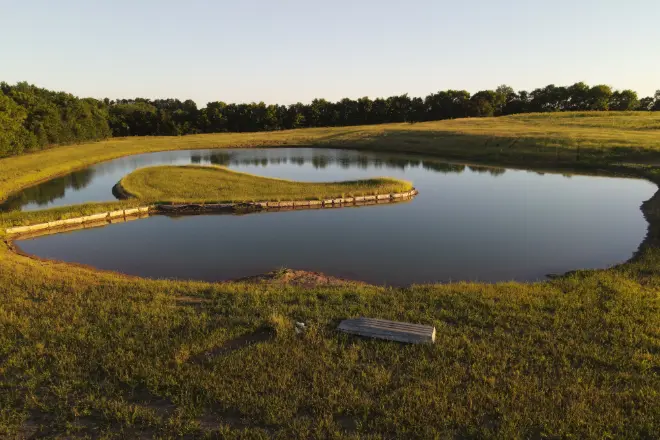
Limestone is an excellent option for protecting pond shorelines while also improving water quality.
These rocks not only shield the banks from soil erosion, but they also offer a natural solution to maintaining the pond’s ecosystem.
- Erosion Control: Limestone rock forms a protective barrier that absorbs the impact of water erosion and prevents soil from washing into the pond.
- pH Balance: Limestone naturally adjusts the pH of pond water, helping maintain a healthy balance that supports aquatic life.
- Dual Benefits: By using limestone along the shore, you reduce soil loss while also benefiting the pond’s overall water quality.
Limestone rock is a practical and eco-friendly choice for pond owners looking to protect their shorelines and enhance their aquatic environment.
Follow the link to view other custom pond features that Bulletproof Pond and Lake can incorporate into your acreage pond installation.
Building Berms for Erosion Control
Berms are raised barriers made of soil that can redirect water runoff and prevent it from reaching the pond.
These simple structures help keep the water moving in controlled paths, reducing water erosion on pond banks.
- Berm Construction: Earthen berms are easy to build and effective at channeling excess water away from the pond.
- Vegetating Berms: Covering berms with grass improves their stability and prevents soil degradation by strengthening the structure.
Implementing these erosion control strategies will help protect your pond from long-term damage, ensuring both its health and aesthetic appeal.
Shoreline Protection Best Practices
Preventing soil erosion around your pond requires strategic measures to stabilize the shoreline and limit damage from environmental factors.
Below are best practices that help maintain the structure of your pond banks and protect against soil loss over time, ensuring that you can reap the benefits of your large pond or lake for years to come.
Adjusting Bank Slopes for Stability
One of the most effective ways to combat erosion on pond embankments is by adjusting the slope.
A properly graded slope helps slow down water erosion and reduces the pressure on the shoreline, preventing soil particles from being washed away.
- Ideal Slope Ratio: Maintaining a 3:1 slope (three feet horizontal for every one-foot vertical) is recommended for pond embankments to reduce soil erosion and prevent gully erosion.
- Shaping Steep Banks: Slopes that are too steep are prone to erosion. Regrading them to a gentler slope will help limit erosion and protect the soil surface from collapsing into the water.
Protecting Shorelines from Heavy Rainfall
Heavy rains can cause water erosion by increasing surface runoff into your pond, which leads to soil loss.
Effective erosion prevention measures can help manage the flow of water and prevent damage.
- Surface Water Management: Use berms and vegetative buffers to slow down and capture rainwater before it reaches the pond. This helps protect the soil health by reducing the speed at which water travels down the embankment.
- Rainwater Diversion: Installing drainage systems or creating channels that divert rainwater away from vulnerable areas helps protect the pond banks from erosion during storms.
Preventing Animal Damage
Wildlife and livestock, such as deer, cattle, and horses, can cause significant damage to pond shorelines.
Their hooves loosen the soil structure, making it more vulnerable to erosion.
- Livestock and Wildlife Impact: Hoofed animals trample vegetation and compact the soil, which contributes to bank erosion. Over time, this weakens the embankments and increases the rate of soil erosion.
- Fencing Solutions: Installing fencing around the pond can protect shorelines from animal traffic and minimize the disruption to the natural resources that stabilize the soil.
By implementing these shoreline protection techniques, you can effectively manage erosion and maintain the integrity of your pond’s edges.
Long-Term Pond Maintenance for Erosion Control
Effective erosion control doesn’t stop with pond construction.
Maintaining your pond over time is critical to protecting its natural resources and ensuring the integrity of its banks.
Regular monitoring and strategic maintenance practices will help you stay ahead of erosion and preserve your pond’s health.
Regular Inspection and Vegetation Management
Routine inspections are essential for identifying early signs of soil erosion and preventing more serious damage.
Regular maintenance ensures that the shoreline remains stable and that vegetation continues to play a crucial role in erosion prevention.
- Shoreline Monitoring: Inspect your pond’s banks for signs of gully erosion, rill erosion, or areas where soil erosion occurs. Addressing these problems early can save time and money.
- Replanting Vegetation: Ensure that any ground cover or vegetation planted for erosion control is thriving. Replanting native grasses and cover crops can help stabilize the soil and reduce erosion over time.
- Dam Maintenance: Ensure that trees do not become established on the dam since tree roots can penetrate the dam and cause pond leaks. Follow the link to learn why your pond is leaking.
Dredging (Mucking Out) for Sediment Removal
Over time, ponds accumulate sediment from soil particles that have eroded into the water. This can reduce water depth and degrade water quality.
Dredging removes excess sediment and restores the pond’s capacity and health.
- Why Dredging is Important: Sediment buildup affects the overall function of the pond by reducing depth and clogging aquatic habitats. Removing this material can greatly improve pond conditions.
- When to Dredge: If you notice decreased water depth, excessive plant growth, or water pollution, it may be time to dredge. Typically, ponds require this cleaning task every 10 to 15 years, depending on the rate of sediment accumulation.
Regular maintenance, including shoreline monitoring and occasional dredging, ensures that your pond remains functional and free from soil erosion long-term.
Comprehensive Erosion Control Strategies
To effectively combat soil erosion in pond construction, it’s important to use a combination of techniques.
By layering multiple methods, you can achieve more robust protection for your pond and its surrounding soil structure.
Fixing Bank Slopes and Soil Types
One of the most critical factors in controlling soil erosion is ensuring that the pond’s bank slopes are properly graded.
In areas with steep slopes, regrading can make a big difference in preventing future erosion.
- Slope Fixes: Adjusting bank slopes to a more gradual incline, such as a 3:1 ratio, prevents rill erosion and helps stabilize the soil.
- Improving Soil Composition: Adding organic matter or clay-rich soil can improve the soil properties around the pond, enhancing its ability to hold moisture and resist erosion.
Combining Techniques for Maximum Effectiveness
Using a multi-layered approach to erosion control ensures long-lasting protection for your pond and surrounding water bodies.
Each technique works together to create a more resilient environment.
- Vegetation, Rip-Rap, and Berms Together: Combining ground cover, rip-rap (large rocks), and berms (raised barriers) provides a multi-tiered defense against soil erosion by water and wind erosion.
- Tailoring Solutions to Your Pond: Every pond has unique characteristics based on its location, soil type, and surrounding landscape. Customizing your erosion prevention methods ensures they are suited to the specific needs of your pond, whether it’s in a suburban yard or on agricultural land.
By integrating these methods, you’ll not only reduce soil erosion but also enhance the overall health and longevity of your pond.
Protect Your Pond with Bulletproof Pond and Lake’s Expertise
By using proven strategies like adjusting slopes, planting vegetation, and installing rip-rap, you’ve learned how to safeguard your pond from the damaging effects of soil erosion.
These techniques not only preserve your pond’s beauty but also help maintain water quality and reduce costly repairs in the long run.
At Bulletproof Pond and Lake, we specialize in creating sustainable ponds that stand the test of time.
Our team has the knowledge and experience to ensure your pond is built with effective erosion control methods tailored to your property’s specific needs.
Ready to protect your investment?
Fill out our contact form today, or give us a call to get started on your pond project!