Pond Perfection: The Truth on Thriving, Long-Lasting Ecosystems
Ponds, often viewed as serene and picturesque additions to landscapes, are not merely “holes in the ground.”
They are intricate ecosystems that demand careful planning, design, and construction to ensure longevity. One of the most critical factors in pond construction is the choice of materials. ✅
The correct selection and utilization of materials can make the difference between a thriving, enduring pond and one that constantly requires costly repairs. Understanding why ponds leak starts with understanding what they’re built from.
Everything in this post comes from ponds and lakes we’ve been called out to repair. They were built by someone else, sometimes another contractor, sometimes the owner doing it themselves.
This isn’t a dig at anyone. It’s here to educate: owners planning a new pond, builders who want to get it right the first time, and DIY’ers who want to know what they’re really up against. The mistakes below are common, and most of them are avoidable.
This post zooms in on one part of the build: the materials. For the full step-by-step process we recommend, from the survey and soil testing to design, compaction, and lining, start with our main guide: How to Build a Large Pond or Lake on Your Property (The Real Process).
Disclaimer: Every pond and lake is unique. The causes, materials, and methods below are a general overview based on our experience, not a diagnosis or a plan for any one pond or lake.
This article is for educational purposes only. It shares our general recommendations and is not engineering, legal, or professional advice for your property. Not every item here is required on every project.
The level of investigation, design, and risk management a project needs can be greater or less depending on the site, the budget, and the outcome the owner wants. Less investigation generally means more unknowns and more risk, including unknown subsurface conditions such as hidden springs, rock, or unsuitable soils.
Regulations and permit requirements vary by location. Before starting any project, consult qualified professionals who can evaluate your specific site.
*Find videos, links, and more resources/references below.
Summary
This blog explains why ponds leak, why building them with the right materials is essential, why most of the failing ponds we repair were built wrong in the first place, and why we generally recommend synthetic liners, including the vertical core liner method we developed ourselves.
This information is based on Bulletproof Pond and Lake’s confirmed experience with pond and lake construction and information supported by official and credible resources.
Why Ponds Leak: Most of the Ones We Repair Were Built Wrong
Most of the leaking, failing ponds we get called out to fix didn’t fail by bad luck. In our experience, the biggest reason why ponds leak is how they were built. The same few shortcuts show up again and again.
1. Over-Excavating
Digging deeper or wider than the design calls for, or deeper than the suitable clay goes. Cut through a good clay layer and you can open the basin up to the sand, gravel, or rock seams underneath. Once that layer is gone, you can’t put it back by hoping.
And no, you can’t fix it with a miracle sealant. We hear it all the time: “Just throw some bentonite on it.” “Just put some pigs on it and it’ll seal.” Either one may slow a leak for a while. Neither is a cheap fix, and neither is that simple.
Pigs. Sealing a pond with pigs is very situational. It depends on suitable clay already being there. Pigs won’t make a pond seal over sand, or where over-excavating has exposed bedrock or other unsuitable material.
Bentonite. Bentonite isn’t as simple as many make it seem. It often requires dry conditions to apply, and a heavy investment in trucking in the material itself, usually in much larger quantities than most people account for once they follow the manufacturer’s recommended rates. Applying it by drone is trending right now, but for the time and cost, it doesn’t compare to spreading it with proper heavy equipment and compacting it the way the manufacturer recommends.
In our experience, “throwing a bag of bentonite” at it, or reaching for a miracle product, is often a setup for failure.
2. Unsuitable Material
Topsoil, roots, organic material, sand, and gravel have no business in a dam or in the foundation that’s supposed to hold water. NRCS Agriculture Handbook 590 calls for removing soils with high organic content from the dam foundation, and the U.S. Army Corps of Engineers (USACE) dam design manual calls for stripping sod, topsoil, and organic material before any fill goes down.
3. Unsuitable Compaction
Good clay, compacted wrong, still leaks. Fill has to go down in thin layers, at the right moisture, and be compacted to spec. USACE treats compaction as its own engineering step, all the way down to test fills that set lift thickness, number of passes, and water content. In our experience, poor compaction is one of the biggest reasons dams fail. We break down why in the compaction section of our pond and lake building guide.
4. Improper Surveying, and Therefore Improper Design
If the survey is wrong, everything built from it is wrong: the elevations, the dam height, the spillway, the volumes, and the bid. “We shot some GPS points” isn’t a survey. What matters is how the site was measured, how that survey was verified, and whether the pond was then properly designed in civil engineering software.
5. No Diagnostics, and Nothing Sent to a Lab
On most of the failed ponds we look at, no soil borings were ever drilled and no samples were ever sent to a lab. NRCS recommends borings across the area that will hold water, extending at least one and a half times the height of the planned dam (Agriculture Handbook 590). Without that, nobody actually knows what the pond is sitting on.
One Shortcut Is a Risk. Stack Them and It’s a Gamble.
Not every project gets every test, and that can be fine. Skipping a step can be a reasonable call when the owner understands the risk and accepts it.
The trouble starts when more than one of these variables gets skipped. Each shortcut stacks on the last, and the odds of a leak or a failure climb fast.
That’s the tradeoff, and it was made by the owner, the contractor, or both. Years later, we’re usually the ones on the other end of it, doing the repair. And fixing it almost always costs more than building it right would have.
Even with every test done, unknown subsurface conditions are never zero risk. More testing makes surprises less likely, not impossible.
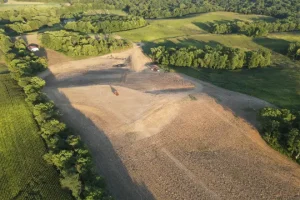
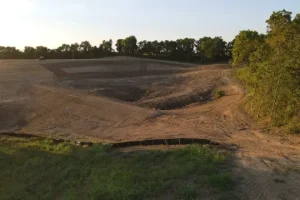
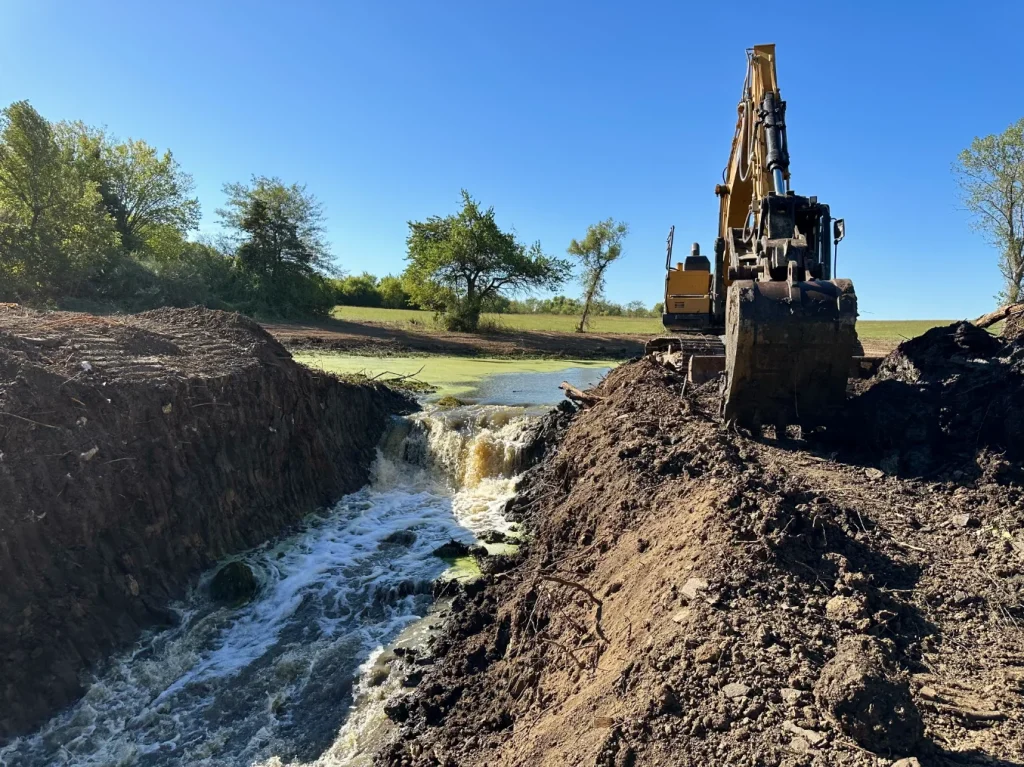
Real-Life Example: Built Right From the Start in Clinton, Missouri
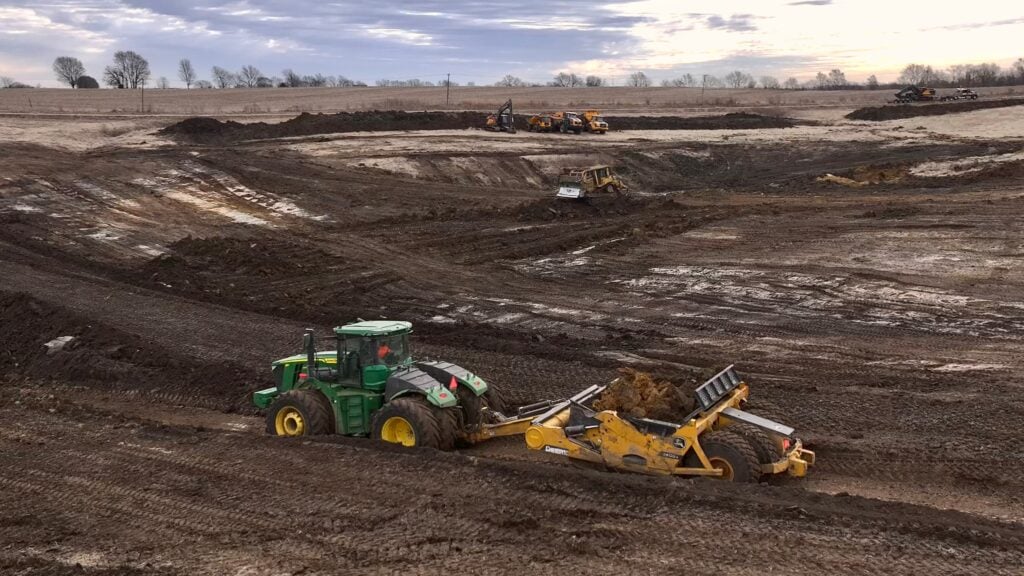
Here’s what it looks like when nothing gets skipped. This new build in Clinton, Missouri, a large lake plus acres of wetlands, was completed start to finish by our team.
It started with the right specialists, the right prep, diagnostics, and planning. Then it took every required step to make sure the suitable natural material on site would seal properly. When a site has the right material and it’s built the right way, natural material works.
The result is a lake and wetland system that’s now full. Here’s the before, the during, and the update:
Topsoil-Built Ponds
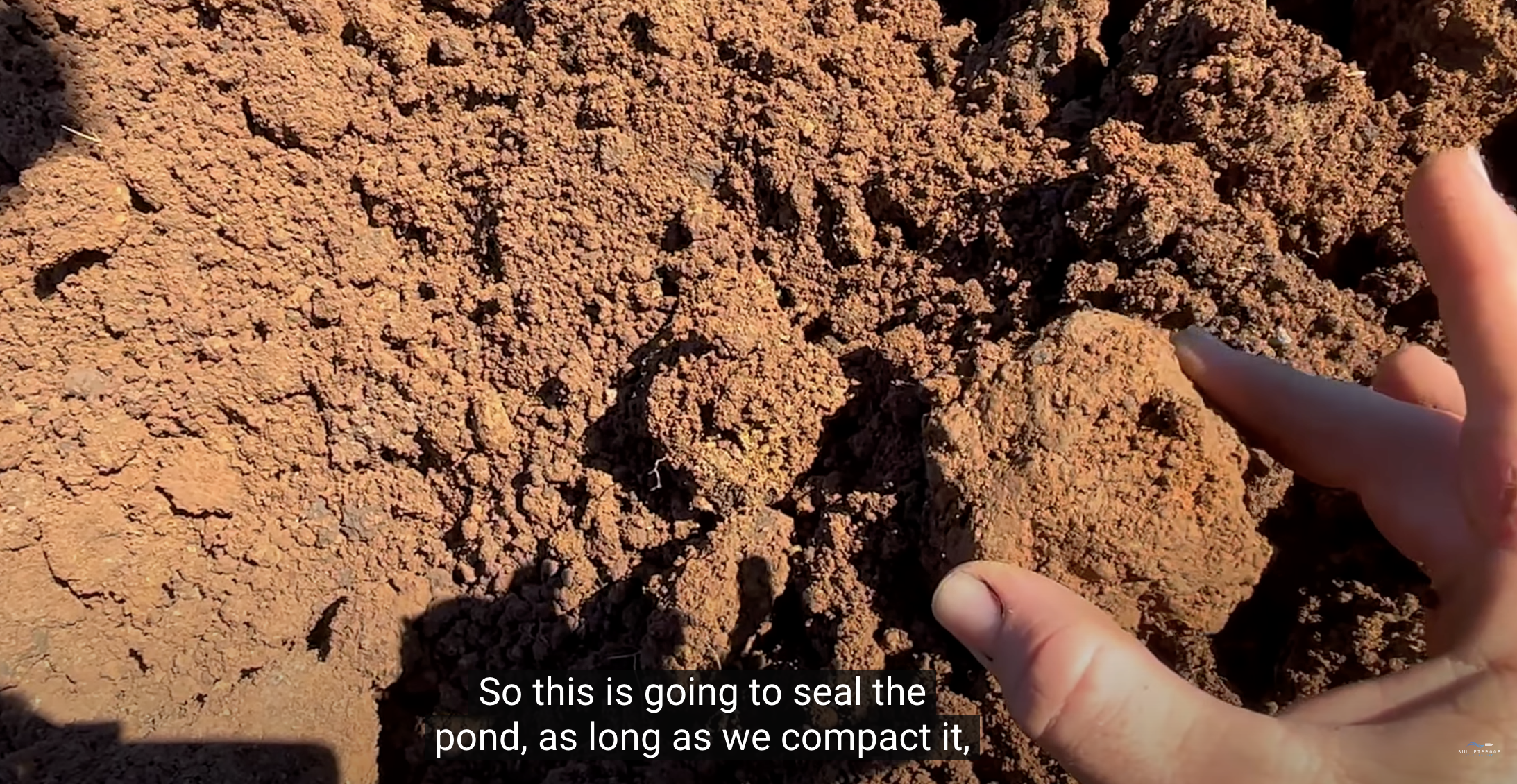
One common pitfall in pond construction is using topsoil as a primary building material. Topsoil may seem like a cost-effective “easy” option initially, but it is highly porous and unsuitable for retaining water.
One of the most common assumptions (doomed for failure) goes like this:
“I think we can just dig a hole with the soil we have. It’s cheaper than bringing in or sourcing the materials, and we have good runoff. It should work fine, right?”
Over time, topsoil-built ponds are prone to leakage and erosion, leading to a never-ending cycle of maintenance and repair. The costs associated with such repairs often far exceed the initial savings, making them an impractical choice.
Real-Life Example: A Leaking Topsoil Pond
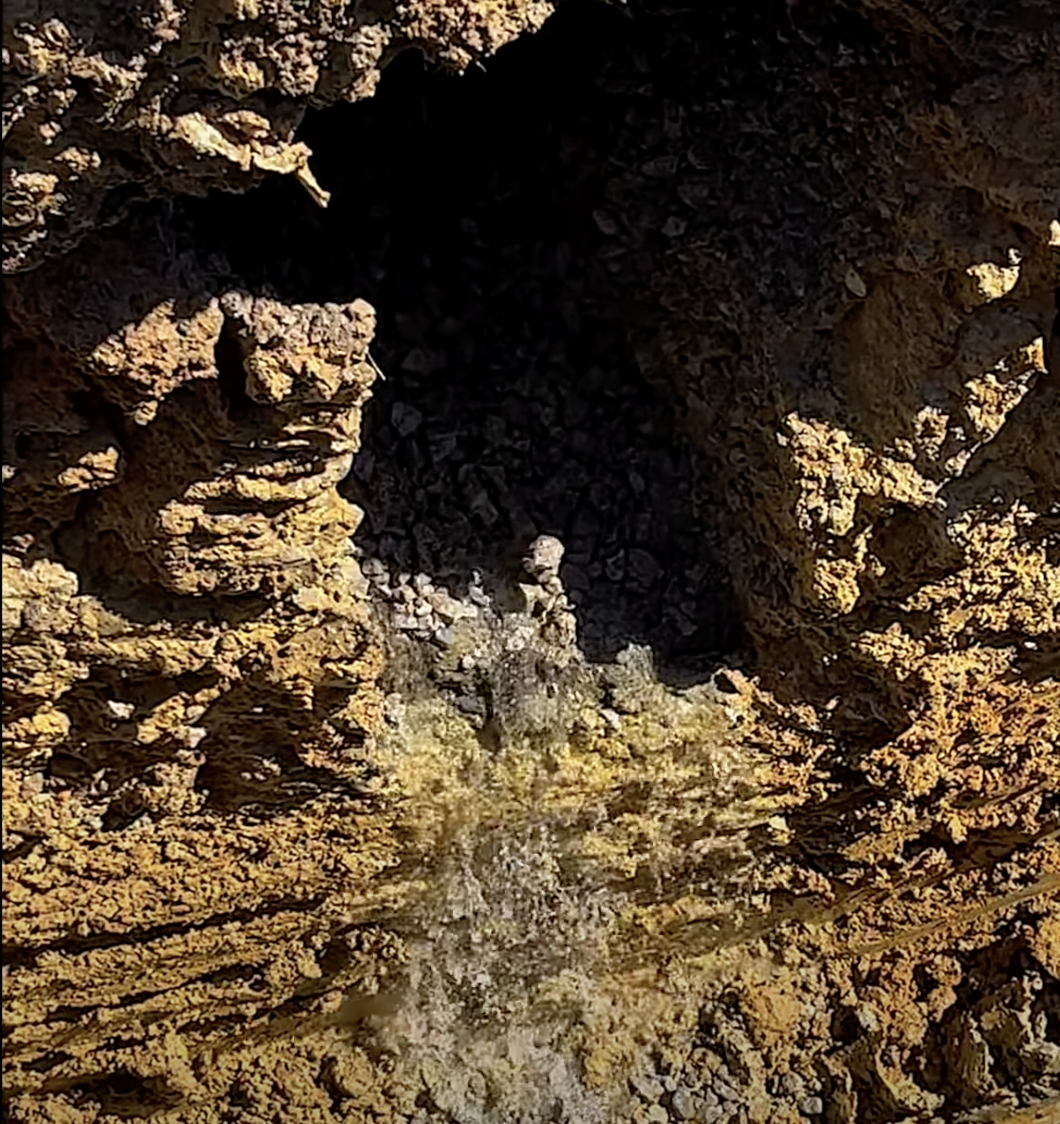
We present a real-life video example of a leaking pond project in Missouri.
The leaks are attributed to common causes, such as a dam filled with topsoil containing tree roots.
Additionally, we highlight a less common cause: seepage through gravel materials within the dam.
This video serves as a valuable visual demonstration of why choosing the correct materials for pond construction is essential, offering insights into potential issues and solutions when planning, building, and repairing ponds or lakes.
- Read more information on this exact project and find more like it here: Finding and Fixing Leaks (Blog Post by Bulletproof Pond and Lake
Ponds Built in Porous Materials
Like topsoil, constructing a pond in porous materials like gravel or sandy soil can result in water loss and instability.
Water seeps through these materials, causing the water level to drop significantly. Additionally, porous materials do not provide the structural integrity needed to withstand environmental factors such as heavy rainfall and groundwater pressure.
What Owners of Porous-Foundation Ponds Often Say
Common (example) FAQ’s regarding pond owners whose ponds’ total foundations are built with porous materials:
“Our pond filled up during heavy rain, but the water level quickly dropped. We even added a new compacted clay core to the dam, but it doesn’t seem to help.”
“The pond just will not fill up, and we’ve even put a hose in it for weeks, it just all disappears into the ground. What’s going on?”
What Owners of Porous-Material Dams Often Say
Common (example) regarding pond dams built with porous materials:
“The pond will fill up, then drop to a lower level that it seems to stay at. It won’t fill up completely, no matter how much consistent water it gets. Why?”
Disclaimer: Every pond is unique. The examples provided is based on common conversations often associated with ponds constructed using porous materials. Accurately identifying the precise issue behind a particular pond problem necessitates further in-depth investigation and assessment.
Real-Life Example: Bonner Springs, Kansas
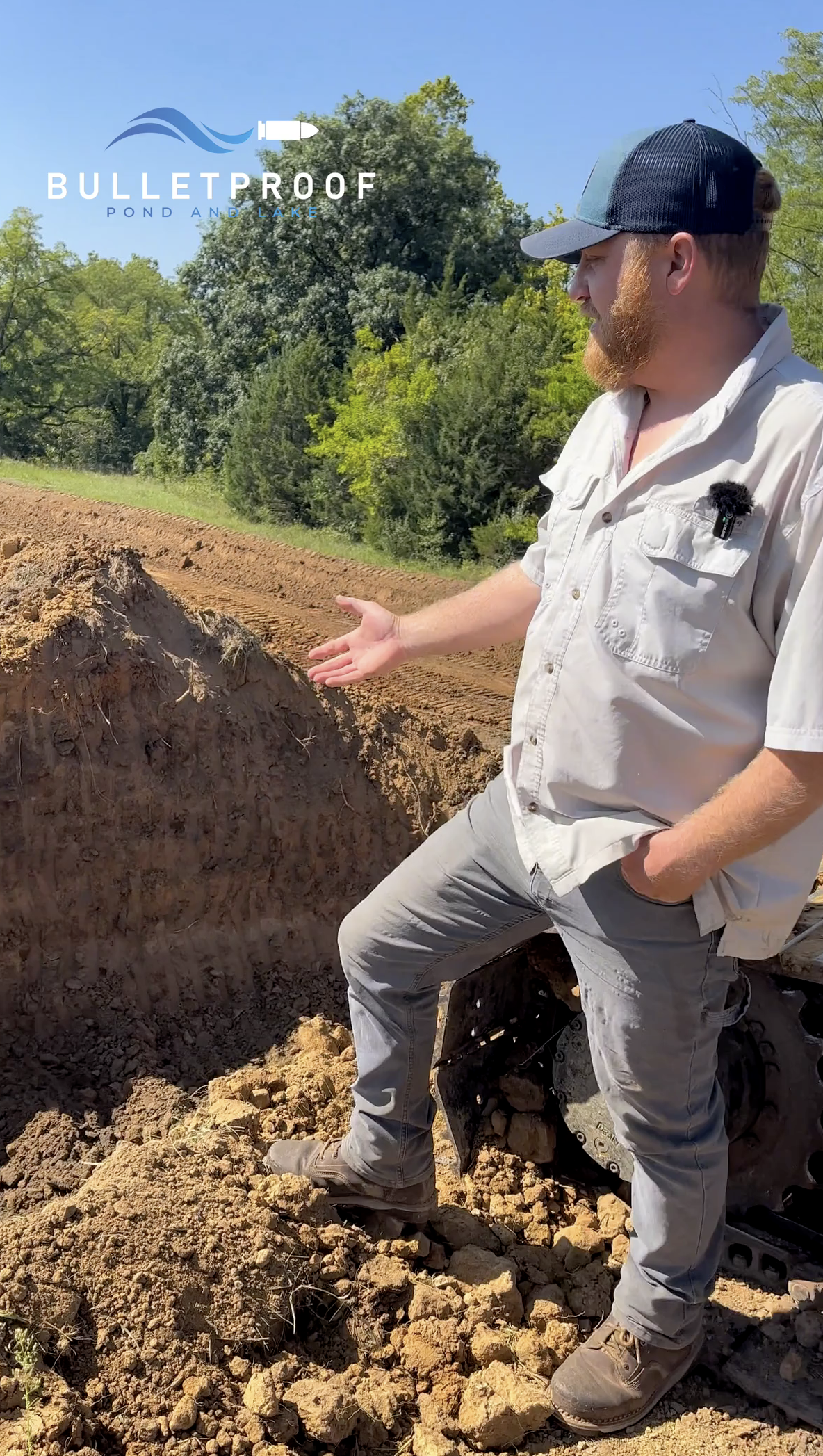
In one of our many short videos below, we casually highlight a real-life instance on a job site in Bonner Springs, Kansas of a poorly built dam. –
This pond was initially constructed using a combination of topsoil and permeable materials. Nonetheless, in this particular case, the pond was rehabilitated with a robust synthetic HDPE liner. Frequently, when dams are reconstructed and cores are installed, this addresses significant problems related to seepage and water retention.
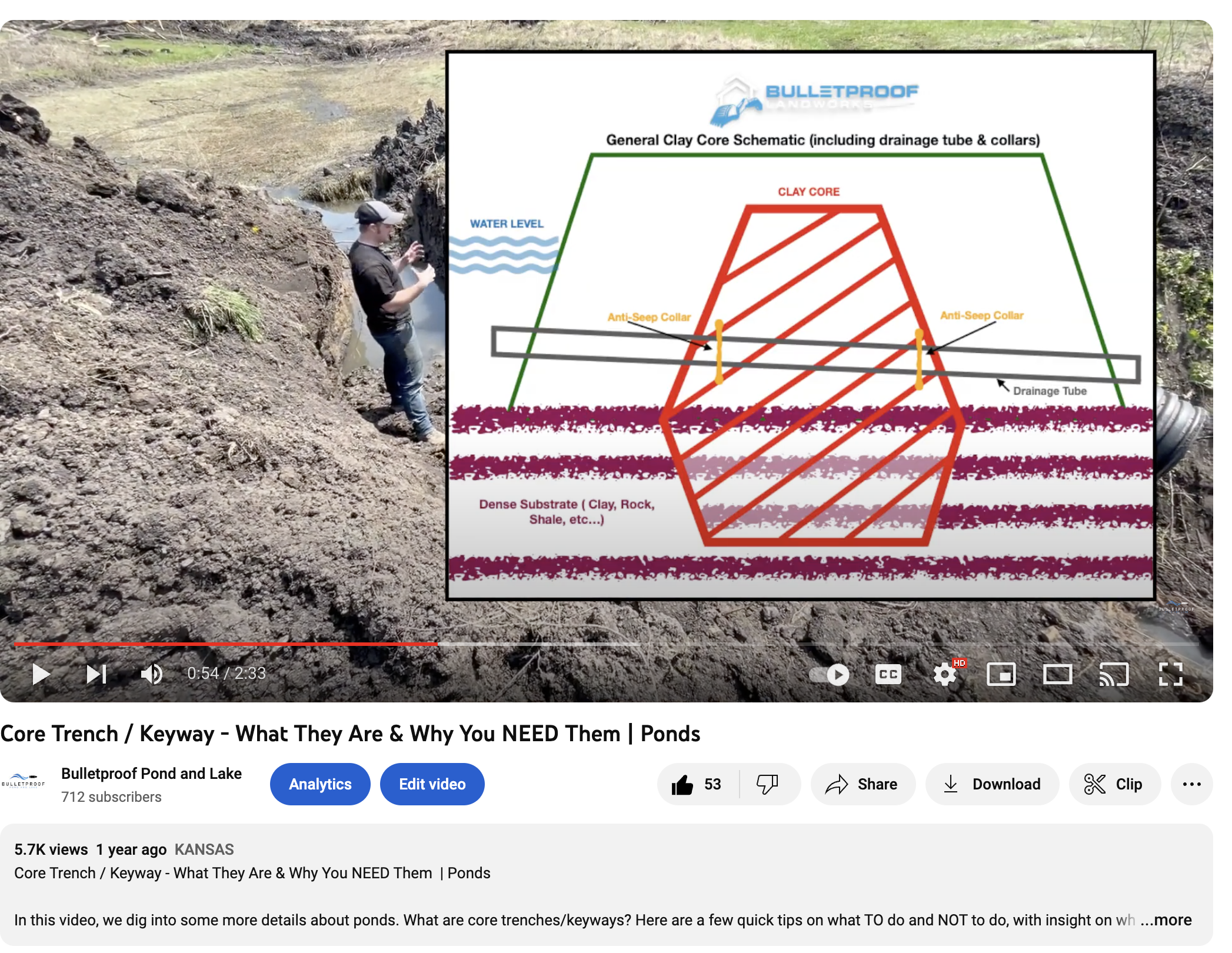
One of the growing trends in the pond construction world is the common oversight of using clay material for most of the pond while neglecting the installation of cores in dams.
If the pond’s foundation and the dam are not constructed using the appropriate materials from the outset, subsequent reconstruction or core installation will not resolve the underlying issue, and additional problems will endure. Find more videos like this on our YouTube channel, social media, and information center.
The Importance of Correct Material Selection
Structural Integrity
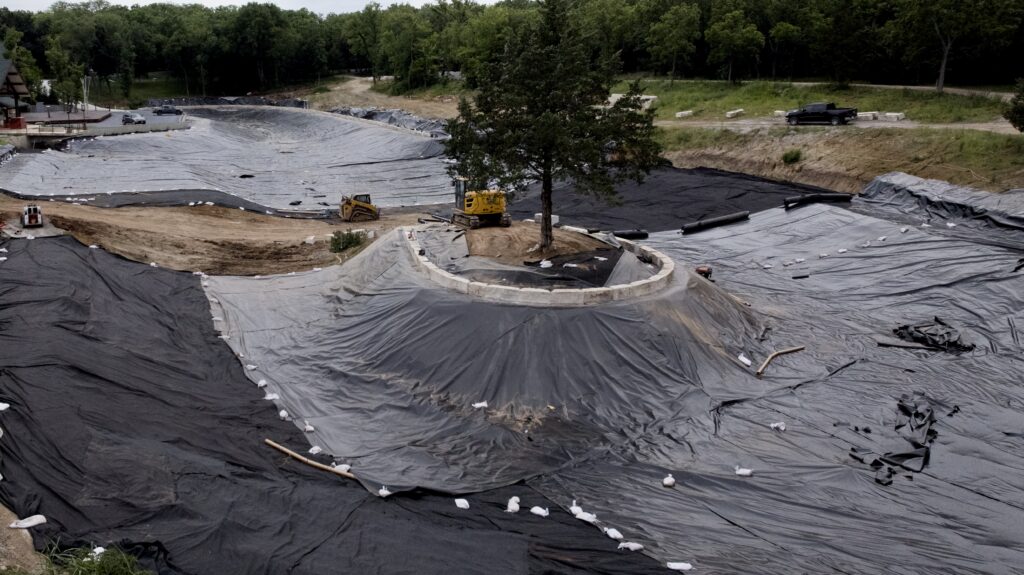
Choosing the right materials is essential for the structural integrity of the pond. Quality liners and non-porous materials, such as clay or synthetic pond liners, prevent water from seeping into the ground. This ensures that the pond maintains a consistent water level, reducing the risk of erosion and leaks.
Water Quality
Proper materials also play a crucial role in maintaining water quality and clarity.
Porous materials such as topsoil have been known to especially affect water clarity, oftentimes resulting in more murky-like waters.
Properly compacted and installed non-porous materials such as clay and synthetic liners help maintain water clarity.
Although porous materials and additions may be added after the foundation build of a pond, it is crucial not to use these porous materials until after the pond’s foundations are first complete.
Why We Generally Recommend Synthetic Liners
Clay can work when the site has enough of the right clay and it’s placed and compacted correctly. That’s a lot of ifs. Natural clay varies from one spot on a site to the next, and hauling in good clay is often one of the largest costs on a project.
A properly installed synthetic liner takes most of that guesswork off the table. Natural materials like clay are water-resistant. Built right, they hold water, but they still seep. A synthetic liner is engineered to be waterproof, and when it’s installed properly, it’s the closest option to a truly waterproof pond or lake. That’s why it’s our general recommendation, especially on sites with sandy, gravelly, or otherwise porous soils.
What a Liner Does Differently
- Covers the entire footprint of the pond or lake, not just the dam
- Doesn’t depend on finding, hauling, and compacting enough suitable clay
- Performs consistently even when soils change across the site
- Can rehabilitate a leaking pond, like the Bonner Springs dam above, without rebuilding the whole thing from new material
Installation Is Everything
A liner is only as good as its install. NRCS has a dedicated conservation practice standard for geomembrane and geosynthetic clay liners, Pond Sealing or Lining (Code 521), written for ponds where the natural soils seep too much. It calls for:
- A smooth, firm subgrade with rocks and sharp objects removed
- Cushion layers where the underlying soil could damage the liner
- Soil cover where the liner type calls for it
- Gas venting so trapped gas doesn’t lift the liner
Seams, anchoring, and venting are where amateur installs fail. This is specialized work, and it should be done by a crew that installs liners regularly.
Liners aren’t the answer for every site. The soils, the water source, the dam, and how you’ll use the pond all factor in, and diagnostics are always recommended to identify the likely issue before choosing a fix.
Real-Life Example: A DIY Pond Rebuilt in Liberty, Missouri
This pond sits on a luxury estate in Liberty, Missouri. It started as a DIY build, and it was built wrong in several ways. Fixing it took a lot more than a patch.
Here’s what it took to make it right:
- A complete cleanout and makeover of the basin
- A heavy-duty synthetic liner installation
- A full plan to reroute water into the pond, because the runoff calculations showed the drainage area alone wouldn’t properly fill it
- A pump system to bring water over from another existing pond on the property, since a well wasn’t a suitable option for this site
Since then, the pond has been filling in naturally. As the water keeps rising, less and less of the liner will be visible. It’s a beautiful work in progress, and we’re proud to be part of this property’s evolution.
Our Vertical Core Liner Method
Sometimes the problem isn’t the whole basin. It’s the dam. A traditional clay core only works when the right clay is available, and when it isn’t, the usual answer is trucking it in.
So we built another option. We invented our vertical core liner method in house: an engineered synthetic barrier that takes the place of a natural clay core inside the dam. We use it in new construction on sites without workable clay, and as a repair on existing dams that are already leaking.
See where it fits in the full process in our guide to building a large pond or lake. The video below walks through the repair side of it.
Misconceptions About Pond Construction
“Ponds Are Just Holes in the Ground”
This misconception oversimplifies the complexity of pond construction. A successful pond is more than just a dug-out hole filled with water.
It requires proper planning and designing to begin with, to name a few major factors: water run-off, pond usage/purpose, and environmental laws and regulations.
Successful pond builds include a multitude of components, including but certainly not limited to:
- An accurate, verified survey and a 3D design
- Soil borings with lab testing
- Proper excavation levels (no over-excavating)
- Precise compaction
- Suitable liners or materials
- Other structures such as aerators, filtration systems, aquatic stocking or breeding structures
- Erosion control
Along with all these, it additionally includes careful attention to water management and upkeep. Neglecting any of these aspects can lead to a multitude of problems, including water quality issues, habitat degradation, and structural failures.
Additional Credible Resources
Want to go deeper? These are the sources we lean on, along with our own guide:
- How to Build a Large Pond or Lake on Your Property (The Real Process): our recommended process, step by step
- NRCS Agriculture Handbook 590: Ponds, Planning, Design, Construction: USDA’s core guide to soil investigations, dam foundations, core trenches, and sealing
- NRCS Conservation Practice Standard: Pond (Code 378): design criteria for ponds and dams
- NRCS Conservation Practice Standard: Pond Sealing or Lining, Geomembrane or Geosynthetic Clay Liner (Code 521): the standard for liners where natural soils seep too much
- U.S. Army Corps of Engineers EM 1110-2-2300: General Design and Construction Considerations for Earth and Rock-Fill Dams: foundation preparation, seepage control, and compaction
- NRCS Web Soil Survey: a starting point for soils data, not a substitute for on-site borings
Build It Right the First Time
The cheapest pond is the one you only build once. Whether you’re planning a new pond or lake or yours is already leaking, talk to a team that does nothing but ponds and lakes. Contact Bulletproof Pond & Lake.
The information in this article is general and educational. Every site is different, and results depend on site conditions, design, construction, and maintenance. Bulletproof Pond and Lake makes no guarantee that this information applies to or will produce a specific result on any particular property.