Pond Placement Pointers: Don’t Wing It, Site It Right
Ever stare out at your land and wonder exactly where a pond should go?
Or worry that a poorly placed one could turn into a muddy mess or money pit?
In this post, you’ll learn how to evaluate your property and pinpoint the ideal spot for a pond—whether it’s for fishing, farming, or pure scenic charm.
By the end, you’ll know exactly what makes a great lake or acreage pond installation site and how to avoid costly siting mistakes.
Want help picking the perfect spot?
Call Bulletproof Pond and Lake, or fill out our contact form—we make ponds that work and wow.
Best Location for a Pond: Quick Answer
The best location for a pond is in a natural depression with clay-rich soil, good sunlight, and a safe distance from potential contaminants.
Ideally, the site should match your intended use—whether that’s fishing, irrigation, or wildlife habitat—and be integrated into the surrounding landscape without creating runoff or dam failure risks.
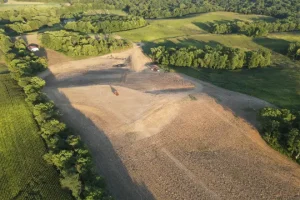
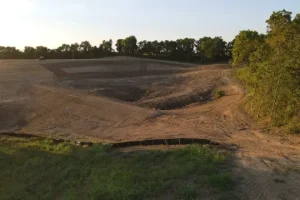
Start by walking your property after heavy rain. Look for areas where water naturally pools but drains slowly.
These low-lying zones with gentle slopes and compactable ground are prime candidates.
Avoid placing a pond near septic systems, feedlots, chemical storage, or barns where livestock gather.
A buffer of at least 100 feet helps prevent contaminated runoff from entering your pond water.
Good sun and wind exposure help oxygenate the water and discourage algae. You’ll want at least 6 hours of full sun per day.
Don’t site the pond too close to trees—roots can compromise the liner or dam, and leaves increase maintenance.
Finally, think safety. If your pond’s dam fails, will it flood a neighbor’s house or nearby road?
Choose a location where a breach won’t damage anything critical.
Know the Purpose of Your Pond First
Recreational vs. Agricultural Use
Start by asking what you want from your pond.
Is it a peaceful place to fish with your kids?
A way to water cattle or irrigate crops?
Your goal will determine the best location for the pond.
If it’s recreational, choose a spot visible from the house or outdoor seating areas.
You’ll want easy access and beautiful views—somewhere guests will gather to enjoy the water features, frogs, or even a waterfall.
For agricultural ponds, practicality wins.
Put it near the barn or field to reduce the distance livestock and water lines need to travel.
This helps maintain a steady water level and simplifies ongoing use.
Integration with the Landscape
Think beyond function.
Your pond should look like it belongs there.
A well-placed garden pond enhances the natural beauty of your land and can serve as a wildlife magnet.
Ask how your pond will reshape the property.
Will it stop erosion or create it?
Will it support birds and deer or displace other creatures?
The right pond complements the surrounding plants, trees, and grade without disrupting the ecology.
Evaluate the Watershed and Water Supply
Sizing the Watershed
A pond is only as good as its watershed.
In general, the watershed (the area where rain drains toward your pond) should be 10 to 15 times the size of the pond’s surface area.
If your watershed is too small, your pond may not fill naturally or stay filled year-round.
If it’s too large, it can cause erosion or muddy water during heavy rains.
You may need to install a controlled drain system to handle overflow.
Safe Water Sources
Surface runoff is the most common water source, but it brings dirt and organic material.
That’s fine if you manage erosion and filter inputs.
Springs or wells offer clean, reliable water but come with higher installation costs.
Avoid diverting streams unless you fully understand how it will affect wildlife, nearby ponds, or the flow downstream.
Not only can it harm the ecosystem, but it may also require permits.
Pollution Control
Your pond shouldn’t become a dumping ground for chemicals, manure, or sewage.
Avoid placing it downhill from septic systems, livestock lots, or any area that collects waste.
Redirect runoff with swales, vegetative buffers, or constructed wetlands.
These features help filter contaminants before they reach your pond, keeping the water safe for fish, wildlife, and humans.
Soil and Subsurface Conditions
Check for Clay Content
Clay is your best friend when it comes to pond construction.
Unlike sandy or rocky ground, clay holds water.
A natural clay basin may not even require a pond liner if the soil is thick and compactable.
To test for clay, grab a handful of moist soil and roll it in your palm.
If it forms a tight ribbon without crumbling, you’ve likely got a good base for pond water retention.
Perform Soil Testing
Before any pond excavation begins, dig test pits in different parts of your chosen location.
Watch how long water sits and check for gravel, sand, or fractured rock layers.
For larger ponds, a professional soil analysis is smart.
It can confirm if you need to install a liner, how deep you can safely excavate, and how stable the subsoil is for dam construction.
Topography, Shape, and Dam Safety
Natural Depressions and Valleys
Choose low-lying ground whenever possible.
It reduces excavation costs and mimics the natural flow of water across your land.
Look for valleys that collect rain during storms.
Avoid flat ground unless you’re willing to excavate deeply and shape the pond yourself.
The more natural the slope, the easier it will be to direct water flow and stabilize the edges.
Slopes and Structural Integrity
The inside slope of your pond should be no steeper than 3:1 (3 feet out for every 1 foot down).
This prevents erosion, makes it safer for people and animals, and helps aquatic plants thrive near the shoreline.
If your pond will have a dam, be sure it’s built with compacted clay and includes a spillway for overflow.
Use a separate core trench under the dam to prevent leaks beneath the surface.
Risk of Failure
No one wants to think about their pond breaking—but it happens.
If a dam gives way, the surge can damage roads, houses, barns, or utilities.
Plan for the worst by placing your pond in a location where failure wouldn’t harm critical infrastructure.
Review your site’s elevation and runoff path, and install emergency drains or spillways to handle extreme weather.
Environmental and Wildlife Impact
Avoid Disrupting Existing Waterways
Don’t block streams or flood wetlands unless you understand the environmental consequences and have the proper permits.
Even a small change can affect fish, frogs, or other creatures that rely on connected water sources.
Maximize Positive Ecological Impact
When sited well, ponds become magnets for wildlife.
Expect visits from birds, deer, turtles, and even dragonflies.
You may find native frogs and fish move in naturally over time.
Planting native grasses, flowers, and water plants around your pond enhances habitat while filtering runoff and limiting algae growth.
Comply with Environmental Regulations
Some properties are near protected zones or conservation land.
Before installing, check zoning maps and contact your local planning department.
Don’t assume a remote location gives you a free pass.
Permits may still apply if your project affects drainage patterns or wetlands.
Sunlight, Wind, and Vegetation
Sunlight Matters
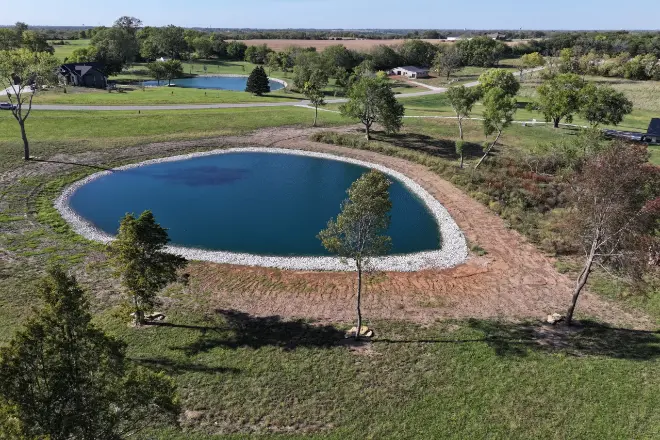
A minimum of six hours of full sun daily keeps pond water oxygenated and discourages stringy algae and foul smells.
Avoid deep shade from buildings or trees.
Sunlight also helps aquatic plants thrive, keeping the ecosystem balanced.
Don’t Build Too Close to Trees
Tree roots can puncture a pond liner or destabilize a dam over time.
Fallen leaves decompose in the water, feeding algae and clouding the surface.
If you want shade, add lilies or floating plants instead of relying on nearby trees.
Take Advantage of Wind
Wind ripples the surface, adding oxygen and preventing stagnant zones.
Place your pond where wind can naturally circulate the water across the longest dimension.
Avoid wind-blocked corners behind structures or fences.
If needed, add a small waterfall or aeration system to keep things moving.
Utilities, Access, and Use Patterns
Distance to Use Areas
If you’re planning a garden pond or recreational area, keep it within walking distance of the house.
The easier it is to reach, the more you’ll use it.
For farm ponds, install near fields or animal pens so hoses, buckets, or pipelines stay short and manageable.
Equipment Access
Leave clear space around the pond for future maintenance.
Excavators, mowers, or trucks may need to reach the shoreline.
Include access paths or drivable surfaces when possible.
Don’t box your pond in with fences or garden beds unless you’re done digging.
Legal, Permit, and Zoning Concerns
Permits for Large or Dammed Ponds
Larger ponds, especially those with dams or altered drainage, often require permits, such as a Stormwater Pollution Prevention Plan (SWPPP).
This is especially true if your project impacts wetlands, water rights, or public waterways.
Start the permitting process early to avoid delays.
Zoning Compliance
Some counties restrict building in floodplains, near utility easements, or too close to property lines.
Check zoning maps and regulations before selecting your pond site.
It’s easier to change your location than fight a zoning violation later.
Follow the link to learn more about how to build a large pond.
Ready to Dig Deep? Let Bulletproof Pond and Lake Help You Build It Right
You now know how to choose the best location for a pond that fits your goals, your land, and your vision—whether you’re after a peaceful fishing spot, a reliable irrigation source, or a thriving wildlife habitat.
From soil and slope to sun and water source, you’ve learned the key factors that set a pond up for year-round success.
When you’re ready to stop dreaming and start digging, the pond experts at Bulletproof Pond and Lake have the tools, experience, and local know-how to bring your acreage pond to life.