
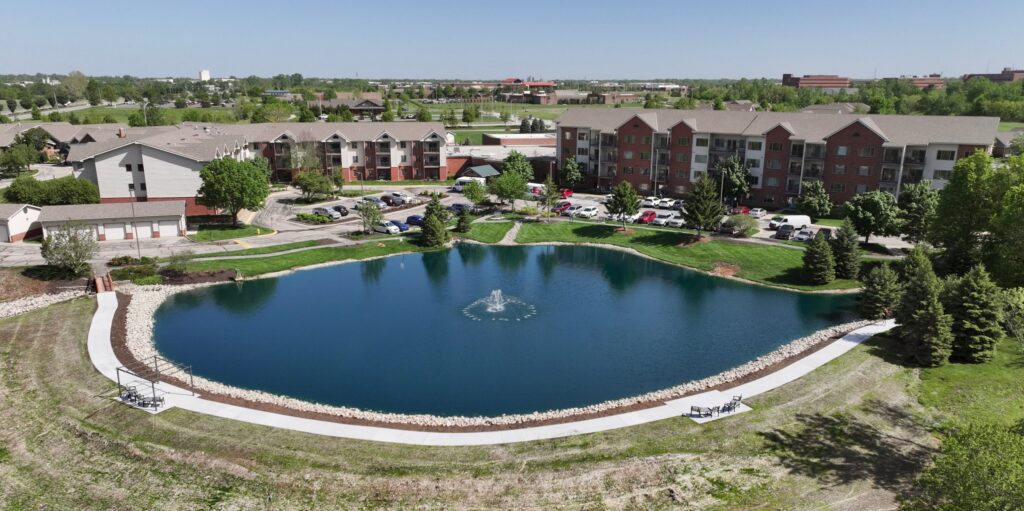
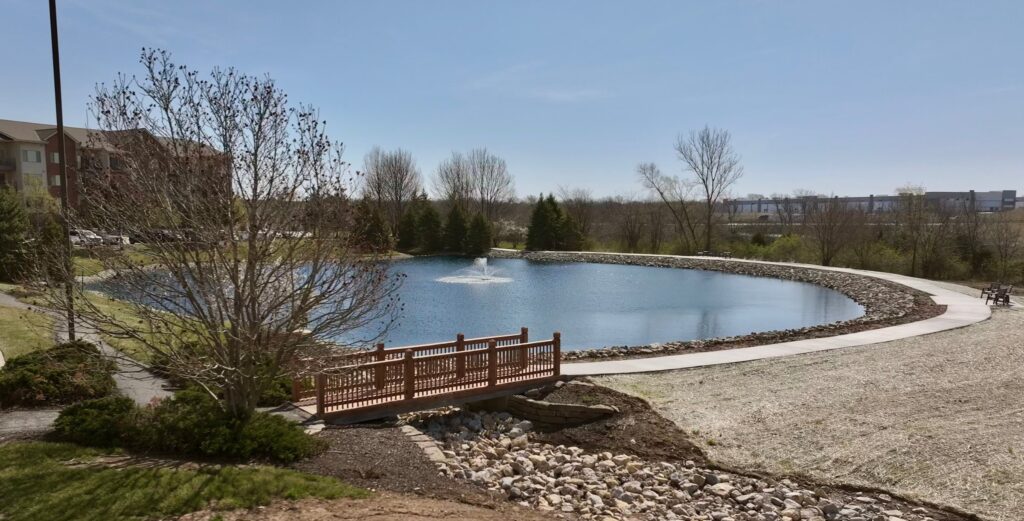
Cedar Lake Village is a senior living community in Olathe, Kansas, created by The University of Kansas Health System Olathe Campus and The Evangelical Lutheran Good Samaritan Society. Residents 55 and over live in villas, independent living apartments, and assisted living and memory care, and the pond is at the center of community life. Residents fish it, tend the community garden beside it, walk its edge with family and friends, and watch the wildlife that lives there or stops by.
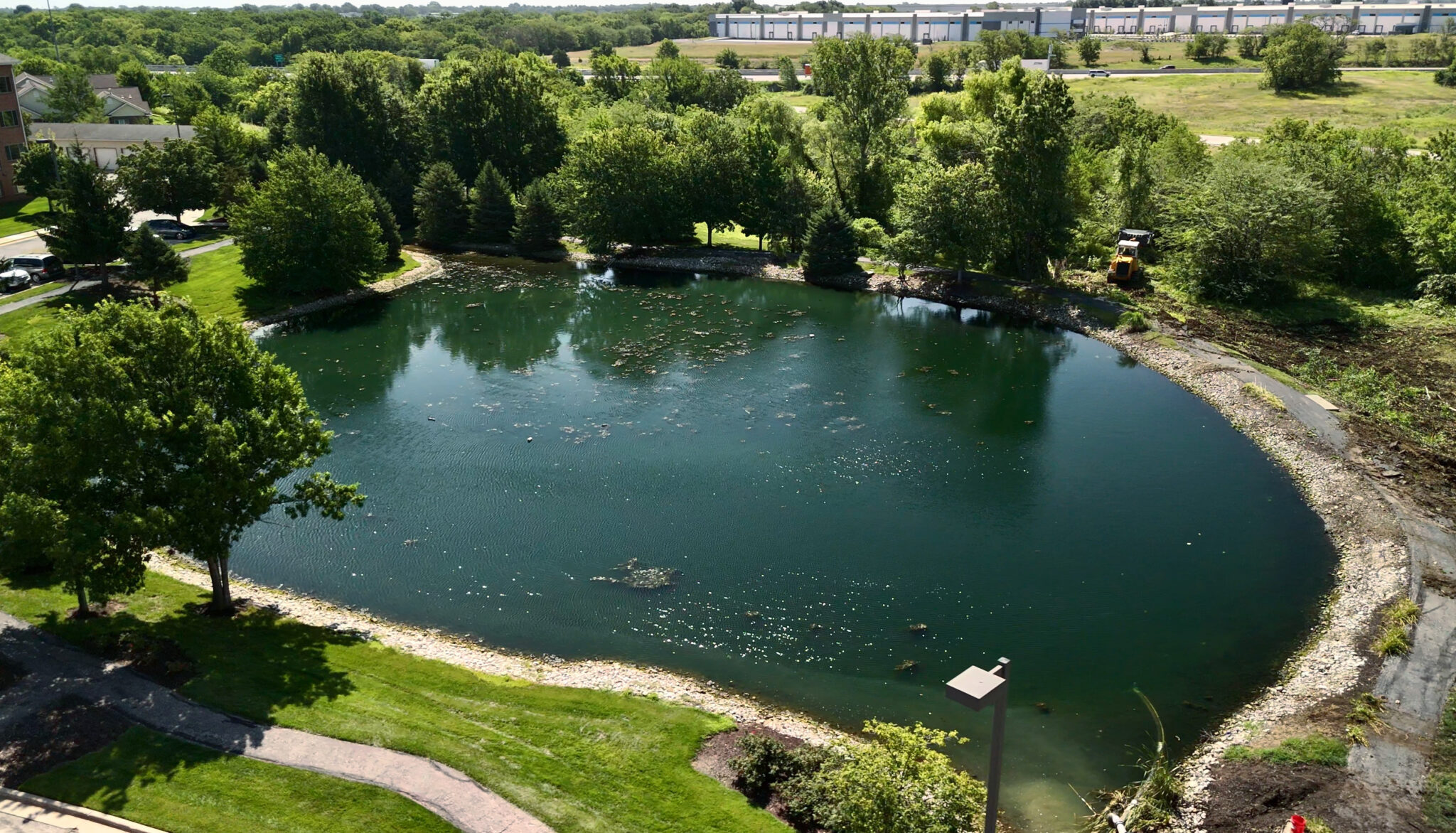
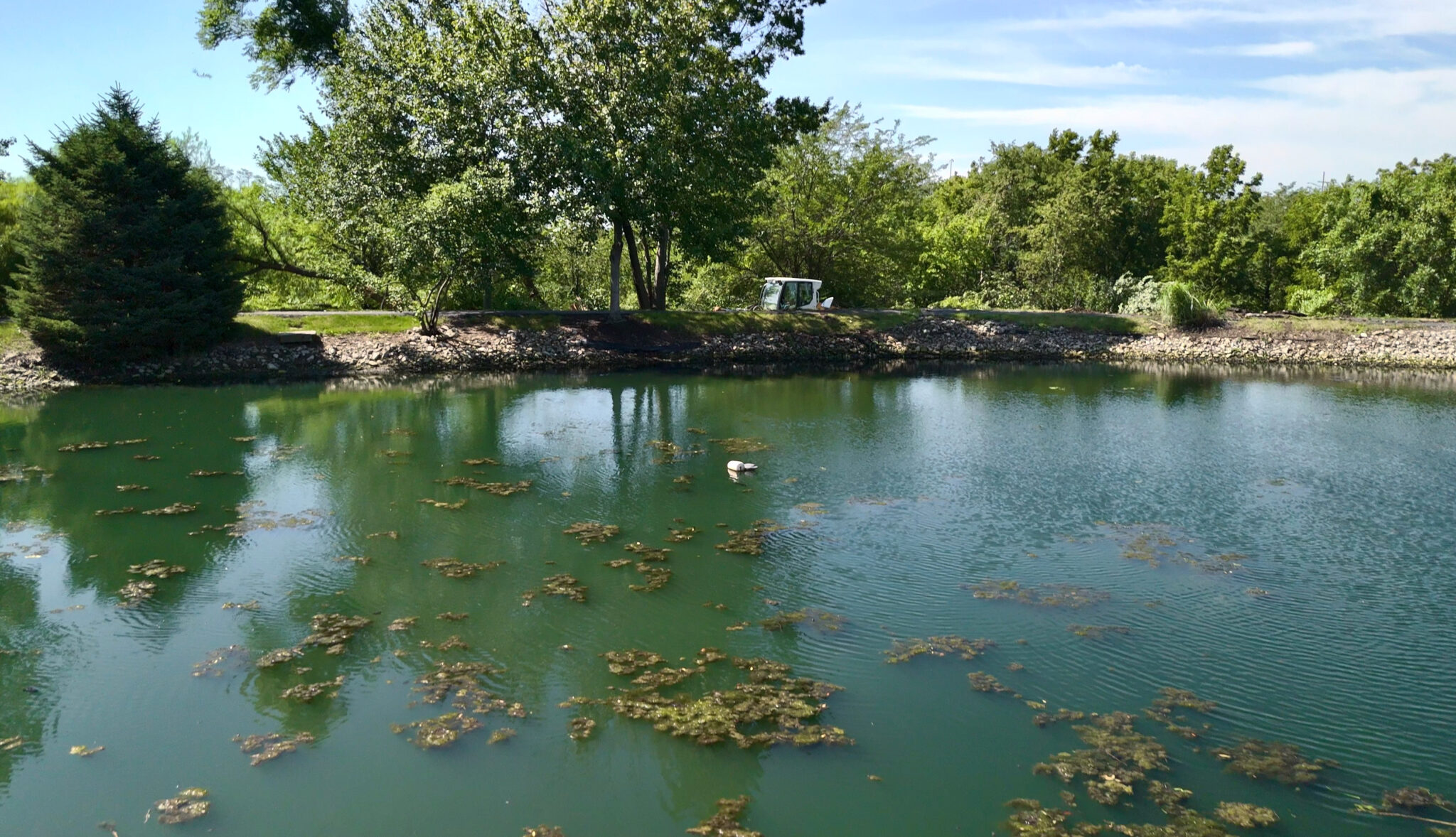
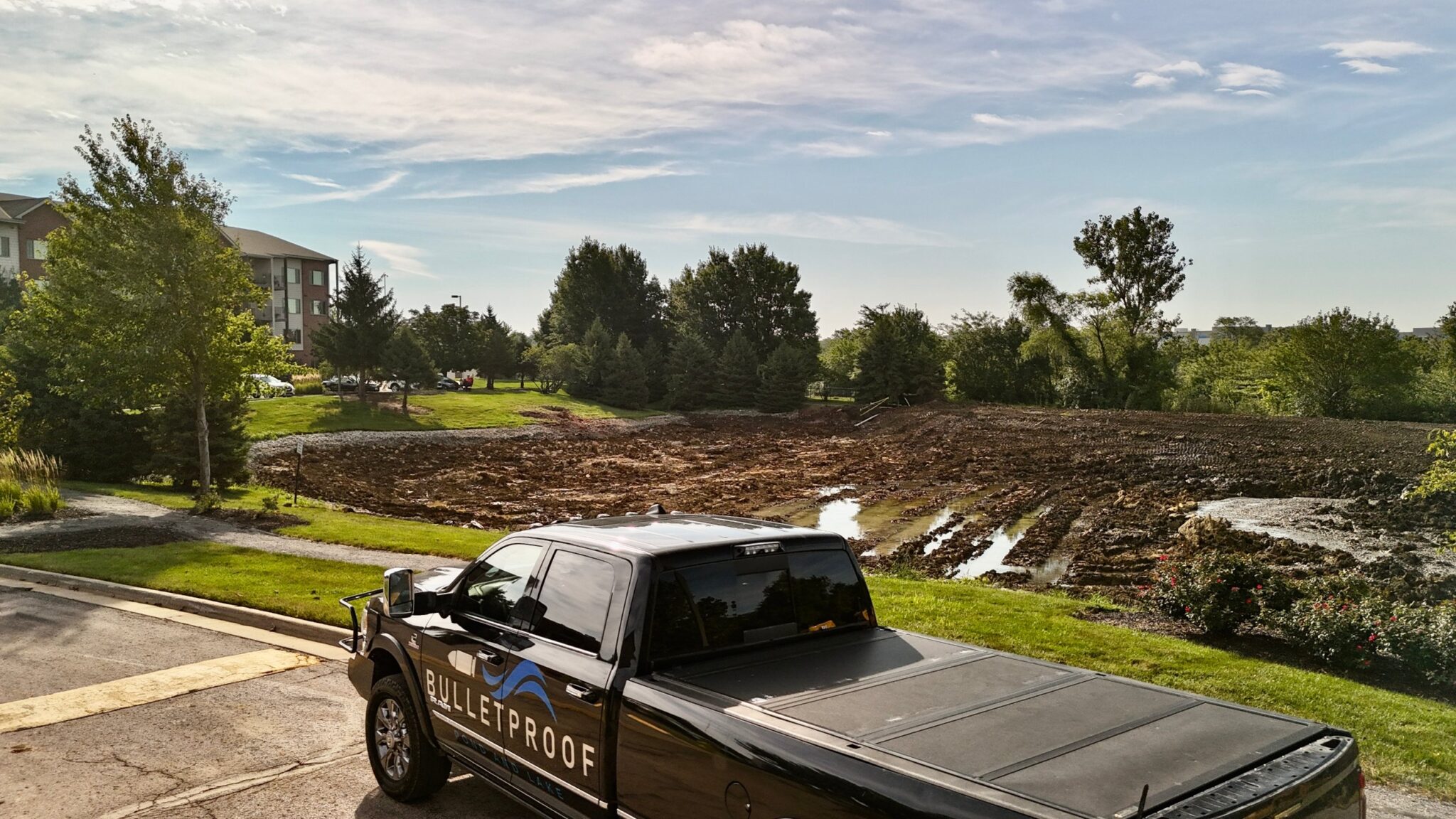
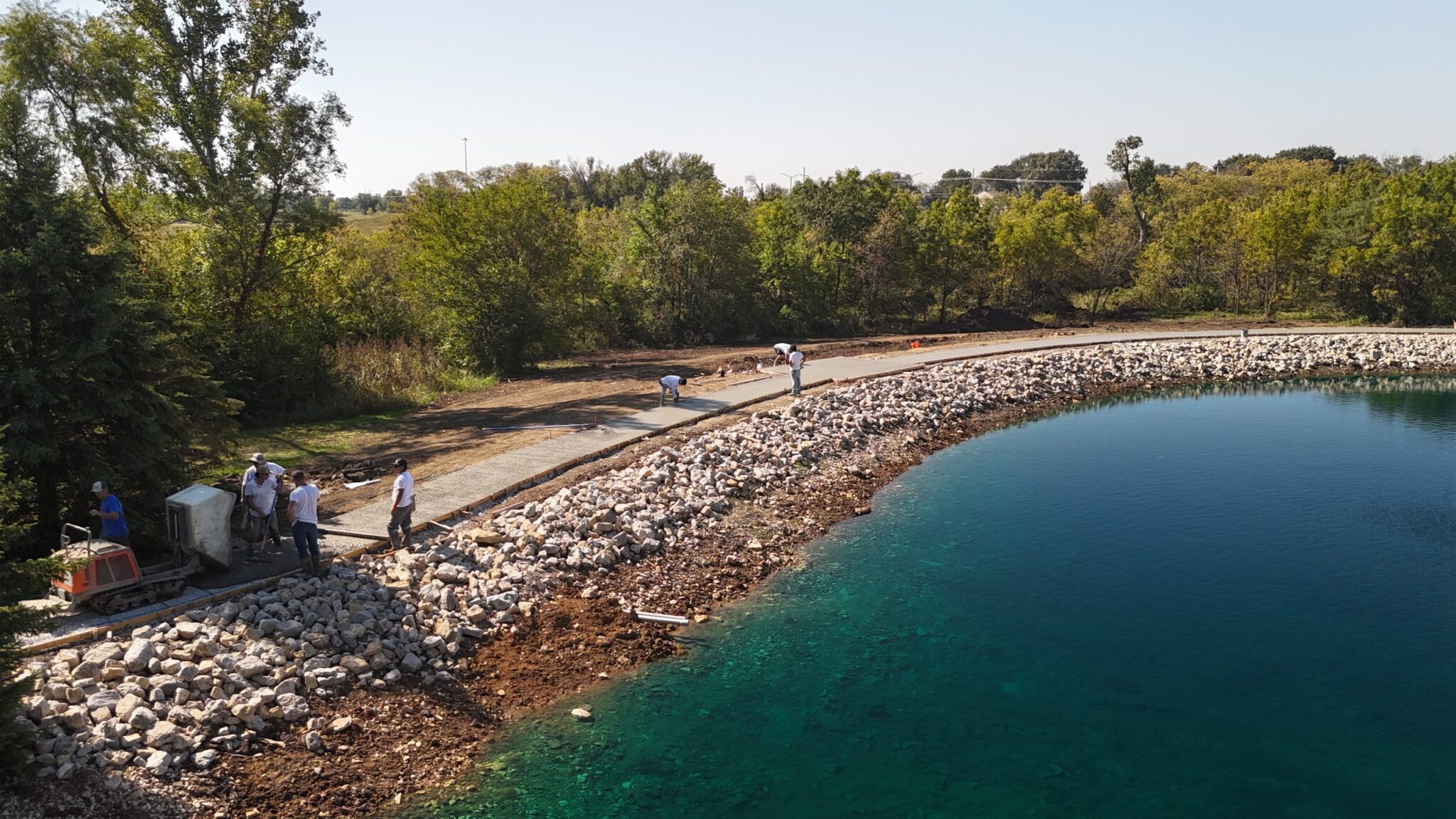
Over the years the pond had filled with sediment and muck. Overgrowth had reached a point that treatments couldn’t fix, the fountain had stopped working, and the walking path around the pond was at the end of its life. Bulletproof Pond and Lake handled the project from planning and diagnostics through the final grade. The work covered a total cleanout and dredging, removal of trees and vegetation from the dam, strategic on-site muck placement, riprap shoreline edging, and a new concrete walking path with entertaining pads, built alongside our local concrete partners. Our team also handled erosion control, including silt fencing, and finished the site with final grading, seeding and erosion control matting.
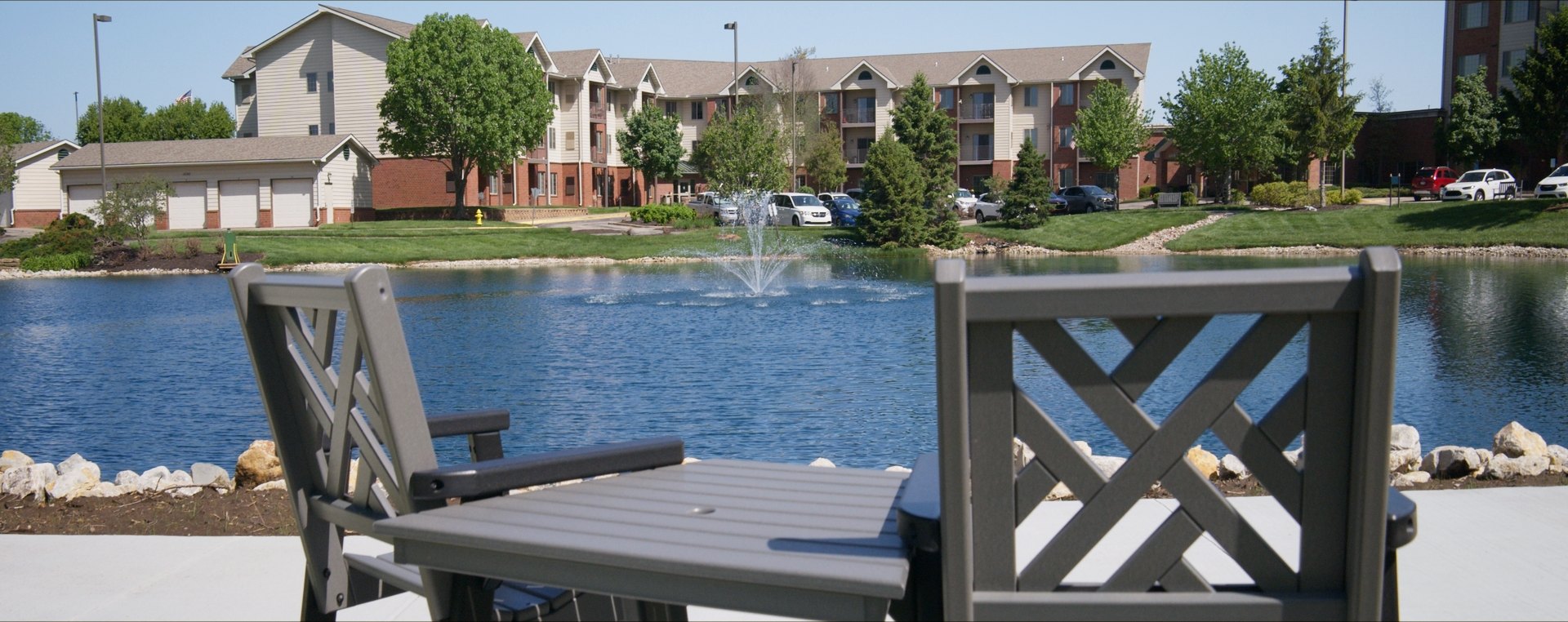
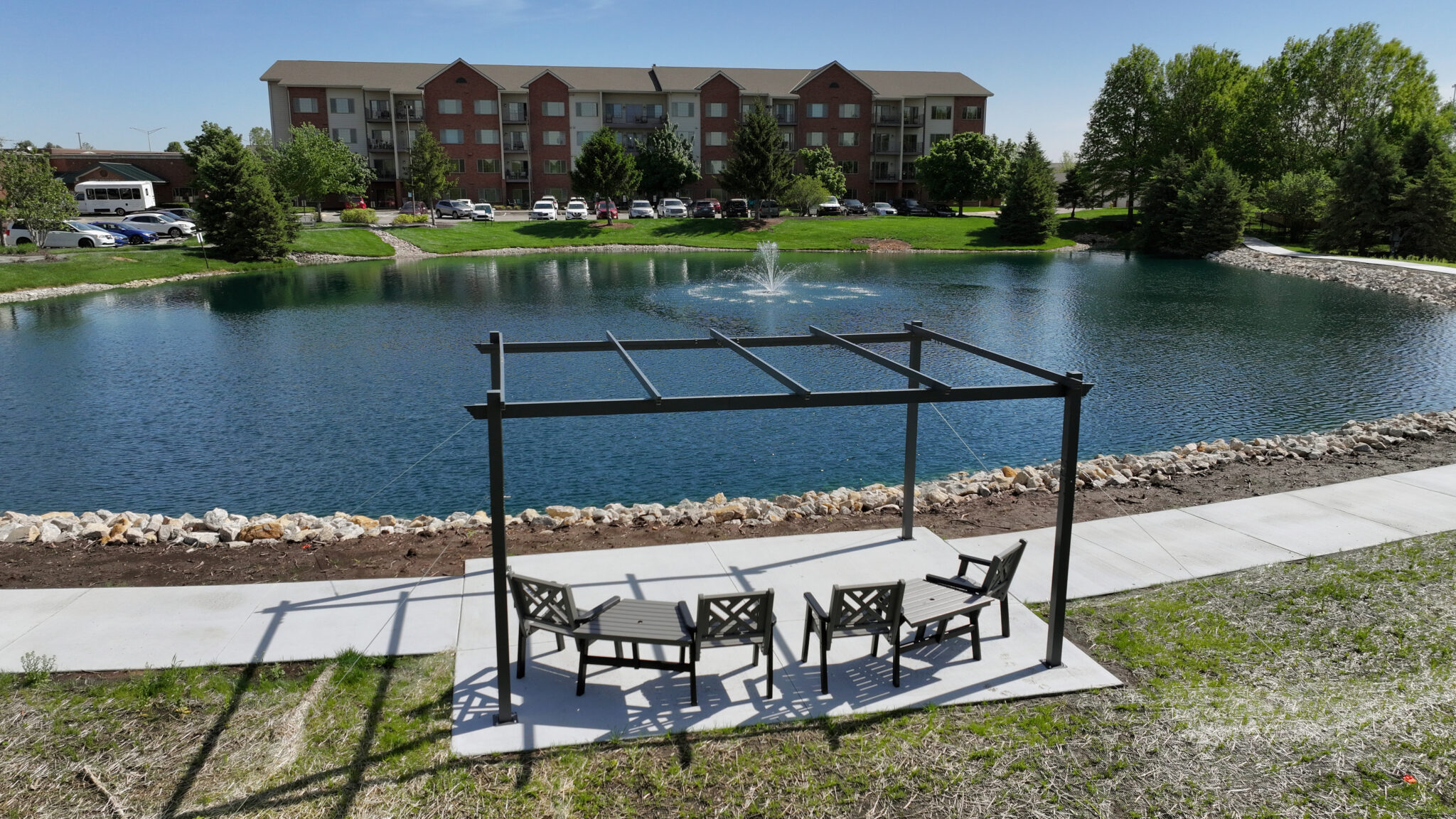
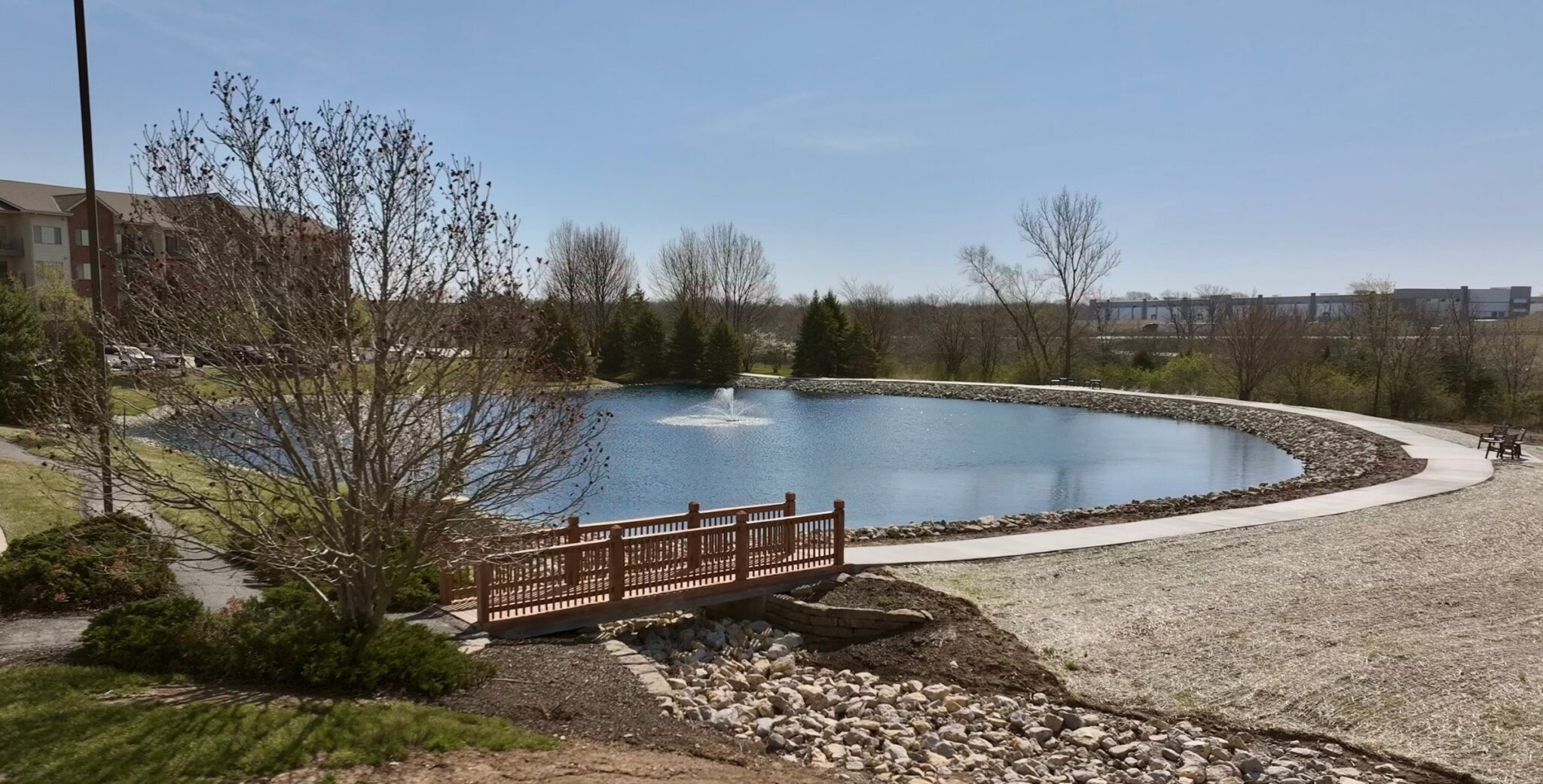
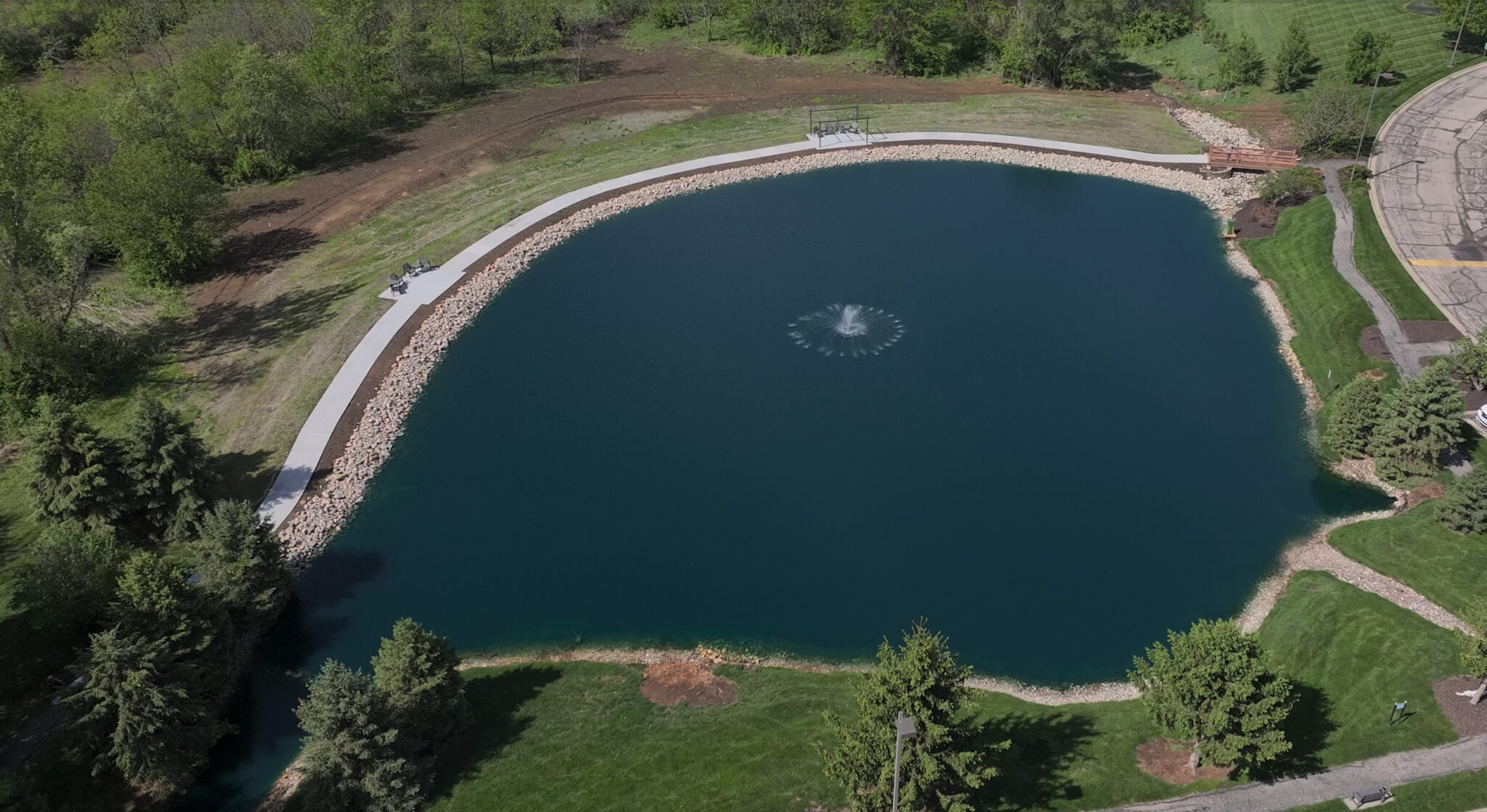
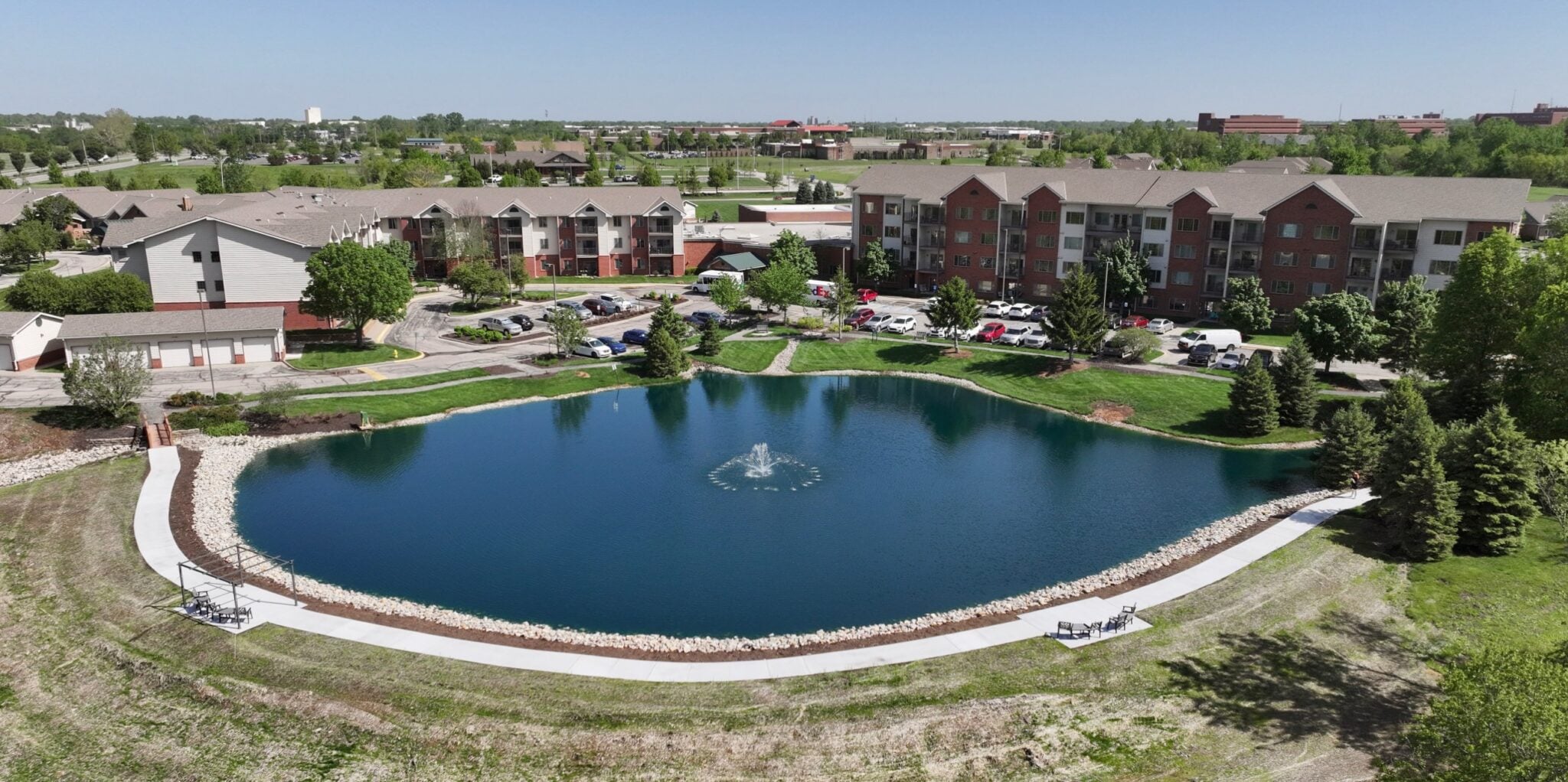
The community's new fountain anchors the view from every side of the pond, and pond dye gives the water its deep blue color while helping limit unwanted vegetation growth.
The fish feeder the community installed themselves is placed right where residents can watch the fish come up to feed, bringing the pond's new life into view.
A wooden footbridge carries the walking path over the overflow, turning a working part of the pond into a natural place to stop and take in the view.
Concrete entertaining pads tie into the walking path, giving residents and their families room to set up seating, visit and enjoy the water together.
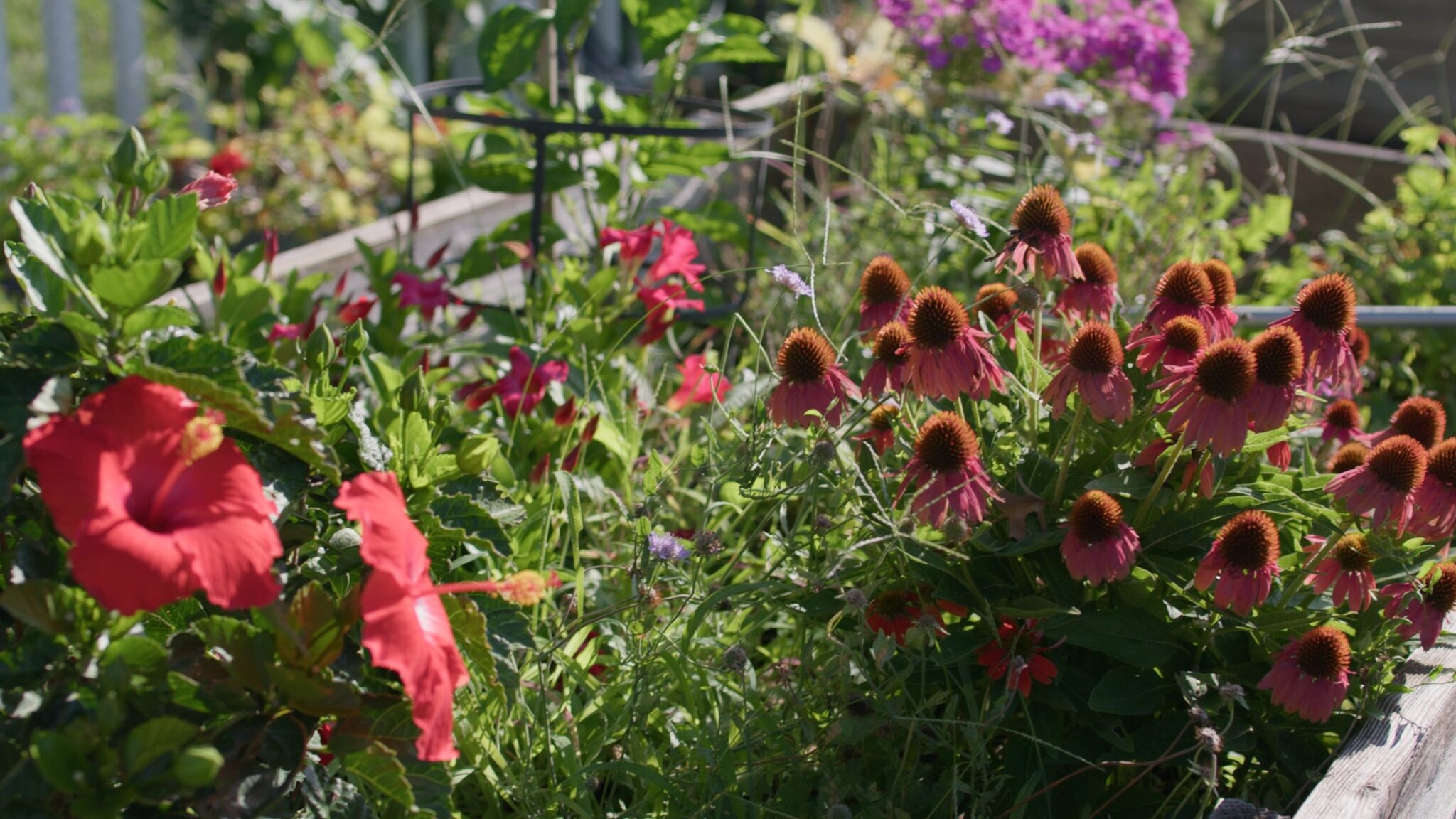
Professionally installed landscaping frames the pond and path, and a community garden sits right beside the water. The pond is in view from inside the residence buildings too, private to the community and placed for residents to enjoy every day.
The fountain, pond dye, fish feeder, footbridge and garden are Cedar Lake Village's own touches, with landscaping by local specialists.
Cedar Lake Village came to us with a clear list. The pond needed dredging, they wanted to consider deepening it, the fountain needed replacing, and they wanted a professional evaluation, especially of the pond’s structure, before any work began.
The on-site evaluation added two more items. Trees and vegetation had grown up on the dam, which isn’t recommended on a clay or natural-material dam because roots can weaken its structure over time. The asphalt path around the pond was cracked, broken, eroding at the edges and missing in places. In a community where many residents walk with care, that path had become unsafe, and for some it put the pond out of reach entirely.
Access was a practical problem too. A full cleanout means heavy equipment crossing that path. Protecting a walkway that was already failing would have added serious cost, so the community decided to replace it once the cleanout was finished.
Every project starts with a conversation. We talked through the pond’s current condition, the community’s vision and values, and starting costs, up front. That conversation also covered site evaluation costs, diagnostic options, and what further testing we might recommend depending on what we found.
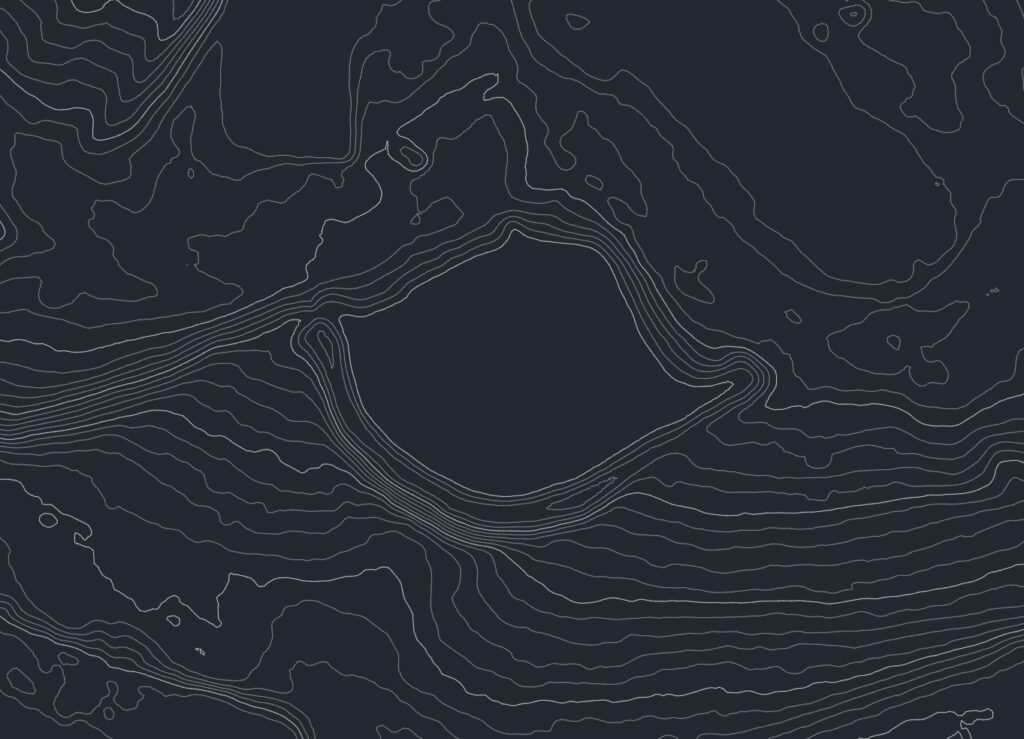
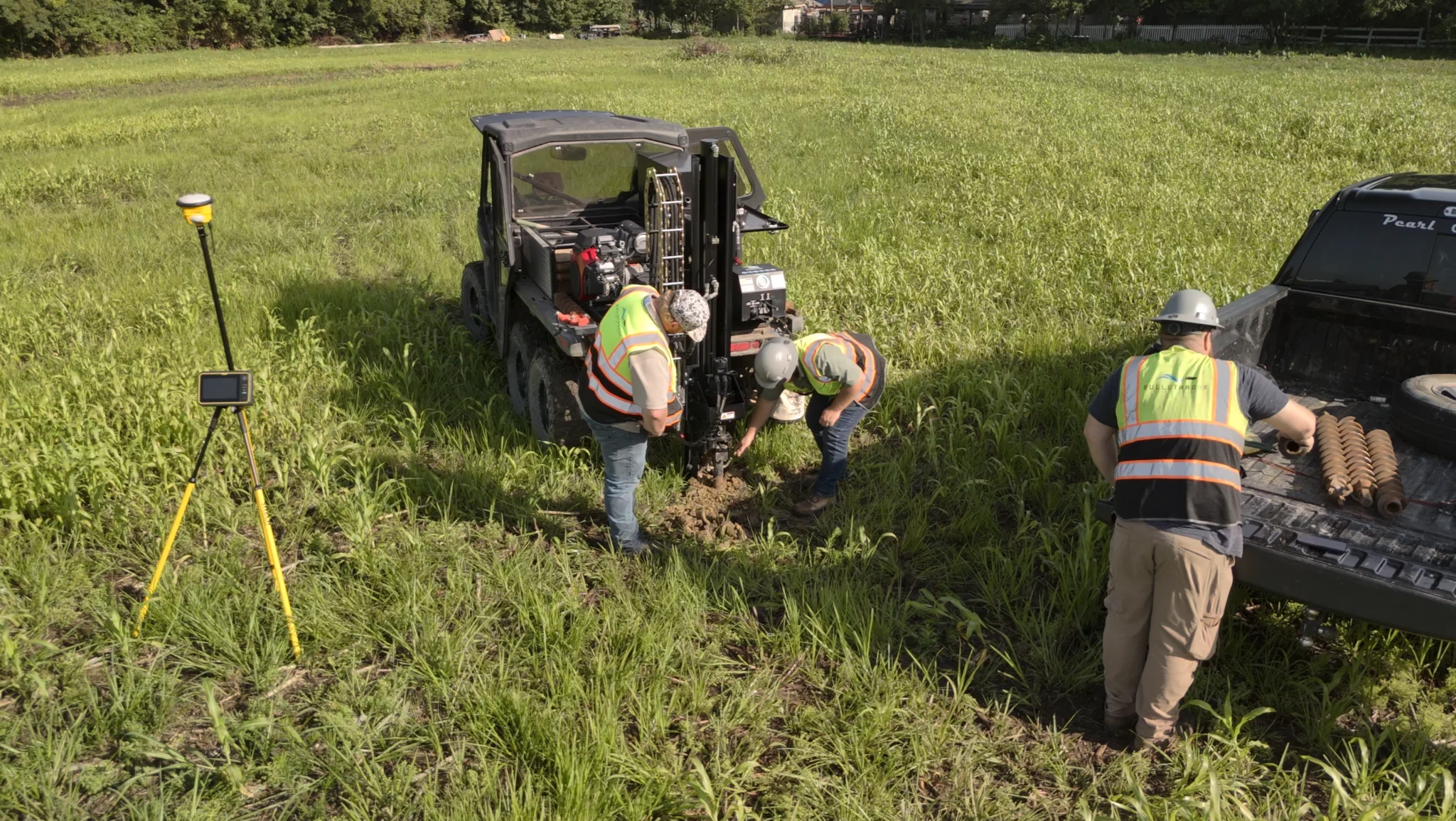
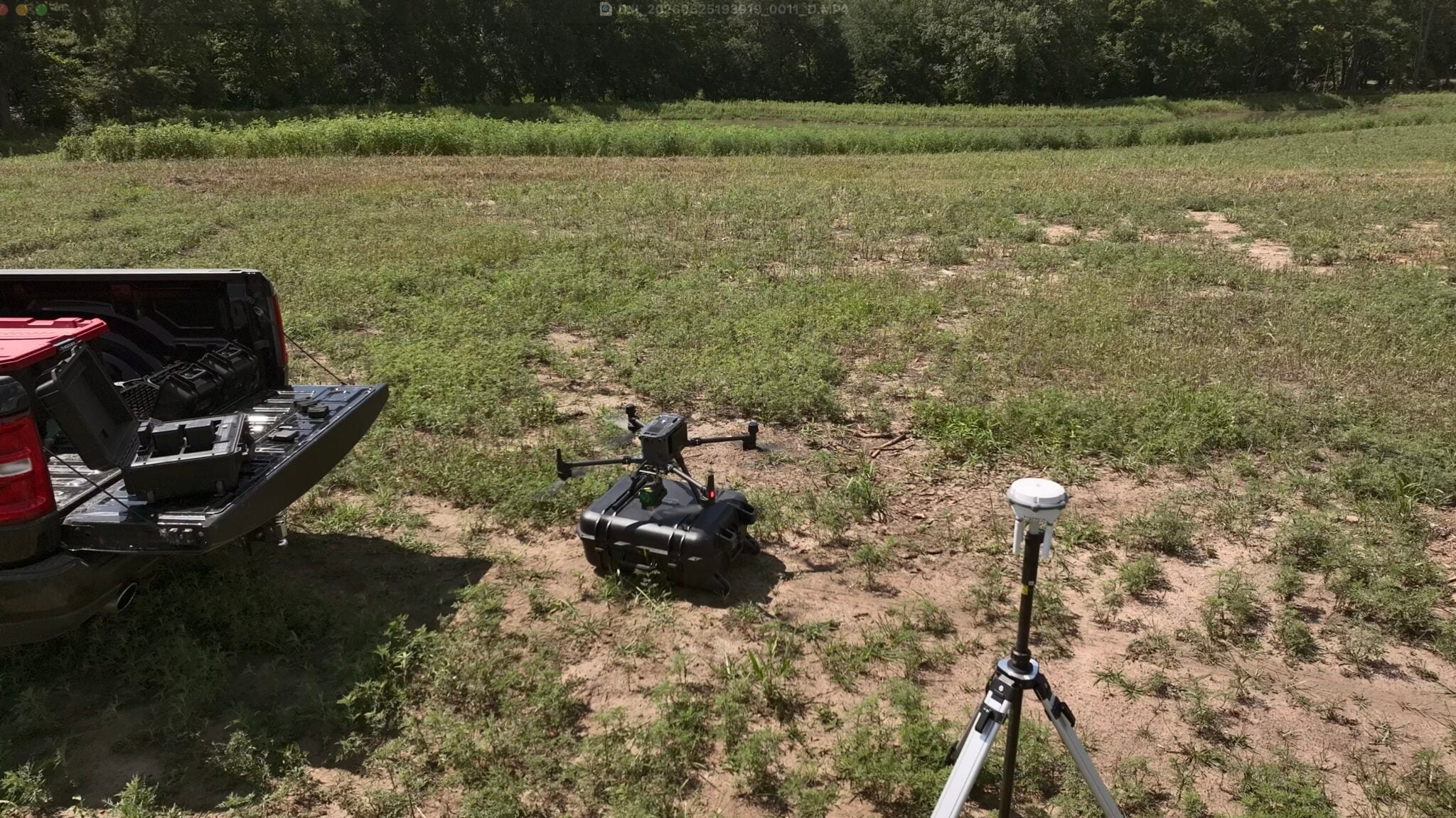
From there we completed an on-site consultation and visual inspection by one of our pond and lake specialist, LiDAR mapping, and soil borings.
We drilled soil borings across the back of the dam, on top of the dam, and around the pond. On a cleanout, this is risk management. Accumulated muck can cover leaks by shallowing and partially sealing over weak spots, and once depth is restored those leaks can show up. Owners often blame the cleanout contractor when that happens, but the cause usually traces back to how the pond was built initially, especially when the original builder used a thin clay layer or bentonite. Without bathymetric or sonar mapping of the muck, it’s also easy to dig past the muck and into the clay layer that seals the basin. Borings tell us what the pond is made of, and how well that soil will hold water at different elevations, before the first load of muck comes out.
Our drill rig pulls layered core samples up to 28 feet deep. It’s less invasive and much lighter on the ground than an excavator test pit, and excavator pits tend to mix soils together. That low disturbance matters to HOAs, commercial properties and communities like this one. The samples went to Kansas State University for lab testing of clay content and other materials, so every decision rested on lab results rather than eyeballing or field tests.
The results came back with no concerns. Everything pointed to a well-built pond that had simply aged and needed a cleanout to start over.
We always recommend bathymetry or sonar mapping for accuracy. Cedar Lake Village chose to skip it, so we contracted the cleanout up to a specified amount of muck removal, with the option to add more as the work went on. Formal watershed analysis and historical research are essential when planning a new pond or lake, or when there’s a concern about a pond holding and maintaining water. Neither applied here. The pond had no history of trouble holding water, and its supply could be topped off by hose or hydrant. With no concern and no evidence pointing to an issue, those studies would have been a waste of the community’s investment. A true specialist knows when a step is needed and when it isn’t, and that judgment keeps a project both fair and strategically smart.
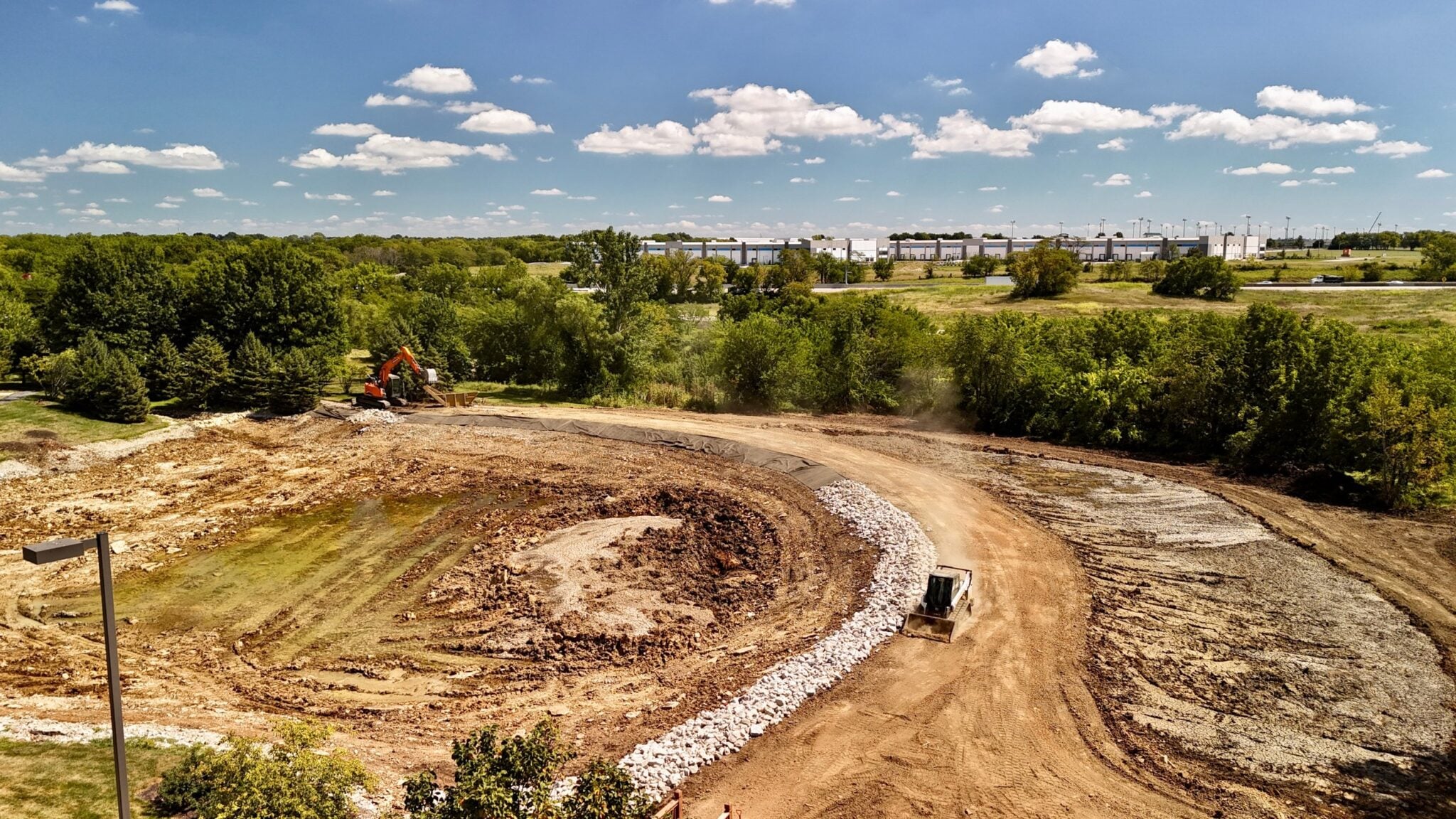
The LiDAR map let us measure real quantities and plan exactly where the muck would go, how large that area needed to be, and what it would look like when finished. Behind the dam was the right spot. It kept the muck out of sight, avoided haul-off fees (which on a project of this scale would have been 250K+), and had room to fit within regulations. Clearing the trees and vegetation from the dam made room for the muck and protected the dam’s structure, so it was added to the scope. Rather than piling muck on the back of the dam, we planned a trench to hold its weight and resist erosion over time. We installed erosion control alongside it, including silt fencing, to protect the creek and neighboring land below.
Cedar Lake Village handled permitting in-house, including a Johnson County land disturbance permit, with our team on standby to support as needed.
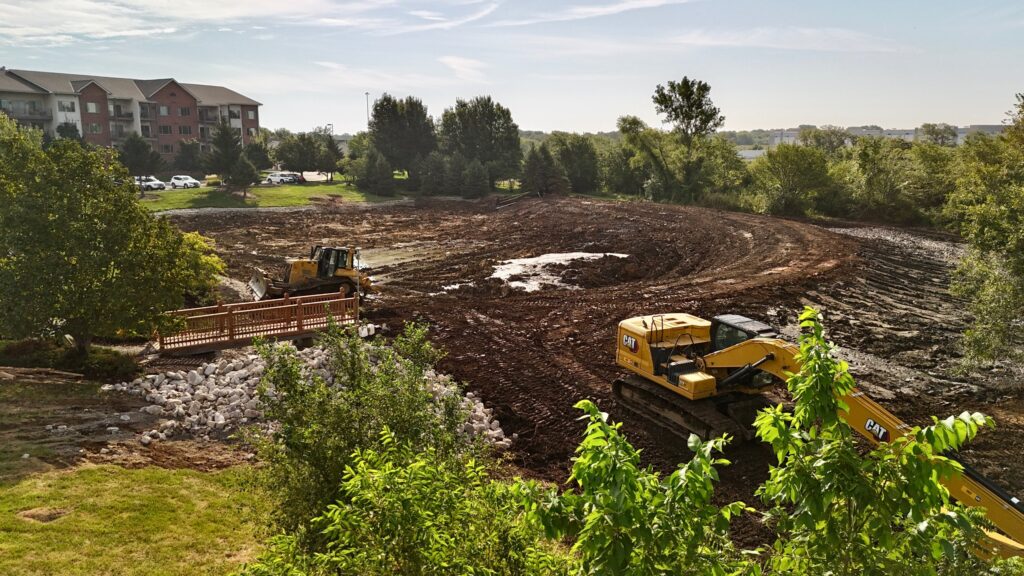
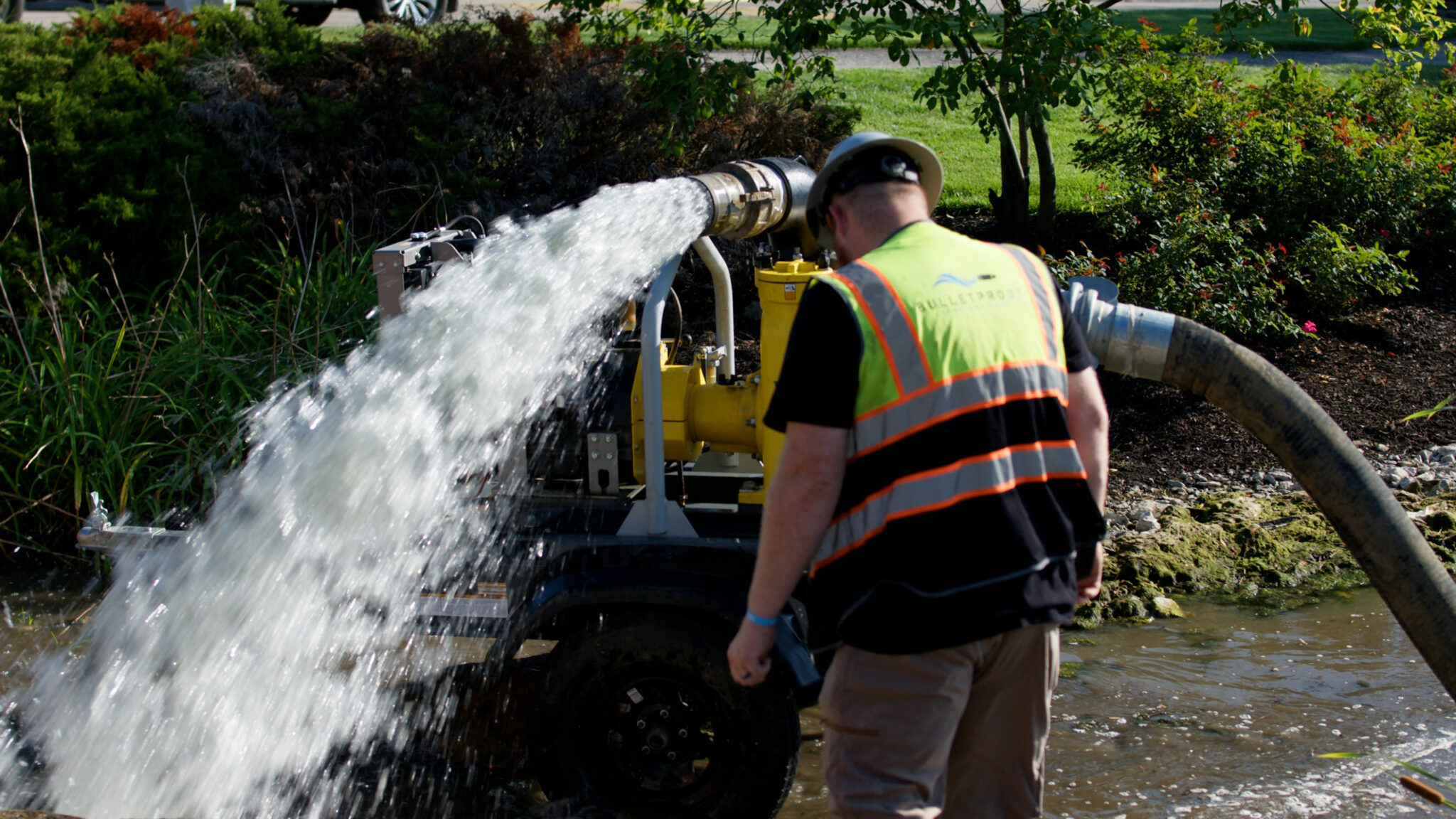
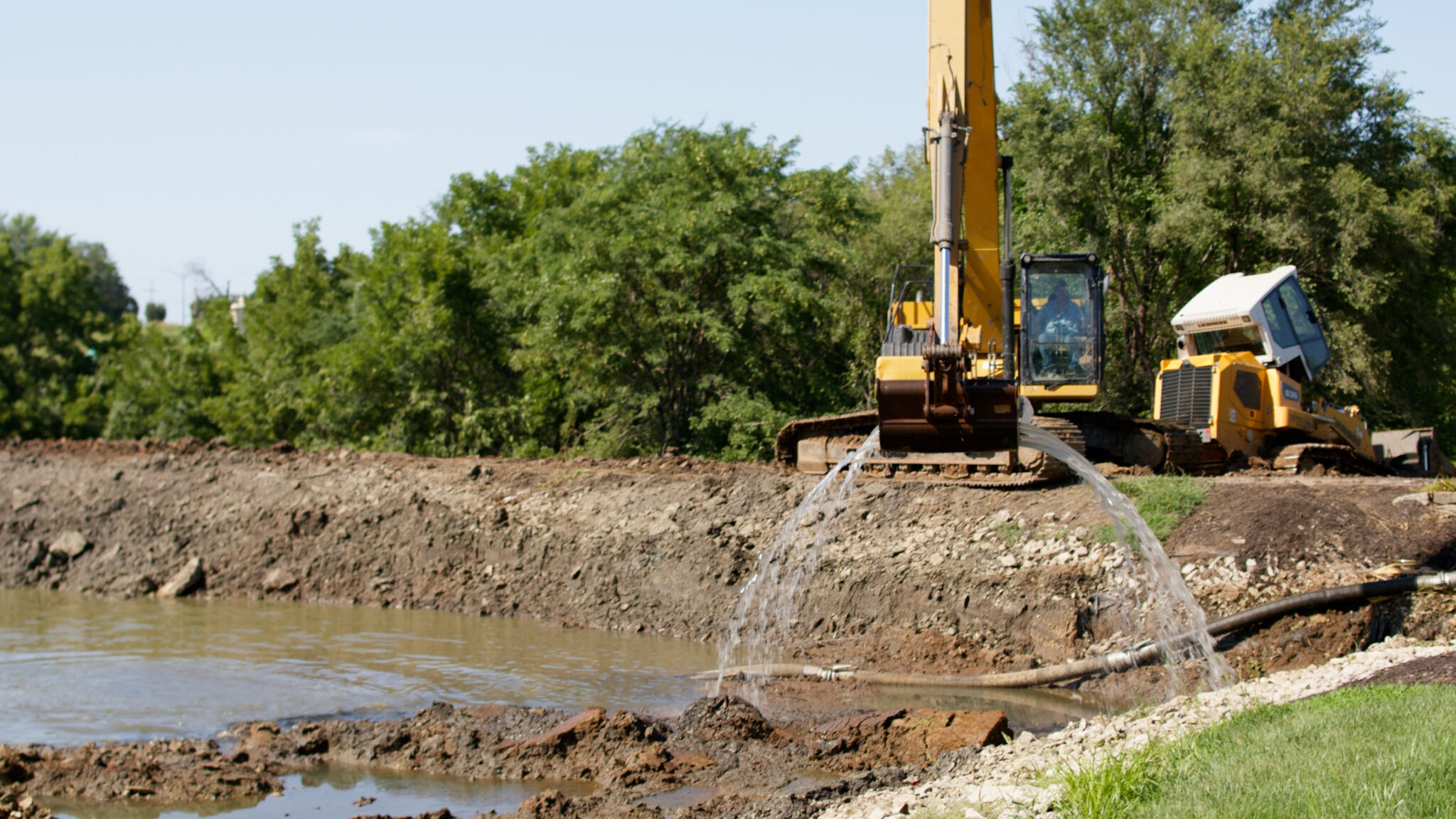
We drained the pond downstream through the overflow using heavy-duty industrial pumps. With the water down, we dug the trench behind the dam and cleared the trees and vegetation off the dam. We placed them in the bottom of the trench instead of burning or hauling them away, which saved cost and left nothing to maintain later.
Our crew then removed the accumulated muck and silt with specialized pond and lake equipment, placed it in the trench, and graded the area smooth. The right equipment matters. Machines matched to the job keep a project on schedule and on budget, and they simply do the work better than whatever happens to be sitting on the trailer. Along the way, Cedar Lake Village added change orders for more muck removal. Once they saw the added depth, they decided the extra investment was worth making now for easier long-term maintenance.
Next came the shoreline. We installed underlayment and riprap edging along portions of the shoreline, including the dam side, using varied rock averaging about 12 inches. Riprap protects the shoreline and dam, substantially reduces erosion, and helps extend the years before the next cleanout. We also lined the overflow beneath the community’s bridge with heavy-duty riprap.
With the site prepped, our local concrete partners from Bonner Springs, Kansas, poured the new walking path. Concrete entertaining pads tie seamlessly into it as gathering areas the community sets up themselves. We left room for landscaping, which local landscaping specialists completed afterward.
Our GPS-equipped machines worked from the plan throughout the project, and they mattered most at the end. We captured the site with LiDAR and designed the work in AutoCAD Civil 3D, and that same Civil 3D design loads straight into the machines. Every grade is checked against the plan as the work happens, not by eye, so the finish never depends on someone having an off day. That’s how we make sure what you get is truly what you paid for and agreed to. The final grade came straight from that plan for a clean, consistent finish.
You’ll hear plenty of builders say a drone flight, a polished mapping app or Google Earth is all a pond needs. Those tools can be precise and still be precisely wrong, and a design is only as good as the survey underneath it. Before anyone digs, ask how your site was measured and how that measurement was verified. If the answer is a drone or an app and nothing more, that tells you what you need to know. We walk through what an accurate survey and design look like in our guide, How to Build a Large Pond or Lake on Your Property (The Real Process). Our team then completed the seeding. The community chose broadcast seeding, our most economical option; we also offer drill seeding, hydroseeding and sod. We also installed erosion control matting (ECM) to hold the seed and soil in place, protect it from birds and weather, and improve germination rates.
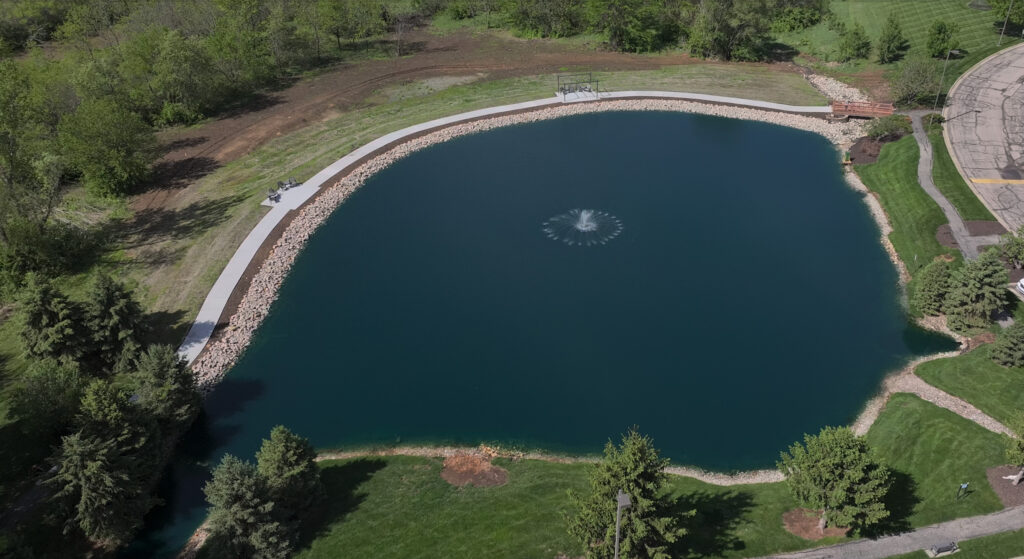
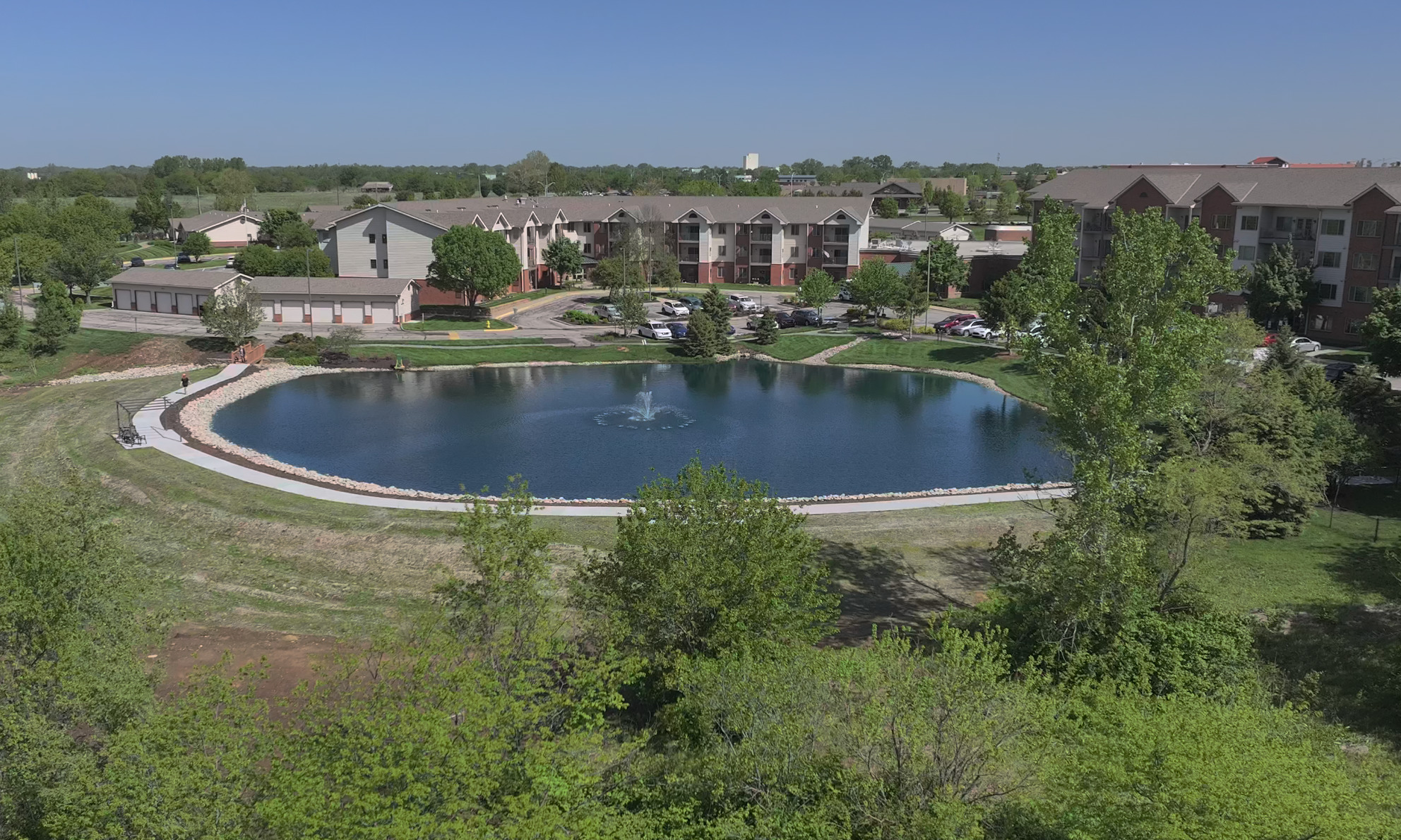
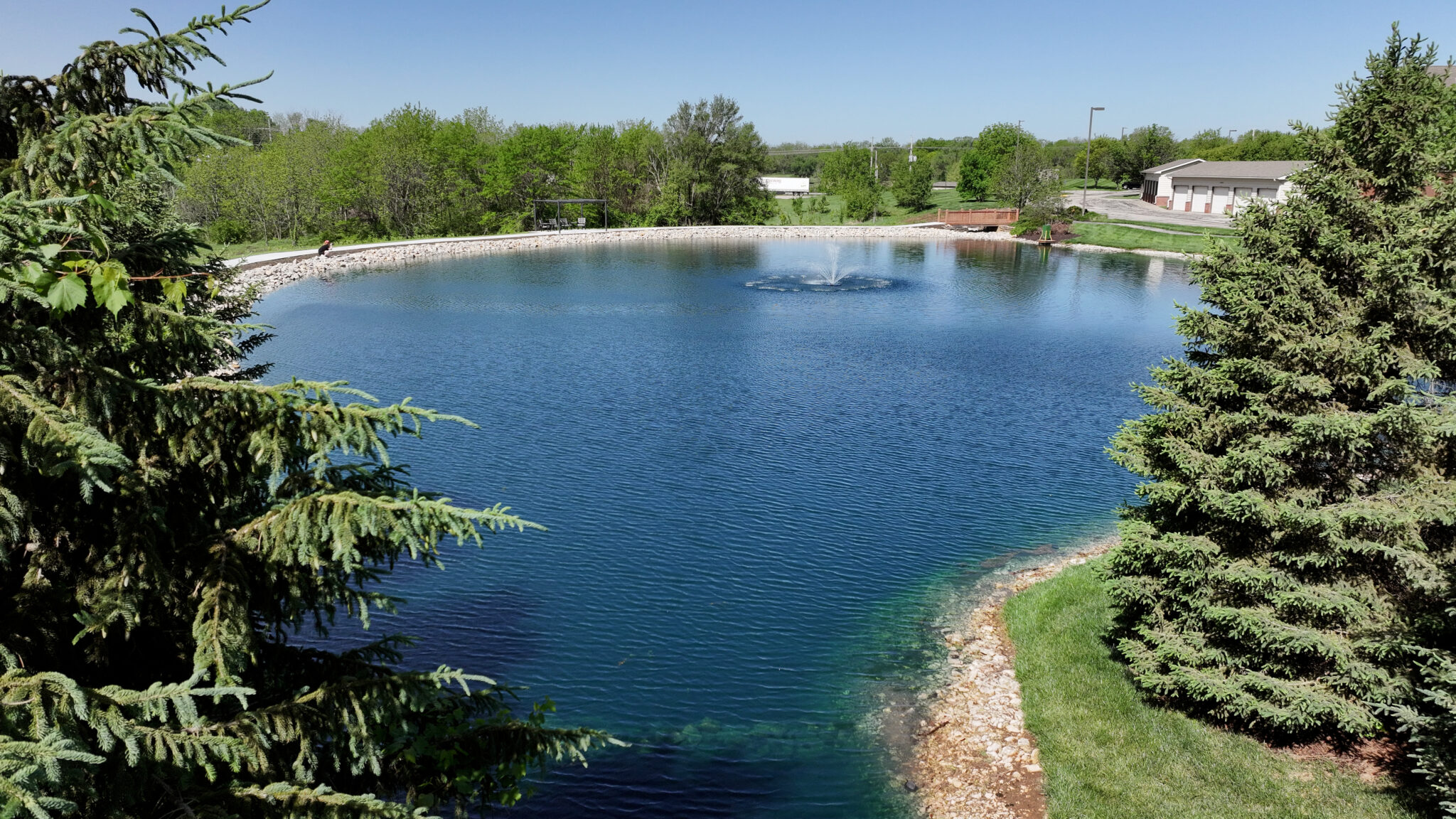
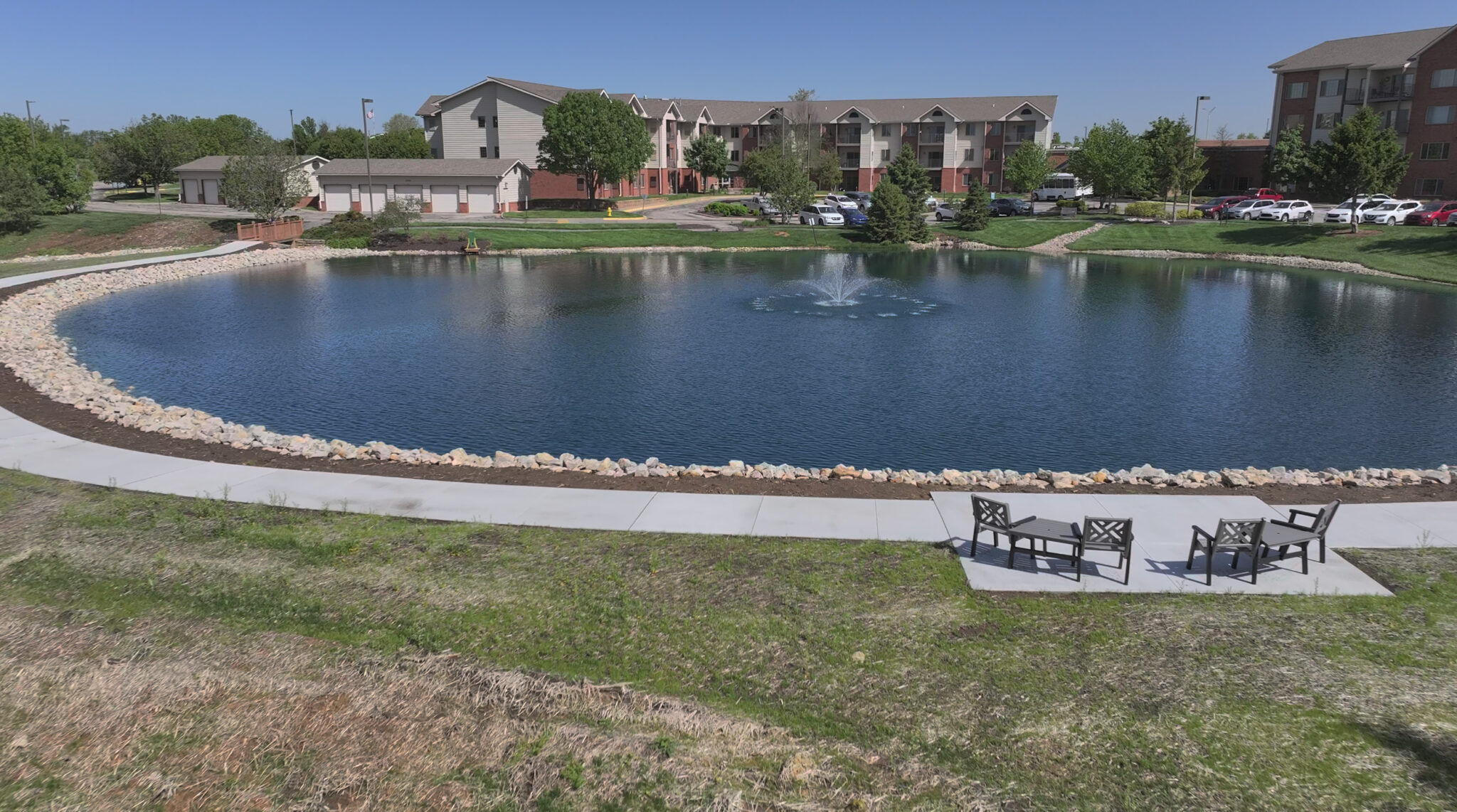
More than a year later, the pond has filled completely. The community has added pond dye and a new fountain, and the fish feeder they installed themselves is beautifully placed (you’ll spot it in some of the photos). The pond is already full of new life and fish.
Residents can walk the whole shoreline again on a safe, accessible path, gather on the new pads, and enjoy the view from the garden. Cedar Lake Village manages the pond in-house, letting it restock naturally and running their own aeration plan. Bulletproof offers fountains, aeration, fisheries planning, fish habitat and stocking through our fisheries biologists and aquatic management partners, and we always recommend a fisheries plan. This community enjoys managing its pond hands-on, and it shows.
Cedar Lake Village needed their pond back, done in a way that respected their budget, their residents and the land around them. Diagnostics up front pointed to a well-built pond before we ever dug. The muck stayed on site, contained and out of view. The new shoreline and walking path made the pond safer, more accessible and better protected for years to come.
It was an honor to be part of this project, and we look forward to checking back in. The community has been incredibly happy with the result. If your community, HOA or property has a pond that needs new life, contact us.
Please note that every pond and lake is different. Each one starts with a purpose, why it’s being built and how it will be used, and that purpose drives how it’s designed. Every project also comes with its own tradeoffs. This page isn’t a step-by-step guide, and it doesn’t cover every step or detail. It’s an overview of one featured project, and just one of many, many projects we’ve completed. Many of our projects are high-profile or kept confidential and off the web, and we’re grateful to Cedar Lake Village for letting us share theirs.
For a deeper look at how ponds and lakes should be built, and what to ask any builder, read our guide: How to Build a Large Pond or Lake on Your Property (The Real Process)
See more of our work in our pond and lake portfolio, or book a free consultation.
From muck and overgrowth to a full, healthy pond residents can walk around again
Tell us about your vision. We'll tell you what it'll take.