
In Liberty, Missouri, just north of Kansas City, a luxury custom estate built by Starr Homes LLC, one of KC’s most sought-after luxury home builders, overlooked a pond that wasn’t living up to the home. The original DIY pond leaked constantly, sat nearly empty and lost water every day, leaving a muddy eyesore right where the estate’s waterfront should have been.
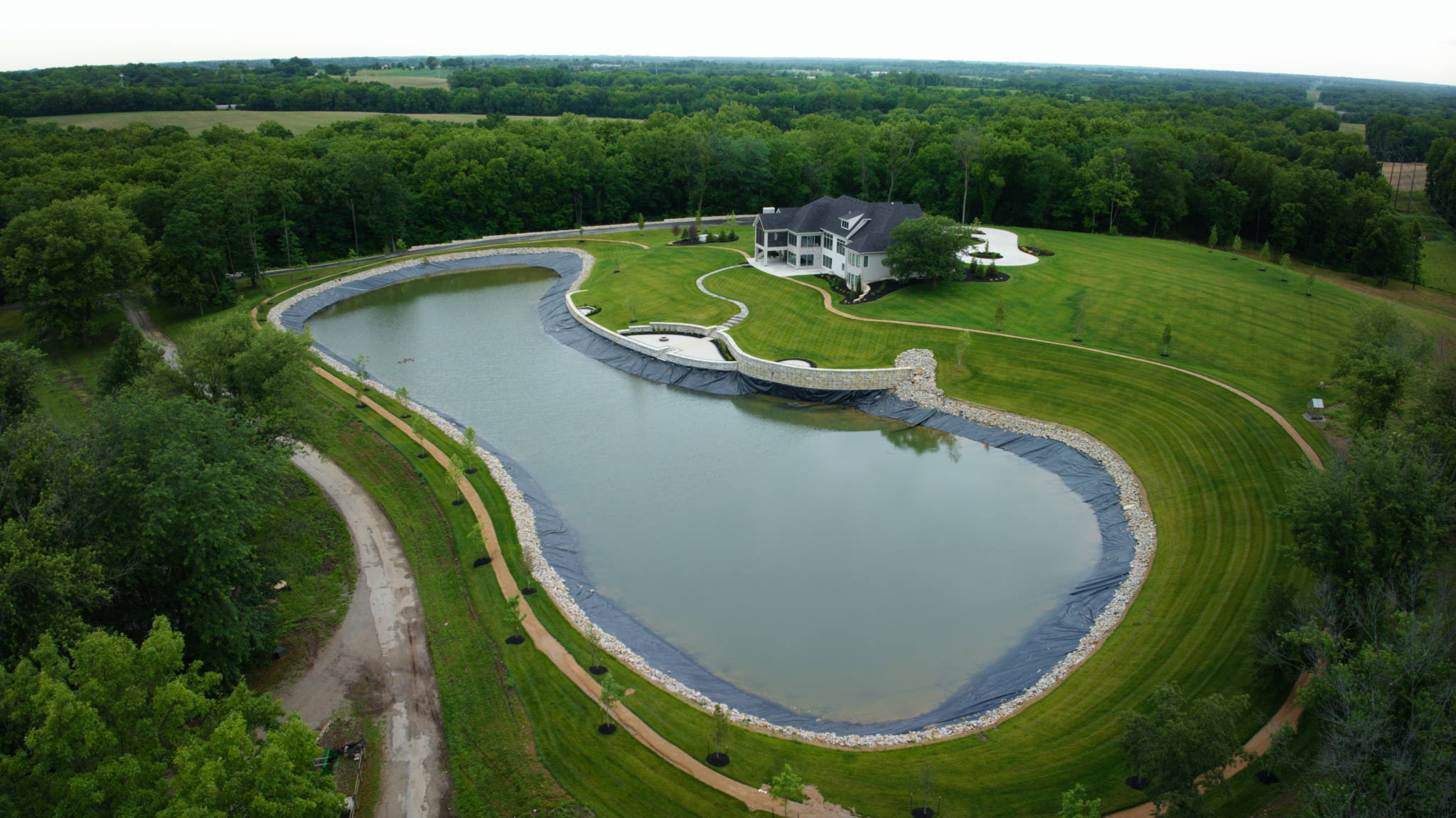
The homeowner came to us wanting a pond liner, and as Kansas City pond leak repair specialists and plastic pond liner installers, we delivered exactly that. After a LiDAR survey and on-site evaluation, we cleaned it out completely, rebuilt the basin, and installed a professionally welded 40 mil HDPE pond liner with riprap edging around the entire shoreline. Then we built an electric pump and filtration system to fill it with clean, filtered water from an existing pond on the property. Today the pond is holding water, filling clear and already home to wildlife, a waterfront that finally matches the upscale home above it.
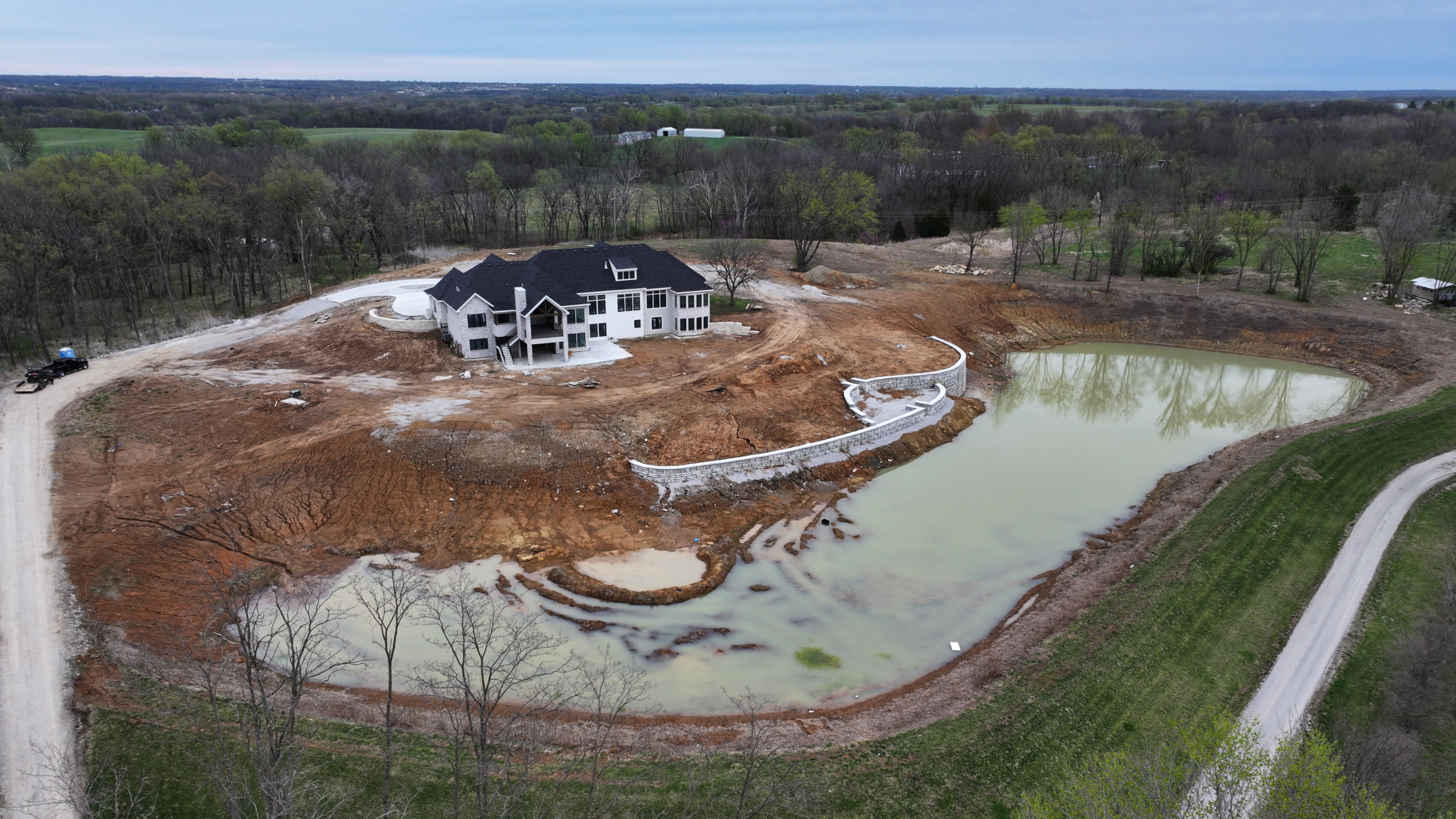
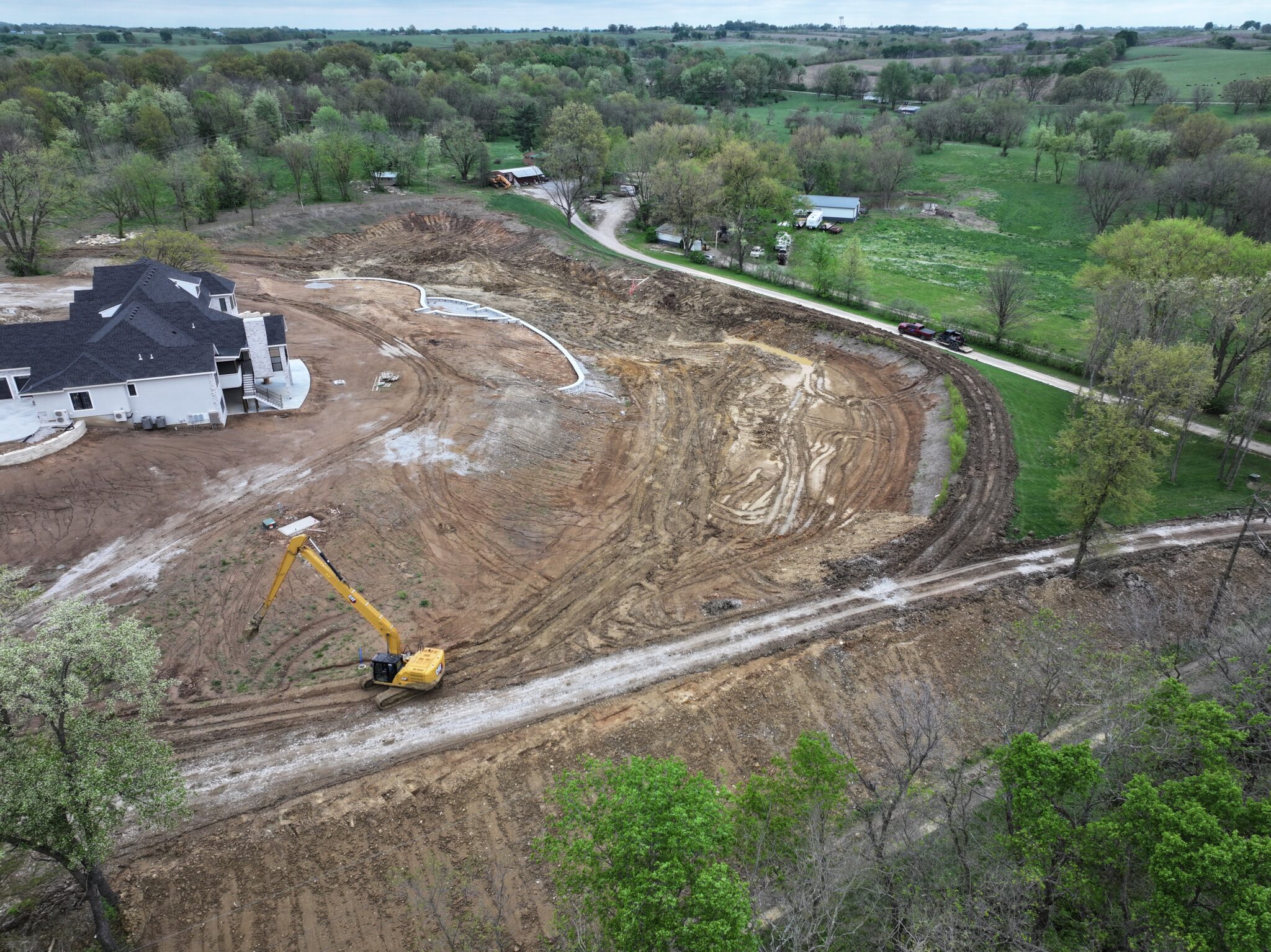
Nathan, the homeowner, was hands-on throughout this property’s transformation. The pond in front of his new home had been built as a DIY project, and it had not worked as anticipated. It leaked constantly, wouldn’t hold water for long, and sat as a muddy eyesore at the very spot meant to be the estate’s waterfront. It’s a more common story than most people think.
With a home this significant, Nathan approached the entire property the same way: a true specialist for every facet of it, not a generalist trying to cover everything. Starr Homes LLC built the luxury custom home. Landscape architecture specialists handled the engineered retaining wall and the intricate stone and concrete work. Other specialists took on the landscaping, lighting, seeding and sod.
The pond, as the focal point of the property, had to meet the same standard. Nathan wasn’t looking for general earthwork, mass earthmoving or landscaping. He wanted a company whose primary business is ponds and lakes, including professional pond lining, and everything that comes with them, backed by everyday, real-world experience rather than a handful of ponds over the years. Finding someone he could trust with that was a challenge in itself, and that’s where we came in.
His goals were clear. The pond had to hold every bit of water it received. The water needed to be as clear as possible, with filtration built into the fill system, because this time the pond would serve primarily for aesthetics, entertaining and recreation. Nathan had already decided how he wanted it done: with a 40 mil HDPE synthetic pond liner. Nathan also preferred to supply the pond from a well, which he felt would give him cleaner water he could control.
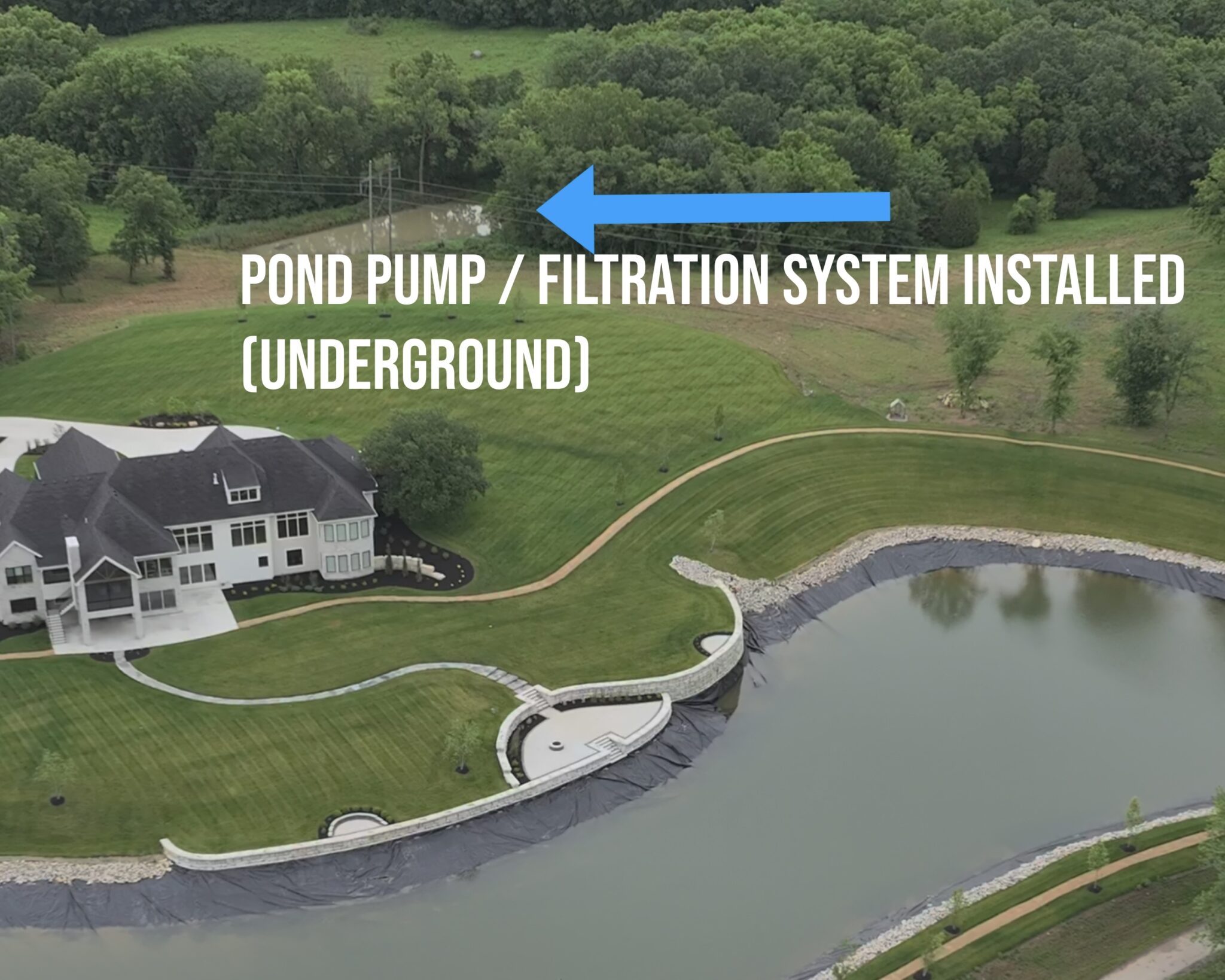
That well didn’t end up being possible. During planning, it was concluded that a well on this particular property wouldn’t deliver the output Nathan wanted, so we pivoted to a more creative solution, curated in-house. We designed an electric pump and filtration system that pumps water from an existing pond downstream on the property up to the main waterfront pond, filtering it along the way.
Nathan came to us already set on a 40 mil HDPE pond liner, so this wasn’t a diagnostic job. Our role was to deliver exactly what he asked for and to plan it right. That planning started with a LiDAR survey and an in-person evaluation on site, along with historical research on the property and a watershed analysis to understand how much water the pond could realistically expect to receive.
Our team reviewed the amount of built-up sediment and muck to plan the cleanout and basin reconstruction. Soil sampling wasn’t needed for this project, since the rebuild reshaped the existing basin rather than digging deeper into new ground.
Nathan’s choice of a liner fit his goals exactly. Natural clay is water-resistant, but it still seeps, and a natural bottom tends to cloud the water more often. Heavy-duty 40 mil HDPE is engineered to be waterproof, and with a professional installation it’s the closest option to waterproof we’ve found. It also keeps the water clearer than a natural bottom typically can.
The watershed analysis also showed that runoff alone would take years to fill a basin this size, so we planned a dedicated pump and filtration system to move filtered water from an existing pond on the property into the main pond. Even when a client knows exactly what they want, due diligence up front is what keeps surprises to a minimum once the work begins.
We drained the remaining water, cleaned out the basin and rebuilt it to the new design. Rather than haul the removed material away, we placed it strategically around the property, where it was repurposed to fill low spots.
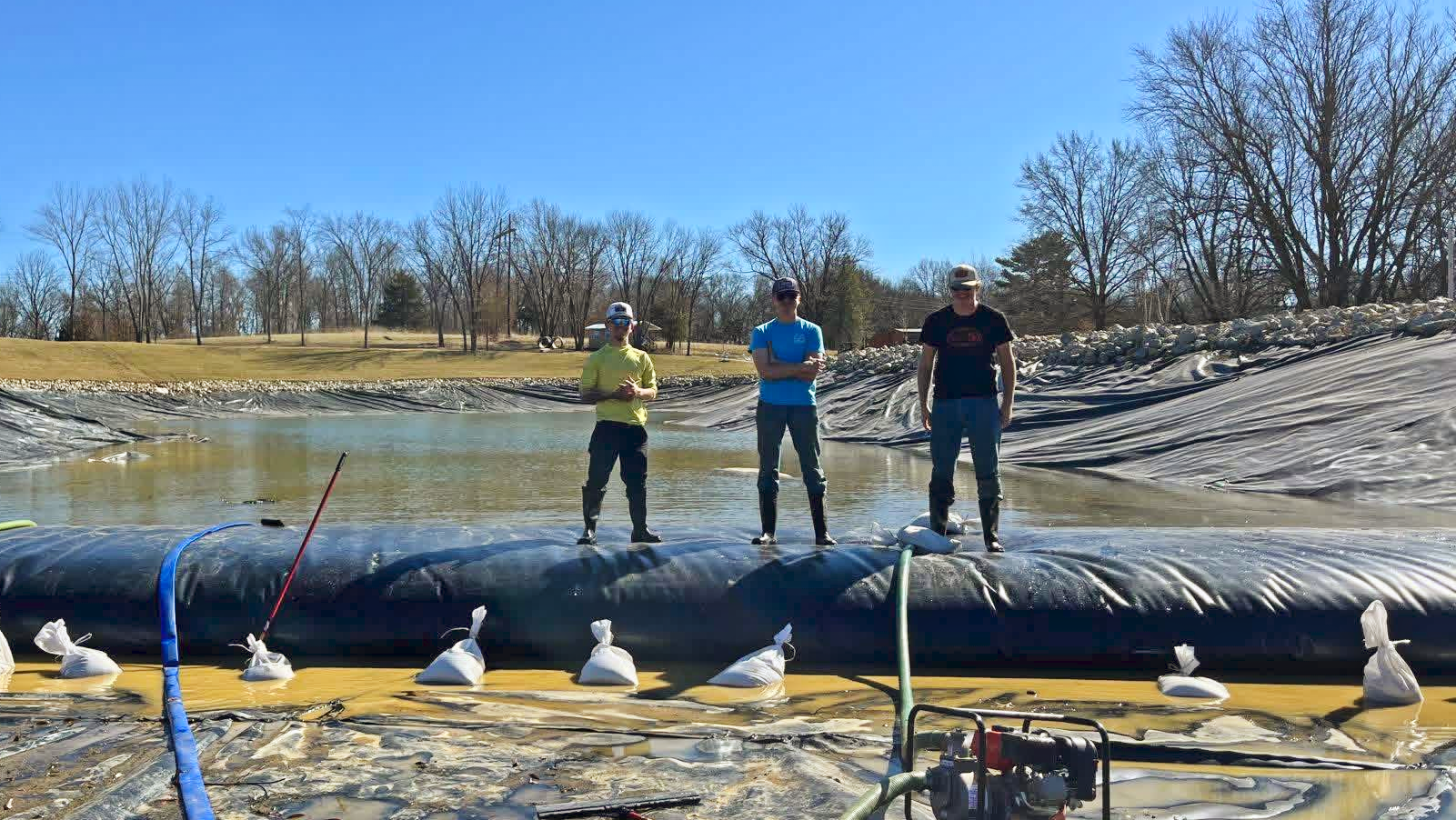
During construction, we installed silt wattles for erosion control, then removed them once the installation was complete. Erosion control is something we highly recommend. It keeps muddy silt and sediment from washing into the pond, and on many projects it also protects neighboring properties. It isn’t needed on every project, especially when the only surrounding land belongs to the same owner, but in most scenarios we recommend it.
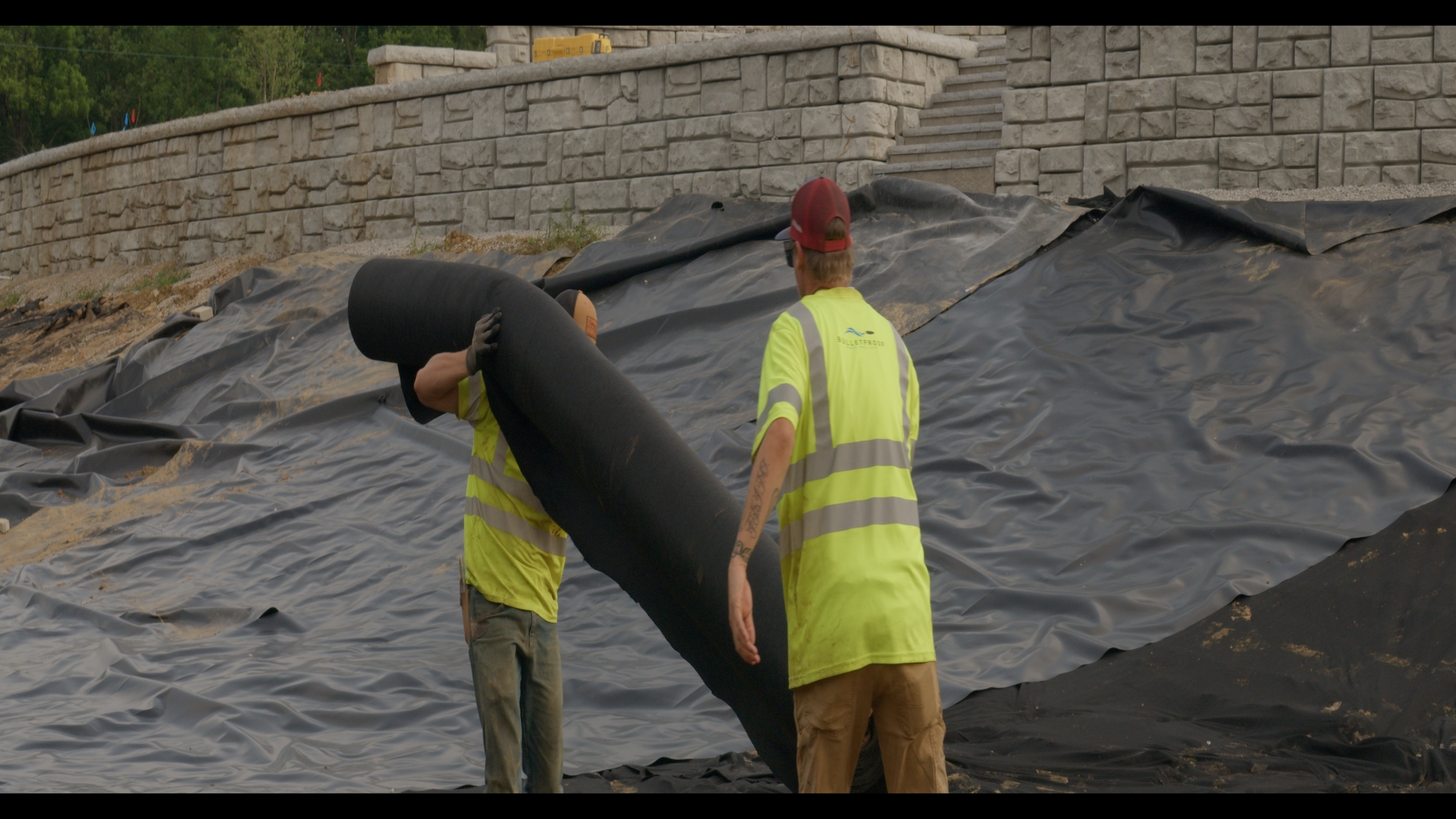
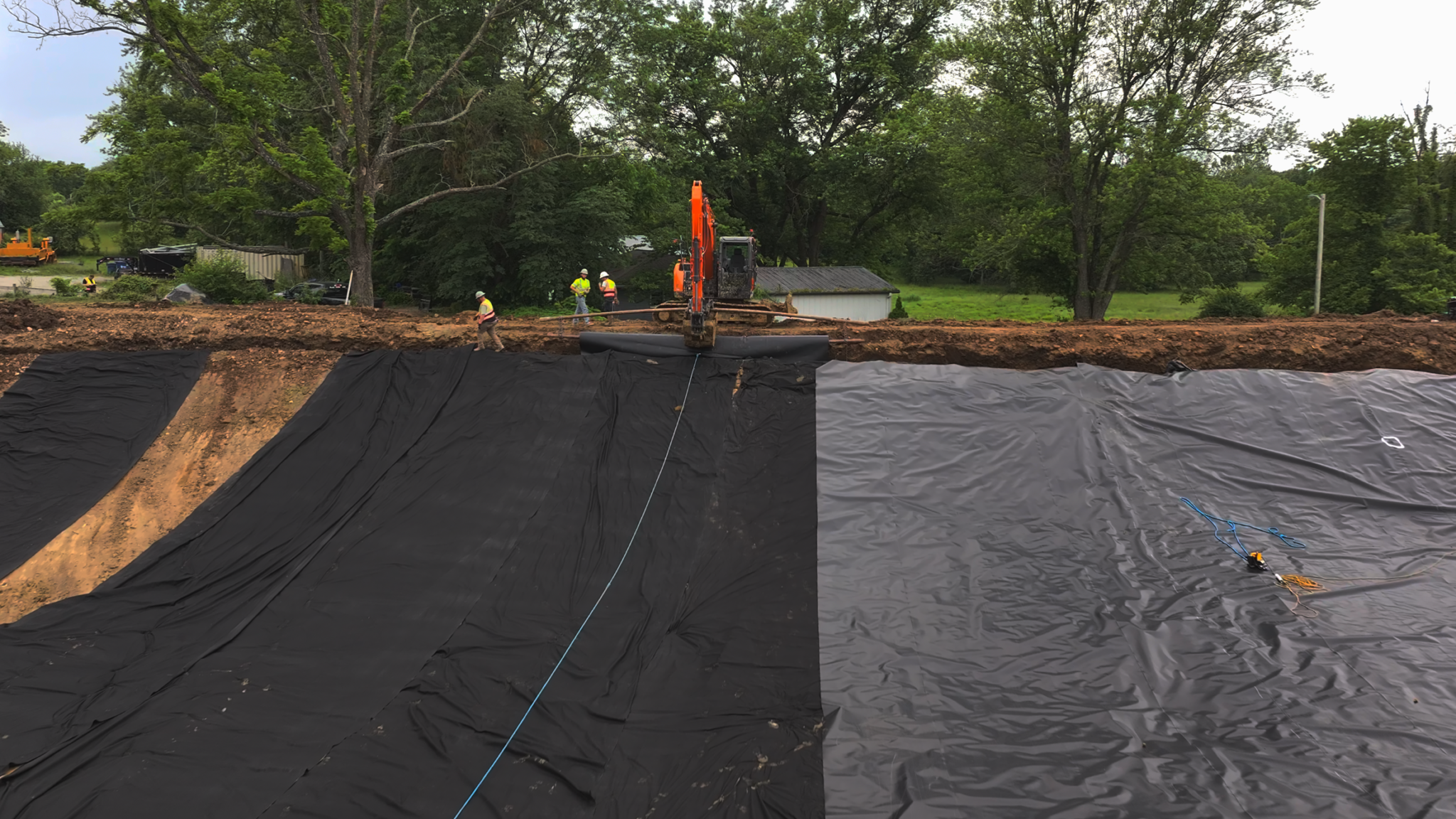
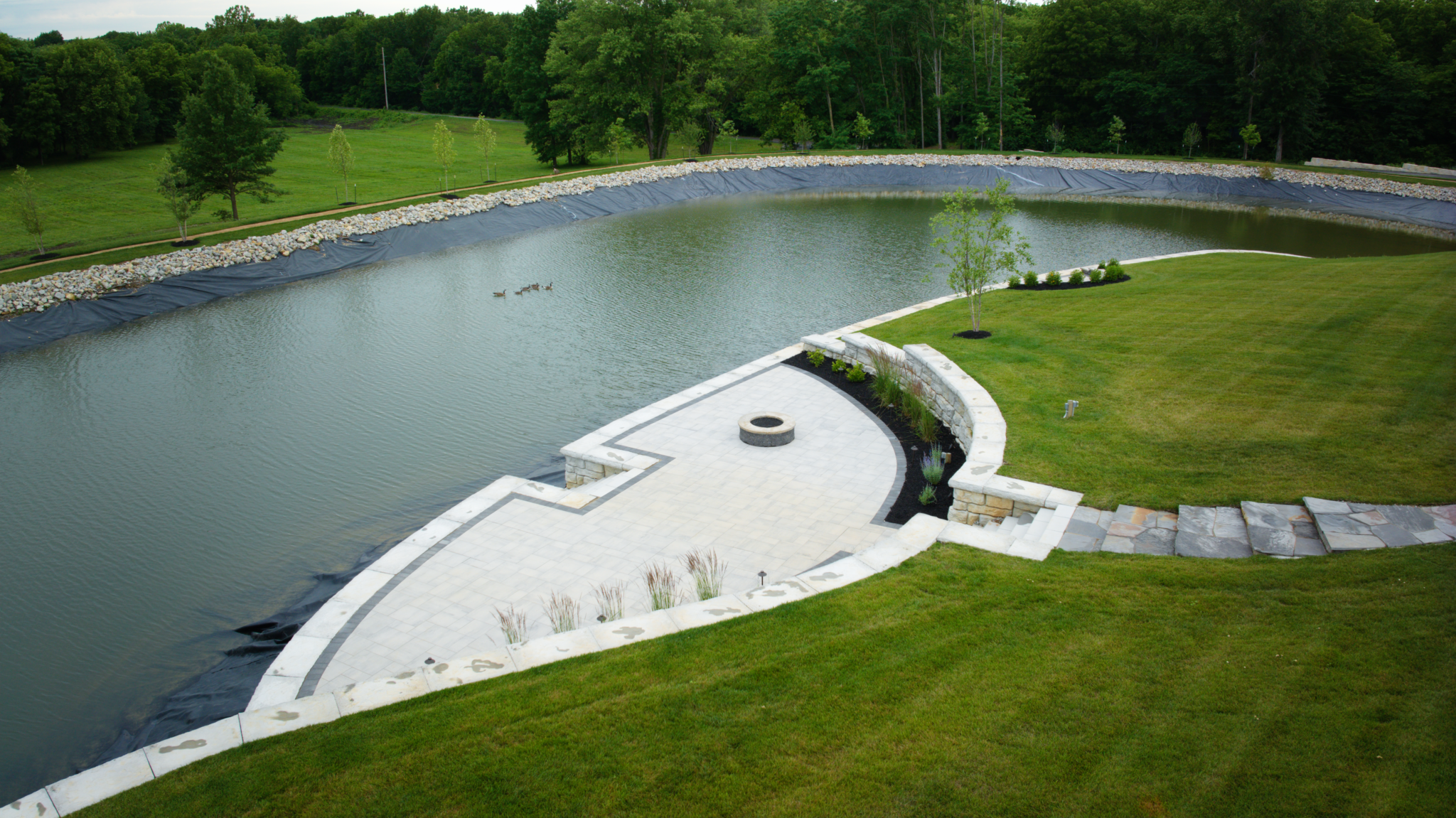
Our team then installed the liner system in two layers: a protective underlayment first, followed by a heavy-duty 40 mil HDPE pond liner, with every seam joined using a specialty welder for tight, consistent welds. Around the entire shoreline we added heavy-duty riprap edging. It protects the edge from erosion, hides the liner so the water meets the ground naturally, and gives the pond a finished, high-end look.
With the liner in, we built the water system we’d planned: an electric pump and filtration system that pumps water from the existing pond downstream up to the main pond, filtering it on the way in to help keep the water clear, complete with the electrical work to run it.
The project had other hurdles, including heavy, unplanned rainfall and coordination with other trades. Landscape sprinklers, for example, sent water into the lined basin and required frequent pumping. We worked through each one and kept moving. Between cleaning out the built-up muck, reshaping the existing basin and working around the weather, the project took about two months from start to finish.
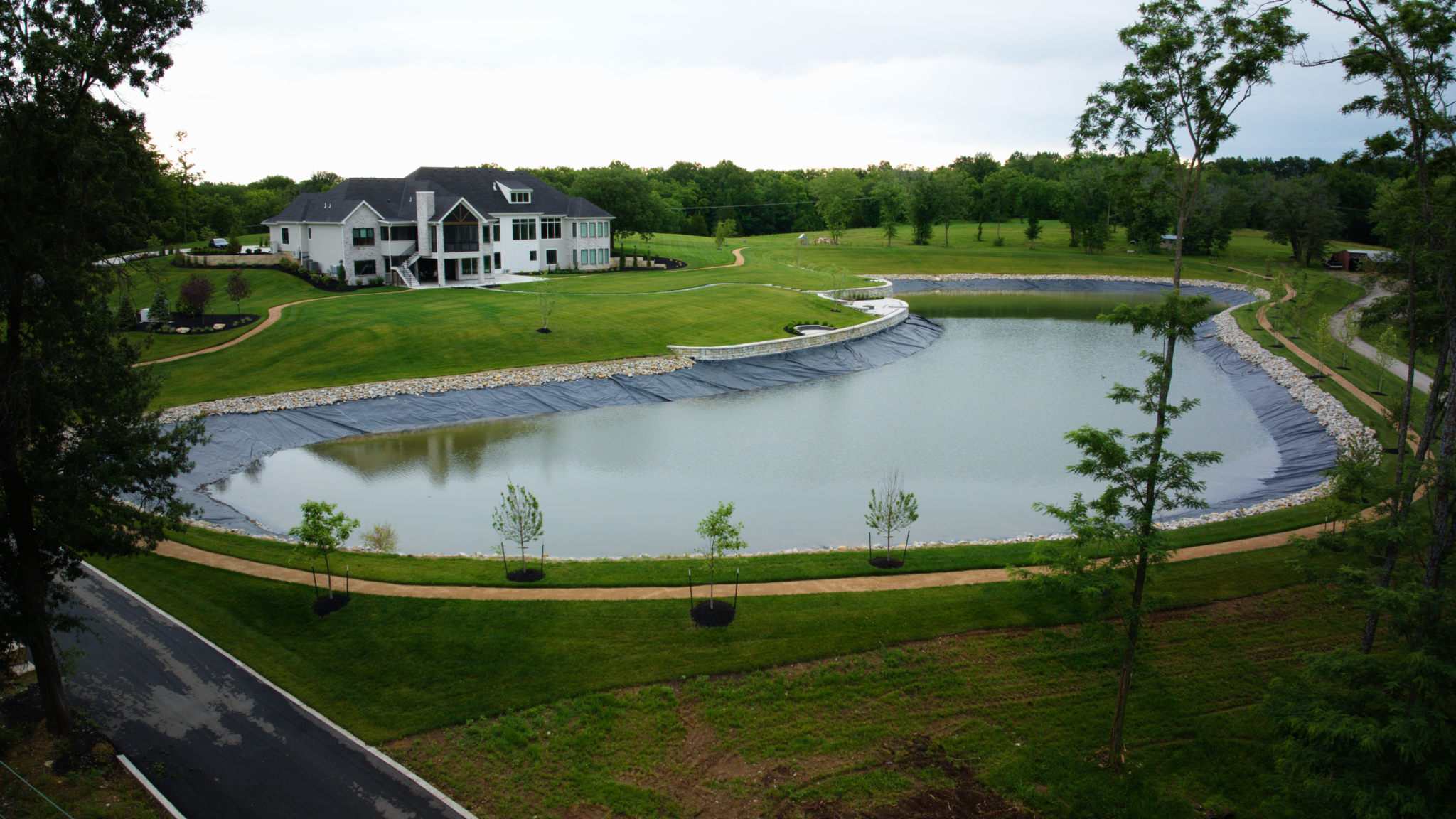
Nathan brought in a strong lineup of specialists, and the finished property shows it. Alongside our work came an engineered retaining wall, stone steps that lead down into the water for easy, elegant entry and exit, upscale landscaping and lighting, a walking path along the dam lined with trees, and professional seeding and sod. The home itself was built by Starr Homes LLC, known around Kansas City for upscale custom homes. We were proud to build the pond that ties it all together.
The liner also opened up landscaping options. On a traditional earthen dam, we generally advise against planting trees, because roots can weaken the dam over time. With a synthetic liner, as in this case, trees could be planted around the pond, and that was a major plus for this property.
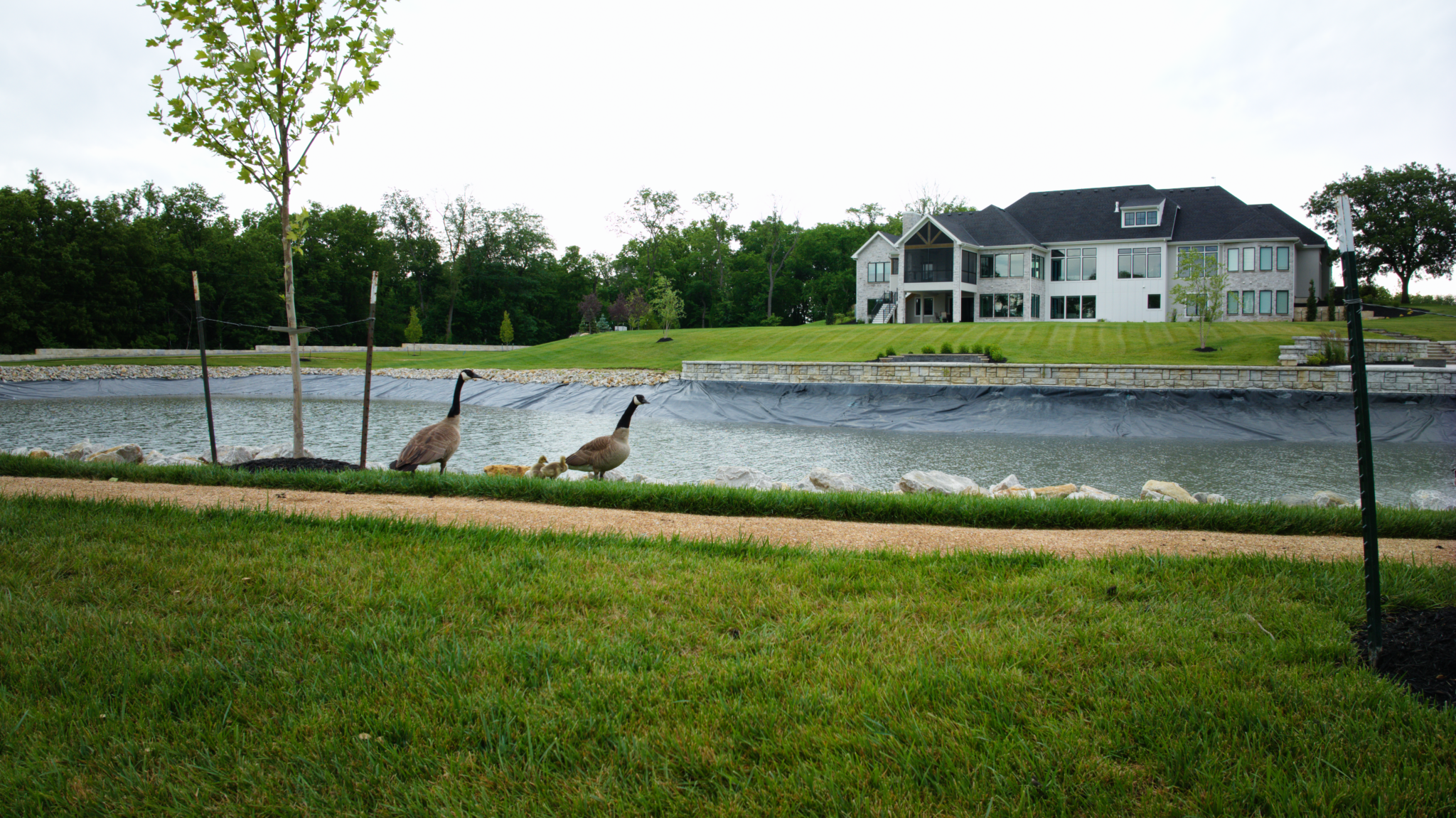
As of this writing, the pond is about half full and still filling through the pump and filtration system, along with rainfall and runoff, with clear water and a family of wildlife already calling it home. These photos aren’t the final version of this pond. They’re update shots of a project that’s still evolving, with the water level rising and the landscaping maturing around it. We’re actively documenting this build, and more updates are on the way as it fills.
Nathan’s pond went from a leaking, nearly empty mud hole to the waterfront centerpiece his estate was built to have: a fully reconstructed basin, a professionally welded 40 mil HDPE pond liner, a riprap shoreline and a custom pump and filtration system designed around the realities of his property. The pond is still filling and the property is still evolving, so the best view is yet to come.
It’s a good example of a clear goal backed by real due diligence. Nathan knew he wanted a liner. Our LiDAR survey, on-site evaluation, historical research and watershed analysis let us plan the cleanout, the basin and a water system that fit the realities of his property before the work began.
Please note that every pond is different. Each one starts with a purpose, why it’s being built and how it will be used, and that purpose drives how it’s designed. Every project also comes with its own tradeoffs. This page isn’t a step-by-step guide, and it doesn’t cover every step or detail. It’s an overview of a featured project we’re actively documenting, and just one of many we’ve completed. Most owners prefer to keep their projects and information private. This owner is proud to show his off, and we’re grateful he let us share it.
For a deeper look at how ponds and lakes should be built, and what to ask any builder, read our guide: How to Build a Large Pond or Lake on Your Property (The Real Process)
See more of our work in our pond and lake portfolio, or contact us to start planning your pond or lake.
Still filling and still evolving. Update photos, with more on the way!
Tell us about your vision. We'll tell you what it'll take.