Kelly and Paul were planning an upscale, modern home on acreage in Gardner, Kansas, and they wanted the water done right before the house went up. Their vision was a 3-acre pond that would frame the view from the back porch and every window, in every season. It also had to hold a healthy fishery for their kids and guests, and be the place for summer evenings with friends, family and colleagues.
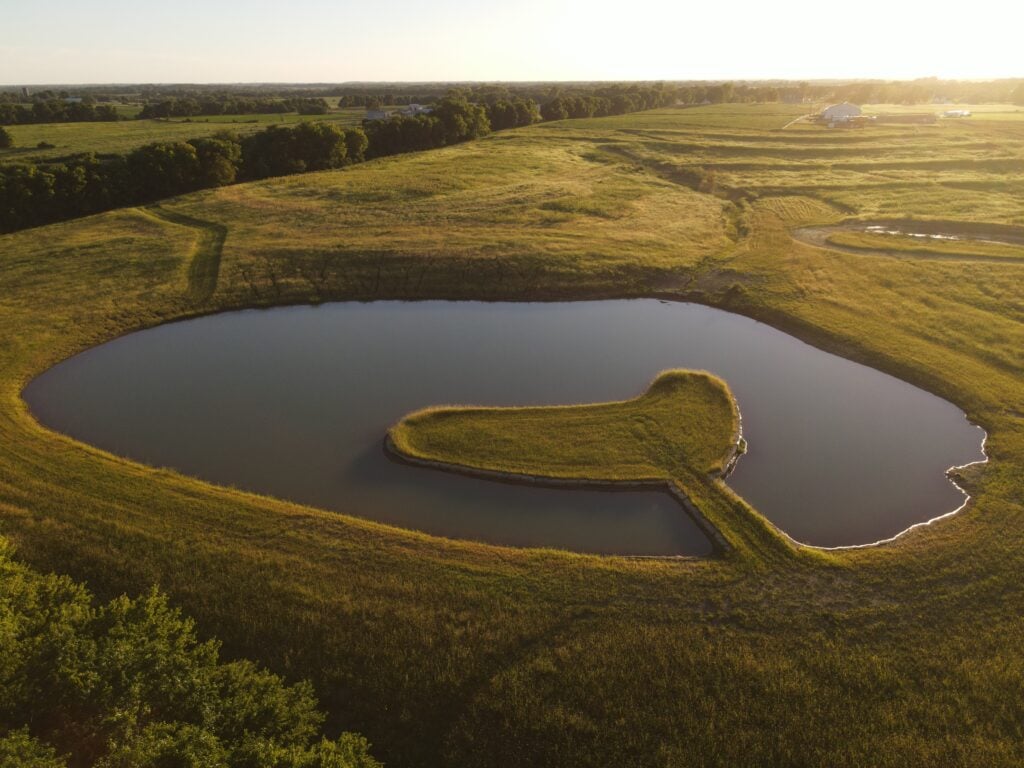
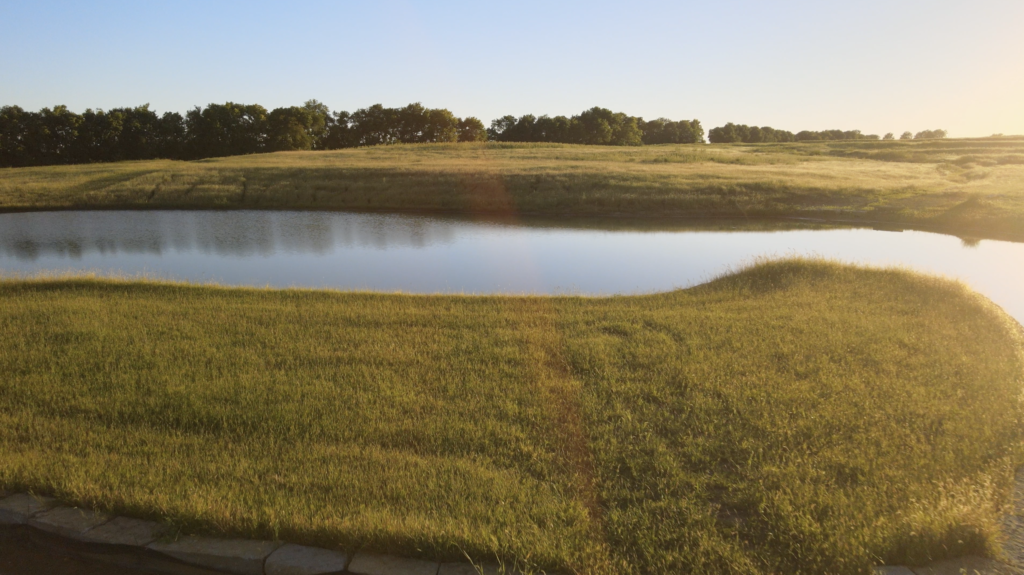
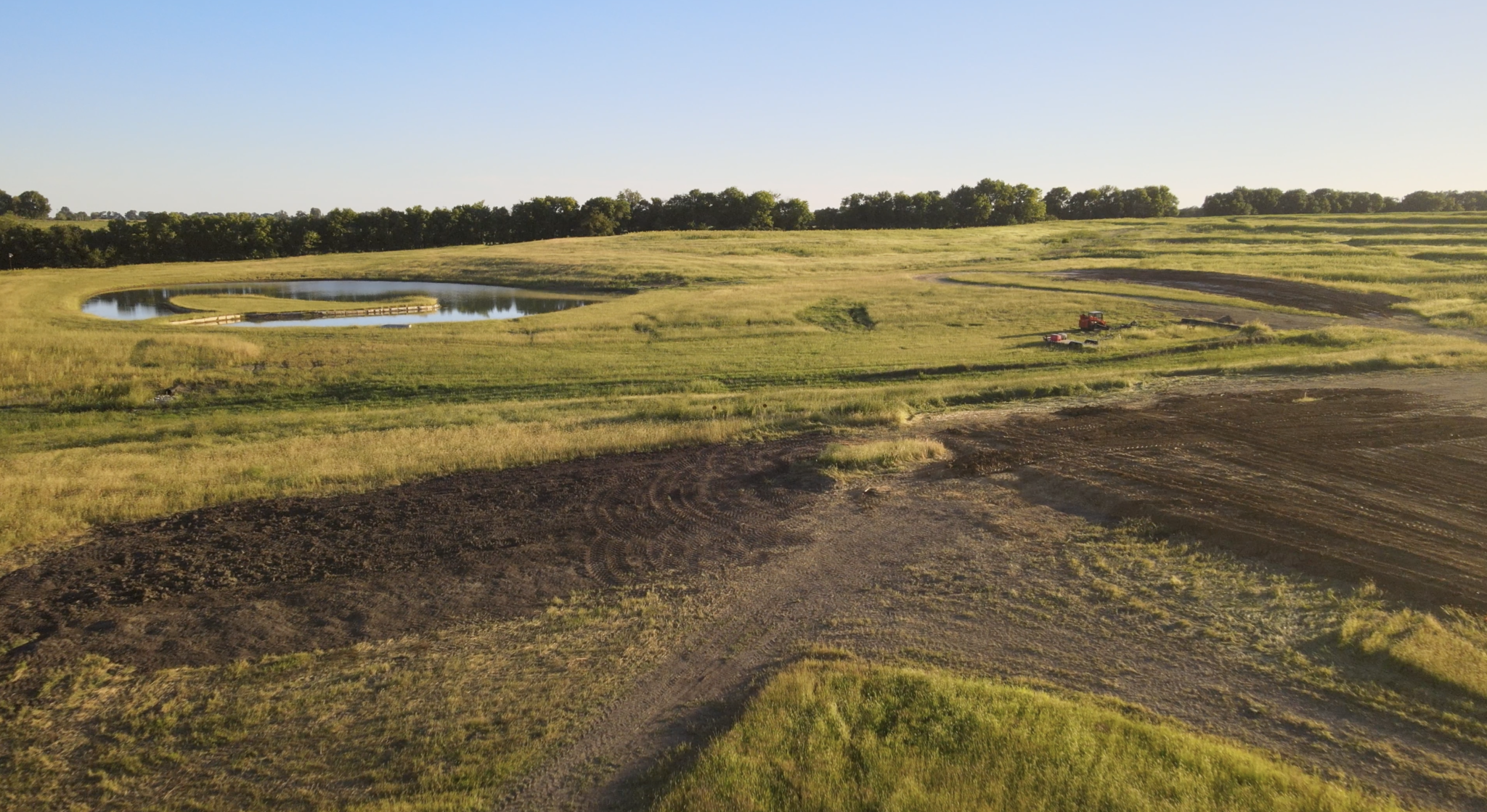
We designed and built it around a peninsula lined with native Kansas limestone that reaches out toward the deepest water on the property. While we were on site, we also built the pad for their future home. The result is private, calm and unmistakably theirs, yet it sits in the landscape like it has always been there.
Kelly and Paul are business owners who work with contractors every day. They knew this was a major investment in both their home and their land, and they knew the difference between a generalist and a specialist. Plenty of companies can move dirt. Far fewer build ponds and lakes as their entire focus. They wanted that kind of specialist, and they wanted as little risk on their side as possible.
That’s why building to contract mattered to them. With open-ended, time-and-materials billing on a new build, the owner carries the cost of every surprise. A contract price backed by real planning puts most of that risk on the specialist instead. It was one of many reasons they chose Bulletproof.
The process was another. Even among companies that call themselves pond specialists, it’s rare to find soil borings, LiDAR surveying and AutoCAD Civil 3D design kept in-house, paired with university lab testing and historical and watershed research before a design is drawn. Bulletproof brings all of that to new builds. Kelly and Paul also found a team with a genuine passion for ponds and lakes, one that explains its process openly and is glad to share what it knows.
The pond had to do several jobs at once. It had to sit close to the house and look as good through the windows in January as it does in July. It had to hold fish, and be safe and inviting for kids, family and guests. It needed a signature feature that made it feel custom, not cookie-cutter. And for all that personality, it still had to blend into the countryside. Most of all, it had to be built to the design, not just look good on paper.
The site brought a challenge of its own: two major gas pipelines crossed the property, and any digging near them is strictly regulated. Without LiDAR and AutoCAD planning up front, the plan would likely have needed major changes once construction was underway. It’s a good example of why pre-planning matters. Ponds and lakes are anything but simple.
Our process starts with a pond’s purpose. This one had three: the view, the fishing and the entertaining. Those goals set the size, the shoreline, the depths and the exact spot for the peninsula. Kelly and Paul reviewed the plan with us, and we refined it together until it matched what they pictured.
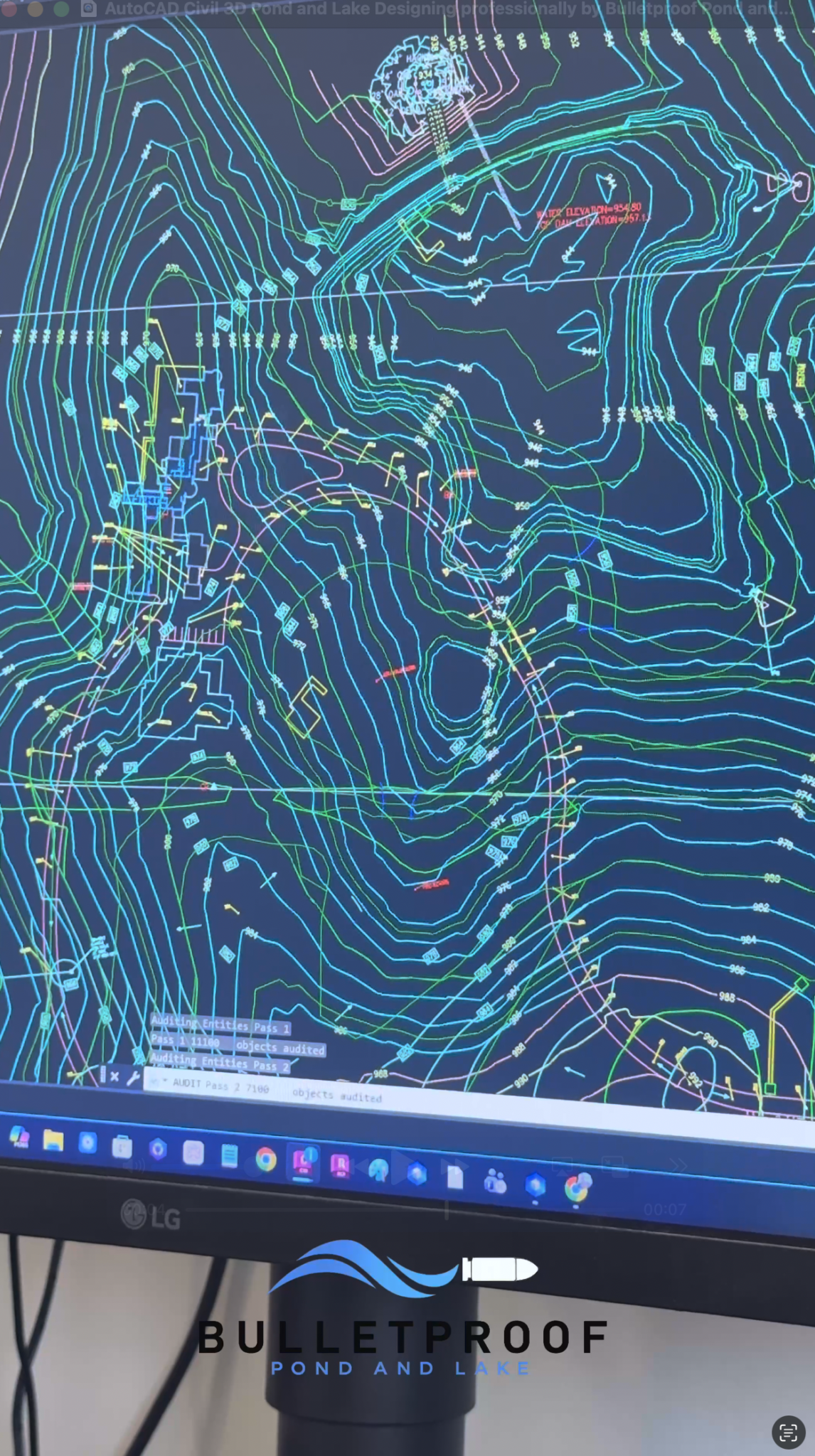
On this project, design was also a matter of safety. Two major gas pipelines ran through the property, and disturbing soil near gas lines is strictly regulated, for good reason. Working from our LiDAR survey in AutoCAD, we planned and coordinated each phase of construction around those lines, laying out the pond, dam and grades to within inches of the design while keeping the clearance the pipelines required. That level of precision is what let the work move forward safely and within the rules, and it’s the kind of detail a rough sketch can’t capture.
It helps to know what goes into a plan worth building from. A Google Earth outline, a phone app or a hand-drawn sketch is a fine place to start an idea, but none of them show what the ground actually does. Drone photos map the tops of grass and brush, not the dirt underneath. And “RTK,” a term you’ll often hear, sharpens a drone’s position in the air; on its own, it isn’t a survey and doesn’t check the data for errors. A good question to ask any builder: how was the site surveyed, how was it verified, and what software was the design built in?
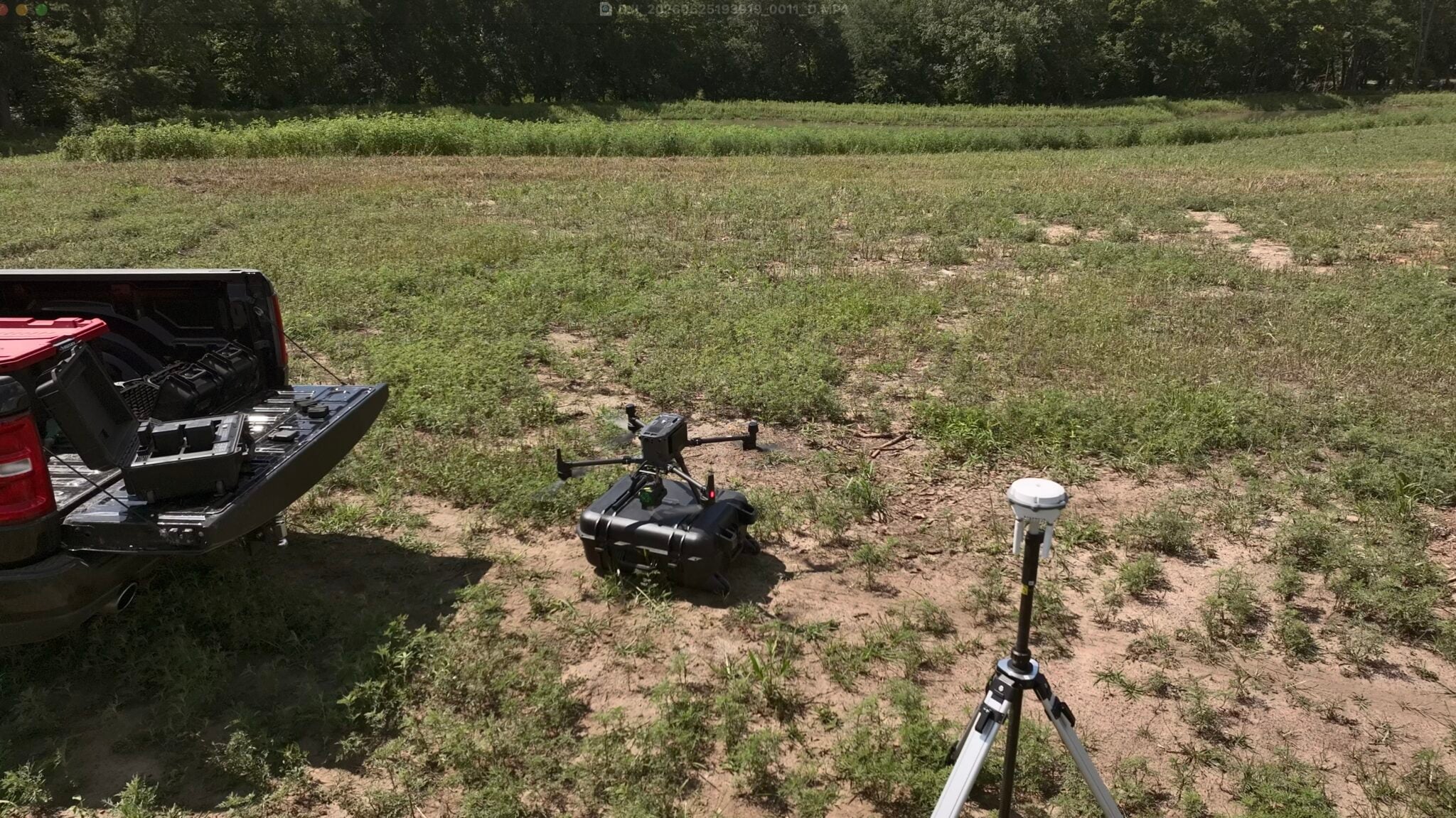
Our standard approach on new builds today starts with verified information. We take deep soil borings with our drill rig. It disturbs far less of the site than digging test pits, reaches much deeper, and keeps each soil layer clean and separate, where an excavator can mix them. Those samples go to a university lab for sand, silt and clay testing, while our team logs rock and other materials on site. We research the region’s history and run a watershed analysis so the pond is sized for the water it will actually receive. Our in-house LiDAR survey reaches through vegetation to the bare ground and captures the site as it is today, not as an old county map shows it, and we verify that data before we design from it. The full 3D design is then built in AutoCAD Civil 3D, the same software licensed engineers use and prefer. It covers the basin, dam, spillways, water level and cut-and-fill quantities, and it loads directly into our GPS-equipped machines. Grades come out to the plan you approved, not roughed in by eye or left to someone having an off day.
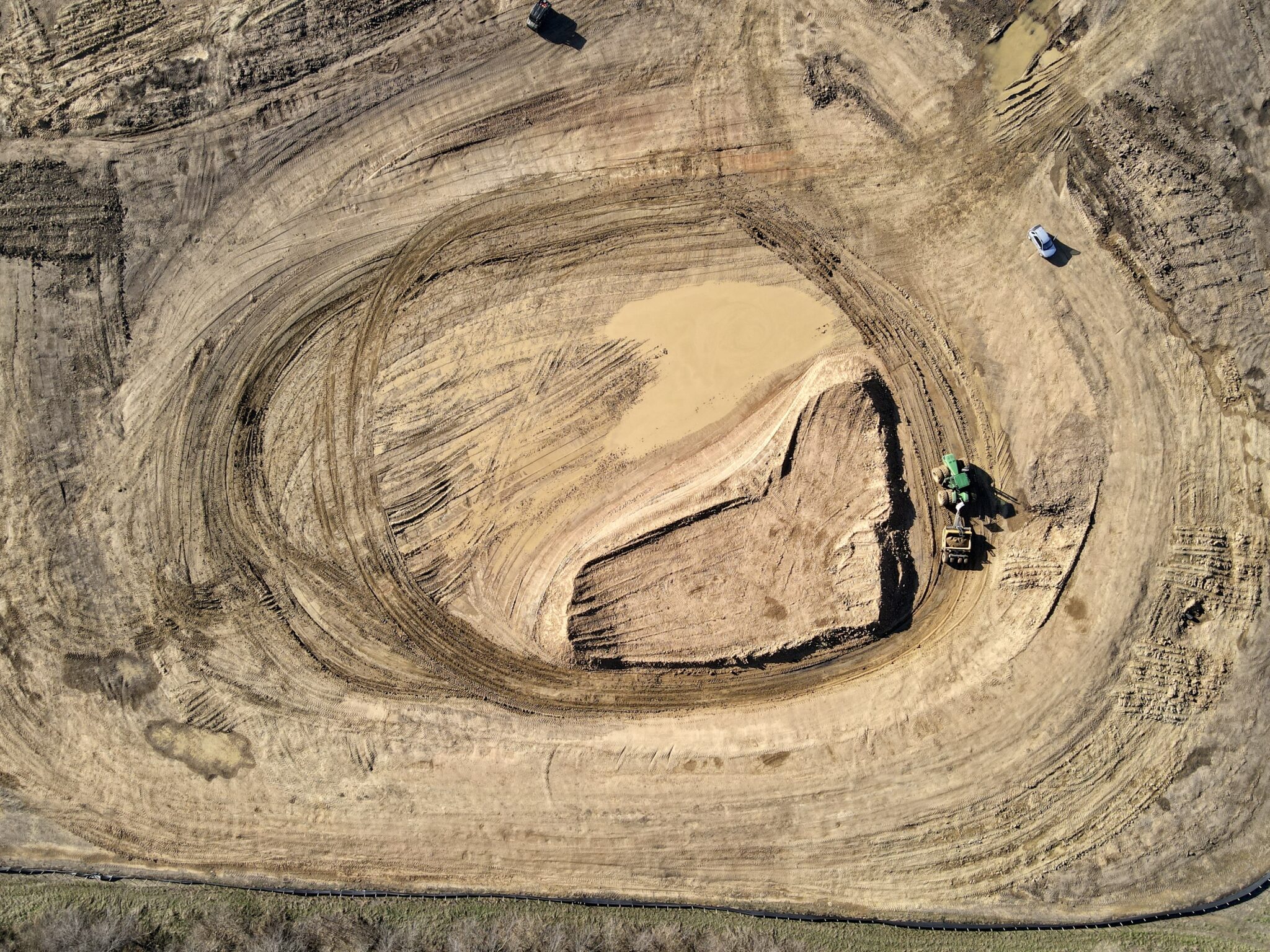
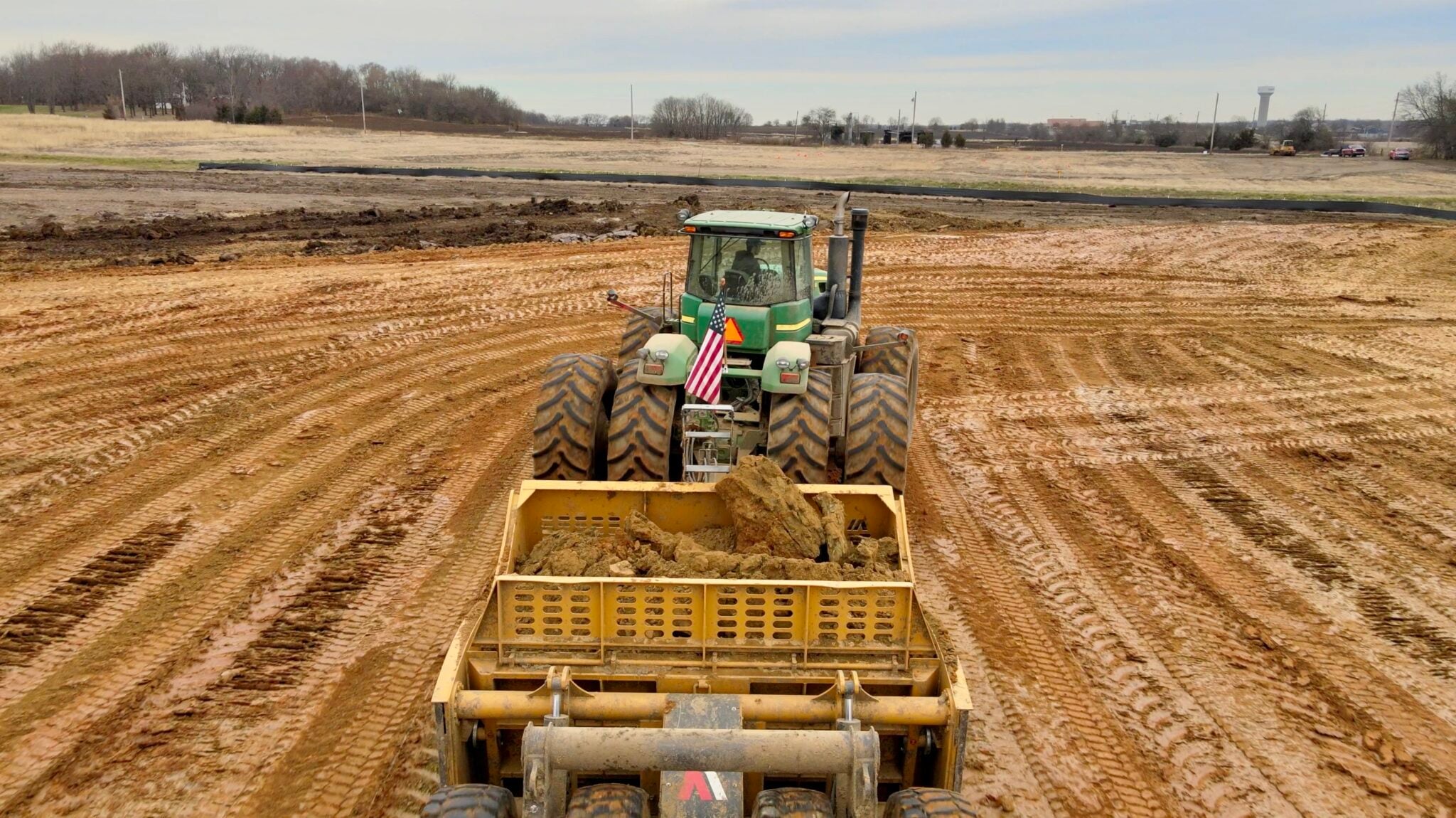
Our crew reshaped the site with large-scale earthmoving equipment, building the core trench and dam first for a stable, lasting structure. We shaped the basin with varied depths, including an exceptionally deep section right off the peninsula. That gives fish year-round refuge and gives anyone casting from the rocks an immediate drop-off.
Then came the signature feature. We set large native Kansas limestone blocks along the peninsula and placed more at the inlet, tying the two together. The peninsula draws you out over the water and makes the whole pond feel immersive and private. Our team also installed silt fencing by hand around the site. It keeps sediment from shallowing the new pond before its time and protects neighboring properties. While the equipment was on site, we built the pad for Kelly and Paul’s future home.
Once construction was complete, we seeded the disturbed ground using broadcast seeding to establish cover and help hold the soil in place. We recommend seeding on new pond and lake projects, and there are many seed options to choose from depending on the look, use and upkeep you want.
The pond is now the first thing Kelly and Paul see from the back porch, in every season. In summer, it becomes the backyard: kids fishing off the peninsula, friends and colleagues gathered at the water’s edge, evenings that end with the sun setting across the limestone. It’s a custom space that feels completely theirs, and it settles into the Kansas countryside as if it was always meant to be there.
If you’re planning your own pond or lake, there’s always more that can be added, and not every project can include every feature. Each one comes with its own tradeoffs in budget, design and upkeep. For ponds like this one, we recommend an aeration system, fish structure for habitat, and pond dye that’s safe for fish and wildlife, added as the pond fills, to help keep unwanted vegetation from taking over. Looking back at this project, a limestone edge around the entire shoreline would have taken it even further, though the pond is beautiful as it stands. From beaches, fountains and stepping stones to docks and entertaining areas, there are many ways to make a pond or lake your own.
Kelly and Paul got a pond designed around how they actually live: a year-round view from the house, varied depths with deep water placed where the fishing happens, and a limestone peninsula that makes it one of a kind.
We built it to contract, not on a time-and-materials basis. Time and materials has its place. On pond cleanouts and repairs to existing ponds and lakes, there’s often no record of how the original was built, so the unknowns are real and billing for time can be the fairest option. A new pond or lake is different. With proper borings, lab testing, a verified survey and a full 3D design, the work can be planned and priced up front, so the owner isn’t paying for the learning curve. That’s how we prefer to build, and it keeps most of the risk with the specialist, where it belongs.
Behind a result like this is the process we recommend on new builds today: verified survey data, lab-tested soils, a full 3D design, and GPS-equipped machines carrying it into the field. Less guesswork, less room for human error, and grades that match what you agreed to. For the full breakdown, read our guide: How to Build a Large Pond or Lake on Your Property (The Real Process)
Tell us about your vision. We'll tell you what it'll take.