Pond Perfect: Elevate Your Farm Pond’s Landscape
Is your farm pond missing that touch of natural beauty? Are you looking to transform it into a serene retreat or a haven for local wildlife?
In this guide, we’ll dive into creative and practical farm pond landscaping ideas specifically for residents in Kansas City and the surrounding areas.
By the end, you’ll have the tools to turn your acreage farm pond installation into a stunning landscape feature that enhances your property and supports a healthy ecosystem.
Selecting and Preparing the Site for Landscaping
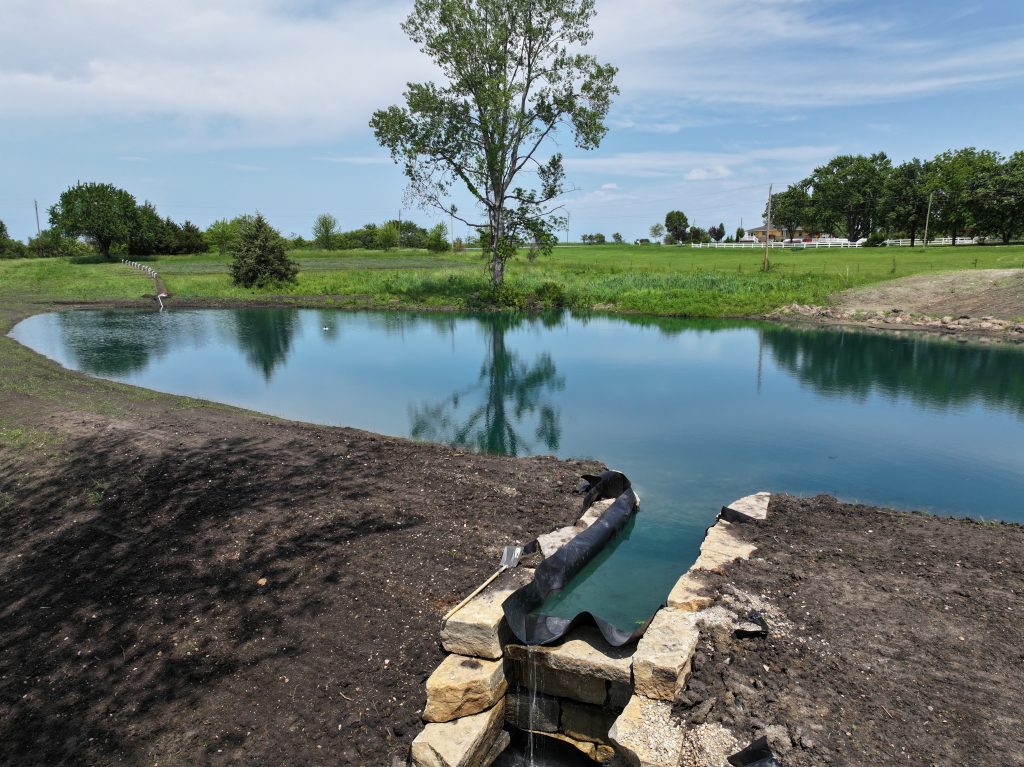
Choosing and preparing the right site is a crucial first step in your farm pond landscaping journey.
A well-chosen location and proper preparation will ensure that your pond landscaping not only looks beautiful but also functions effectively for years to come.
Soil pH and Drainage Considerations
Before you begin any landscaping, it’s essential to assess the soil and drainage conditions around your farm pond.
These factors play a vital role in maintaining the health of both the pond and the surrounding landscape.
- Soil pH: The soil pH around your pond is crucial for plant health and water quality. Test the soil to ensure it is within an ideal range, as this will help support robust plant growth and maintain a balanced ecosystem in your pond.
- Proper Drainage: Good drainage is critical to prevent waterlogging, which can damage plants and lead to erosion. Avoid areas prone to flooding, and ensure there’s a natural slope or drainage system that directs excess water away from the pond. Installing a drainage system may be necessary to maintain soil health and prevent erosion around the pond’s edge.
By carefully considering soil stability and drainage, you’ll create a solid foundation for your farm pond landscape, ensuring it remains both beautiful and functional over time.
7 Farm Pond Landscaping Ideas
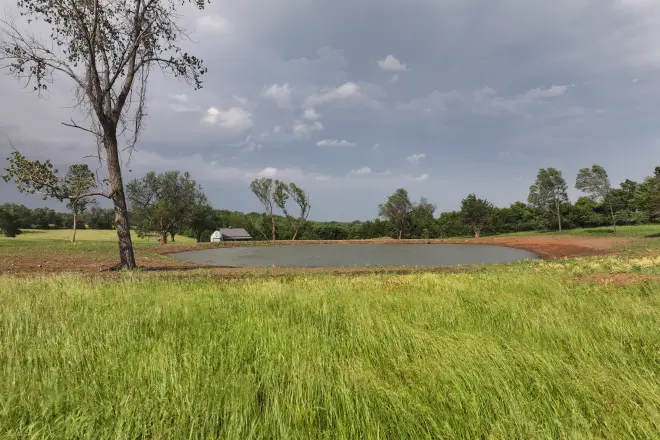
Enhancing the landscape around your farm pond can transform it into a beautiful, functional space that supports local wildlife and adds value to your property.
Below are 7 landscaping ideas to consider for your farm pond.
1. Grass Seed Installation
Beautify and stabilize the area around your farm pond by planting carefully selected grass seeds.
Not only does this prevent erosion, but it also creates a lush, green landscape that enhances the pond’s appearance.
- Erosion Control: Grass roots help anchor the soil, reducing the risk of erosion around the pond’s edge.
- Aesthetic Appeal: A well-maintained grassy area creates a clean, inviting look that blends seamlessly with the surrounding land.
2. Rip-Rap Shoreline Rock
Installing rip-rap rocks along the shoreline of your farm pond adds a natural, rugged aesthetic while offering crucial protection against erosion.
- Erosion Prevention: The rocks break the force of water and wind, preventing the soil from washing away.
- Natural Beauty: Rip-rap rocks give your pond a rustic, natural look that complements the surrounding landscape.
3. Limestone Shoreline Rock
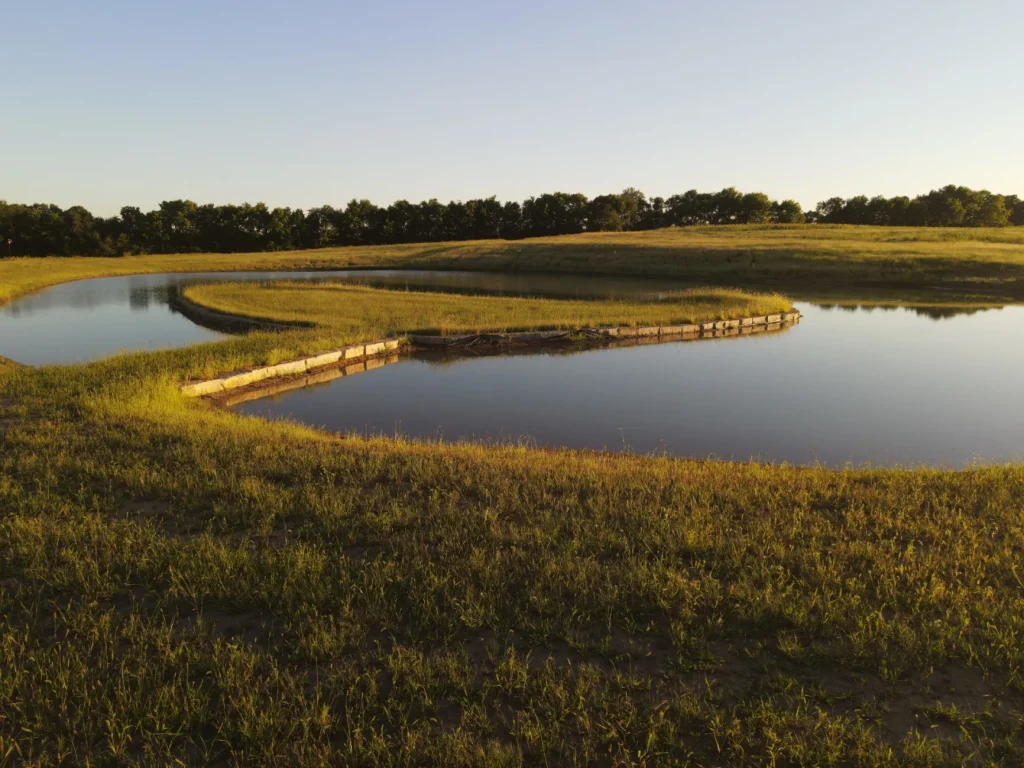
Limestone rocks are an excellent choice for protecting your pond’s shoreline.
They not only prevent erosion but also help maintain the pond’s water quality by naturally adjusting pH levels.
- pH Balance: Limestone can naturally buffer the pond’s water, helping maintain a stable pH level that benefits aquatic life.
- Shoreline Protection: Like rip-rap, limestone rocks protect against erosion while adding to the pond’s visual appeal.
4. Aquatic Plants and Bog Plants
Incorporating aquatic plants and bog plants into your farm pond design supports a healthy ecosystem and adds vibrant greenery to the water’s edge.
- Native Aquatic Plants: Species like water lilies and cattails are ideal for Kansas City ponds, providing oxygen and shelter for fish while enhancing the pond’s natural beauty.
- Bog Plants: Plant irises, canna lilies, and sweet flag plants along the pond’s edges to create a thriving, diverse habitat that supports local wildlife.
5. Shrubs, Ground Covers, and Ornamental Grasses
Add structure, color, and texture to your farm pond landscape by incorporating shrubs, ground covers, and ornamental grasses.
- Flowering Shrubs: Plant hydrangeas, camellias, or forsythias around your pond to create shelter for wildlife and year-round visual interest.
- Ground Covers: Low-growing plants like creeping phlox or sweet alyssum provide erosion control and a burst of color at the pond’s edge.
- Ornamental Grasses: Grasses such as lomandra and reed grass are low-maintenance options that add texture and movement to your landscape.
6. Habitat Structures and Additional Features
Creating habitat structures around your farm pond encourages biodiversity and improves the overall ecosystem.
- Shallow Areas: Design shallow zones within your pond to provide spawning grounds for fish and safe havens for amphibians and other wildlife.
- Rocks and Logs: Add natural features like rocks and logs to create hiding spots and shelter for various species, enhancing the pond’s ecological balance.
- Wetland Development: Develop a wetland area around your pond to filter water naturally, improve water quality, and support a wider range of wildlife.
- Catch/Silt Pond Installation: Installing a catch or silt pond upstream helps capture sediment and runoff, keeping your main pond clear and reducing maintenance needs.
7. Recreational Landscaping Features
Make your farm pond a hub of relaxation and recreation by adding features that invite use and enjoyment.
- Recreational Beach Area: Transform a section of your pond’s edge into a sandy beach area for swimming, sunbathing, or family gatherings.
- Peninsula Installation: Add a peninsula to your pond for fishing access, unique landscaping opportunities, or to divide the pond into different sections for various uses.
These farm pond landscaping ideas will not only enhance the beauty of your pond but also improve its functionality and ecological value, creating a space where nature and recreation coexist harmoniously.
Follow the link to explore more custom pond features for your acreage pond.
Practical Landscaping Tips

Landscaping a farm pond requires thoughtful planning and execution to ensure that it remains visually appealing, functional, and sustainable.
Here are some practical tips to help you design and maintain your farm pond landscape effectively.
Planting Techniques and Design
Proper planting techniques and design are essential for creating a balanced and attractive landscape around your farm pond.
By carefully selecting and placing plants, you can enhance the pond’s beauty and functionality.
- Avoid Blocking Views: When planting around your pond, be mindful of how plant height and placement affect visibility. Place taller plants like ornamental grasses and flowering shrubs behind shorter ground covers to keep the view of the pond unobstructed.
- Sketching Out Designs: Before you start planting, sketch out your farm pond design. This plan should include the location of plants, water features, and habitat structures to ensure a cohesive and harmonious look.
- Mixing Annuals and Perennials: Combine annuals and perennials to ensure that your pond area has color and interest throughout the year. Perennials provide a long-term foundation, while annuals can be changed seasonally for variety.
Wildlife Attraction and Management
Attracting and managing wildlife around your farm pond can enhance the ecosystem and create a lively, natural environment.
Wildlife attraction is just one of the many benefits of building a large pond or lake on your property.
- Attracting Birds and Butterflies: Choose plants that are known to attract local wildlife, such as native flowering plants that provide nectar for butterflies and seeds for birds. Plants like sunflowers and milkweed can draw in these species, creating a dynamic and vibrant landscape.
- Managing Wildlife Impact: While attracting wildlife is beneficial, it’s also important to manage their impact. For example, consider adding plants like lavender or lemon thyme to deter pests like cats, which can pose a threat to fish and other pond life.
These practical landscaping tips will help you create a farm pond that is not only beautiful but also functional and supportive of local wildlife.
By planning your design carefully and considering the needs of both the pond and its surroundings, you can achieve a landscape that thrives year-round.
Elevate Your Farm Pond Landscaping with Bulletproof Pond and Lake
By following these farm pond landscaping ideas, you’ve learned how to enhance your pond’s beauty, support local wildlife, and create a sustainable ecosystem.
From selecting the right plants to designing practical features, these tips will help you achieve a landscape that is both functional and visually appealing.
However, turning these ideas into reality can be a complex task.
That’s where Bulletproof Pond and Lake comes in. We offer expert services to handle every aspect of your acreage pond installation, from design to execution.
Ready to transform your farm pond into a stunning landscape feature?
Fill out our contact form today, or give us a call!