Digging Into the Details
Ever look at a piece of land, maybe after a Kansas City summer storm or a long Texas dry spell, and imagine what it could become with the right excavation work?
Or wonder why excavation prices can swing so much from one project to the next?
In this post, we’ll break down how excavation costs are determined, what affects pricing, and what you can expect when we prepare your land for its next chapter.
By the end, you’ll understand exactly how we price excavation projects and what goes into turning raw land into something functional, beautiful, and built to last.
If you’re ready to talk about your excavation project, reach out to us by calling or filling out the contact form.
We’d love to help you shape your land the right way.
What Does Excavation Cost?
- Excavation projects start at $20,000, but the final excavation cost depends on the size of the excavation project, the terrain, the amount of earth that needs to be moved, and any upgrades or site challenges that affect the total cost.
- Our excavation services typically take 1 to 12 weeks, with a minimum of one week of excavation work to complete the scope safely and correctly.
Unlike some general excavation companies, Bulletproof Pond and Lake also installs acreage ponds and lakes.
Follow the link to learn the difference between a general excavation company vs. a pond excavation company.
How Excavation Pricing Works
Project Minimums and Baseline Requirements
Every excavation project begins at $20,000, which covers the specialized equipment, workers required, and time needed to excavate land safely.
We also require a minimum of one week on-site because most residential excavation projects, whether they’re near KC’s limestone-heavy terrain or Oklahoma’s red clay, need careful shaping, hauling, and grading before we can move to the next step.
Larger or more complex excavation projects take more time, especially when the total volume of material being moved increases.
Why Prices Vary Between Projects
Excavation costs shift because no two sites are the same.
A precise estimate is only possible after an on-site consultation where we review soil type, accessibility, grading needs, underground utilities, and the specific project requirements.
Land with steep slopes, dense vegetation, or low-lying areas takes longer to reshape.
The equipment needed also changes from site to site, which affects the estimated cost, labor costs, and excavation expenses.
This is why understanding excavation costs begins with seeing the land in person.
Factors That Increase or Decrease the Cost of Excavation
Size and Scope of the Project
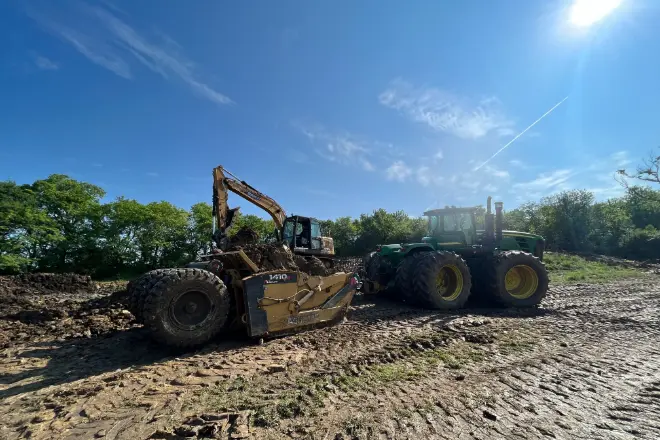
Larger excavation projects require more machine hours, more crew time, and more hauling.
When we move large amounts of material or combine projects like clearing, leveling land, and drainage improvements, the total cost increases.
Smaller excavation work still requires planning and equipment, but the scale plays the biggest role in cost per hour and cost per cubic yard.
Soil Conditions and Ground Stability
Soil type has a major impact on excavation costs.
Sandy soil is easier to cut and move, while dense clay or rocky ground slows equipment and increases labor.
Soft or wet areas may need stabilization before we can begin excavation work.
When soil conditions improve the flow of the project, the cost stays lower.
When soil conditions complicate the cut, the cost rises.
Terrain and Topography
Steep slopes, uneven land, or areas prone to erosion add grading time and may require engineered solutions.
Flat, open land speeds up excavation and reduces labor.
Terrain can also determine whether a standard excavator works or whether we need smaller equipment to reach tighter areas, which affects the cost of excavation.
Accessibility and Site Logistics
Tight or restricted sites slow movement and may require a mini excavator or additional specialized equipment.
Remote locations can increase travel time and fuel use.
Sites with clear, wide access paths often cost less because the excavation services go faster.
The easier the access, the lower the impact excavation costs have on the final number.
Environmental Considerations
Excavating near wetlands, protected areas, or drainage paths adds planning steps to avoid unexpected issues.
Water diversion, runoff control, and erosion management may be needed depending on the project type.
These steps protect the land and avoid surprises that could increase excavation costs.
On-Site Challenges and Obstacles
Tree removal, brush clearing, old stumps, or buried debris increase labor and hauling.
Hidden underground lines or abandoned structures require careful excavation and may add disposal fees.
Clean, open sites keep excavation costs predictable and help us maintain fair pricing.
Types of Excavation Services That Affect Final Cost
Bulk Earthmoving and Grading
Moving large amounts of material is one of the biggest cost drivers in any excavation project.
This includes leveling land, preparing building pads for new construction, and shaping the site for drainage.
Grading also creates a stable foundation for future work.
Terraces and Erosion Control Work
Creating terraces takes time because the soil must be cut, leveled, and compacted to control runoff.
These projects protect slopes, prevent erosion, and improve long-term land stability.
They also add time and equipment needs, which impact the total cost.
Wetland, Dyke, and Levee Construction
These hydrological features require engineering to manage water flow.
Because they involve precise shaping and careful planning, they take longer and require specialized equipment.
NRCS and Conservation Projects
Projects guided by NRCS standards have specific grading patterns, slopes, and drainage paths.
These require detailed planning and may extend the schedule.
Field Leveling and Agricultural Site Prep
Preparing large agricultural areas can involve many cubic yards of soil movement.
When the land has uneven grade or needs extensive contouring, the time and hour requirements increase.
The Role of Technology in Excavation Cost
LiDAR Surveys and GPS Guided Equipment
Advanced technology helps us reduce rework by showing drainage paths, slopes, and soil patterns before excavation begins.
These tools give us a rough estimate of the material to be moved and help us avoid surprises once the excavation work starts.
AutoCAD Planning
AutoCAD layouts ensure the project is shaped correctly and help us plan haul routes, cut depths, and fill areas.
This planning reduces mid-project changes that could affect the total cost or extend the schedule.
What’s Included in an Excavation Project
Clearing and Preparation
We start by removing vegetation, brush, trees, and any material that blocks access.
Land clearing gives the equipment room to operate and prevents delays once the digging begins.
Cutting, Moving, and Shaping Soil
This is the core of excavation services.
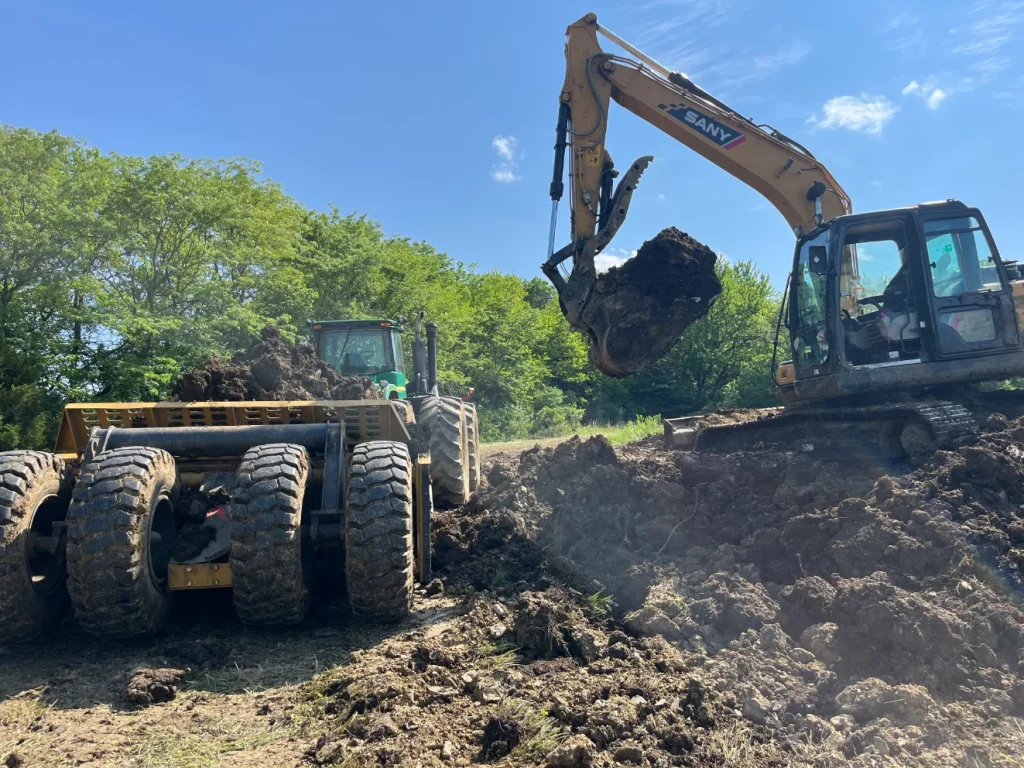
We cut soil, shape slopes, establish drainage, and prepare the land for future construction or water management features like levees or ponds.
Cutting and grading the land correctly prevents future erosion.
Final Grading and Site Stabilization
Once the shaping is done, we smooth, level, and compact the site to create a strong foundation.
This step reduces future settling and protects the land from erosion.
How Long Do Excavation Projects Take?
Typical Timeline
Most excavation projects take 1 to 12 weeks, depending on the total volume of soil moved, the complexity of the layout, and the depth of the cuts required.
Larger or more complex excavation projects take longer.
What Extends the Timeline
Difficult soil, inclement weather, extra land clearing, or environmental constraints can slow progress.
Follow the link to learn how we keep your project on schedule even during unpredictable weather.
Underground utilities or unexpected issues discovered on-site can also add time.
How to Get the Most Accurate Excavation Cost Estimate
Schedule an On-Site Consultation
We provide a precise estimate after reviewing the terrain, soil conditions, access paths, and overall layout.
Site conditions affect the equipment needed and help us avoid surprises with excavation costs.
Understand the Site’s Natural Features
Drainage paths, low spots, and soil testing results help us plan correctly and reduce excavation expenses.
This is especially important for home project planning or new construction.
Discuss Optional Upgrades Early
Terracing, erosion control features, or wetland elements affect the total cost.
Discussing them early ensures smooth scheduling and prevents extra disposal fees, labor costs, or delays.
Ready to Break Ground? Let Bulletproof Pond and Lake Handle the Heavy Lifting
You now have a clear understanding of the excavation cost factors that shape a project and what goes into planning land the right way.
With this knowledge, you can move forward confidently and avoid surprises during your next excavation project.
If you’re looking for a team of professional excavation contractors that bring precision, planning, and clear communication to every job, we’re here to help.
Reach out to Bulletproof Pond and Lake to get your land shaped, leveled, and ready for whatever you build next!