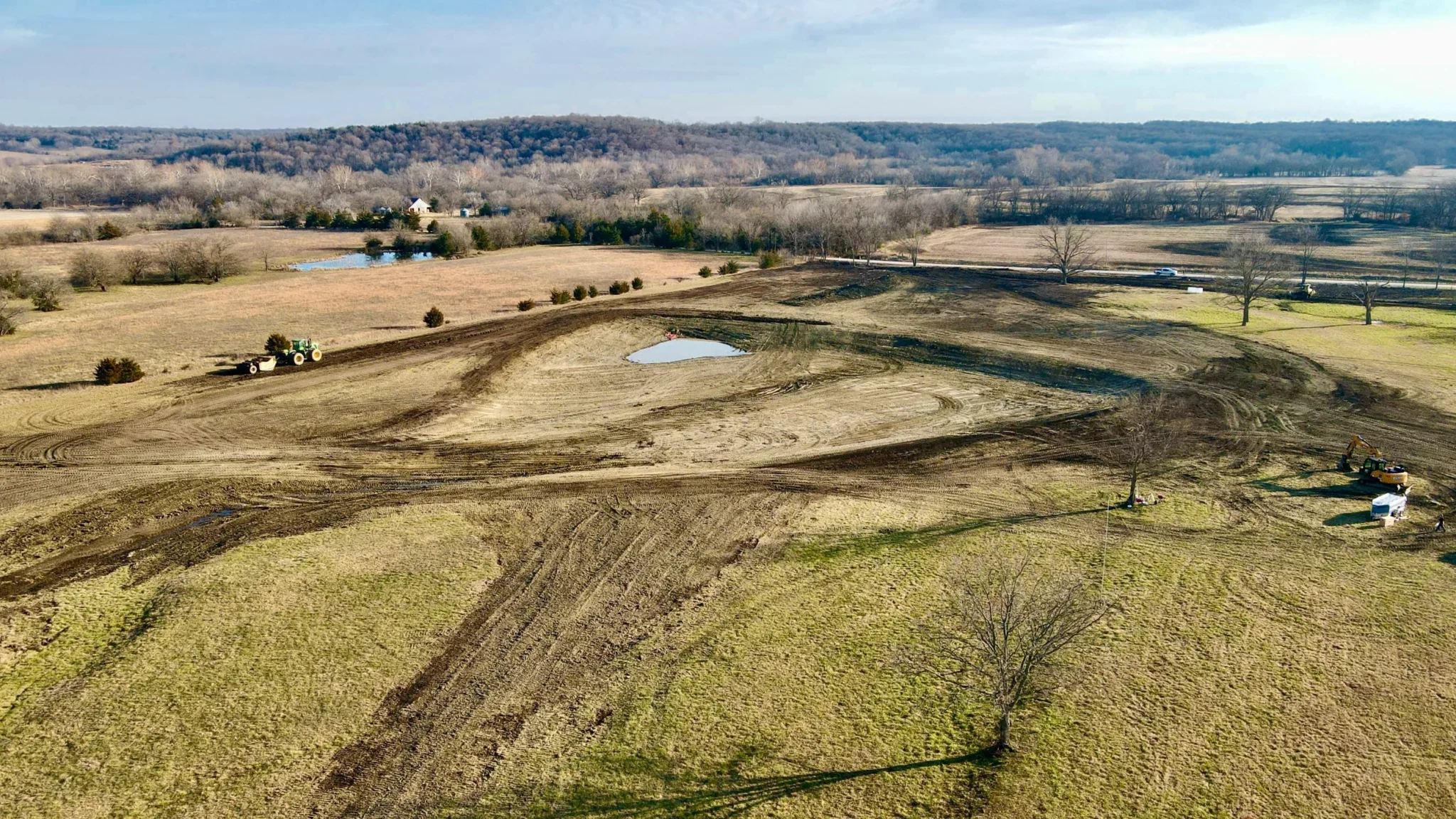
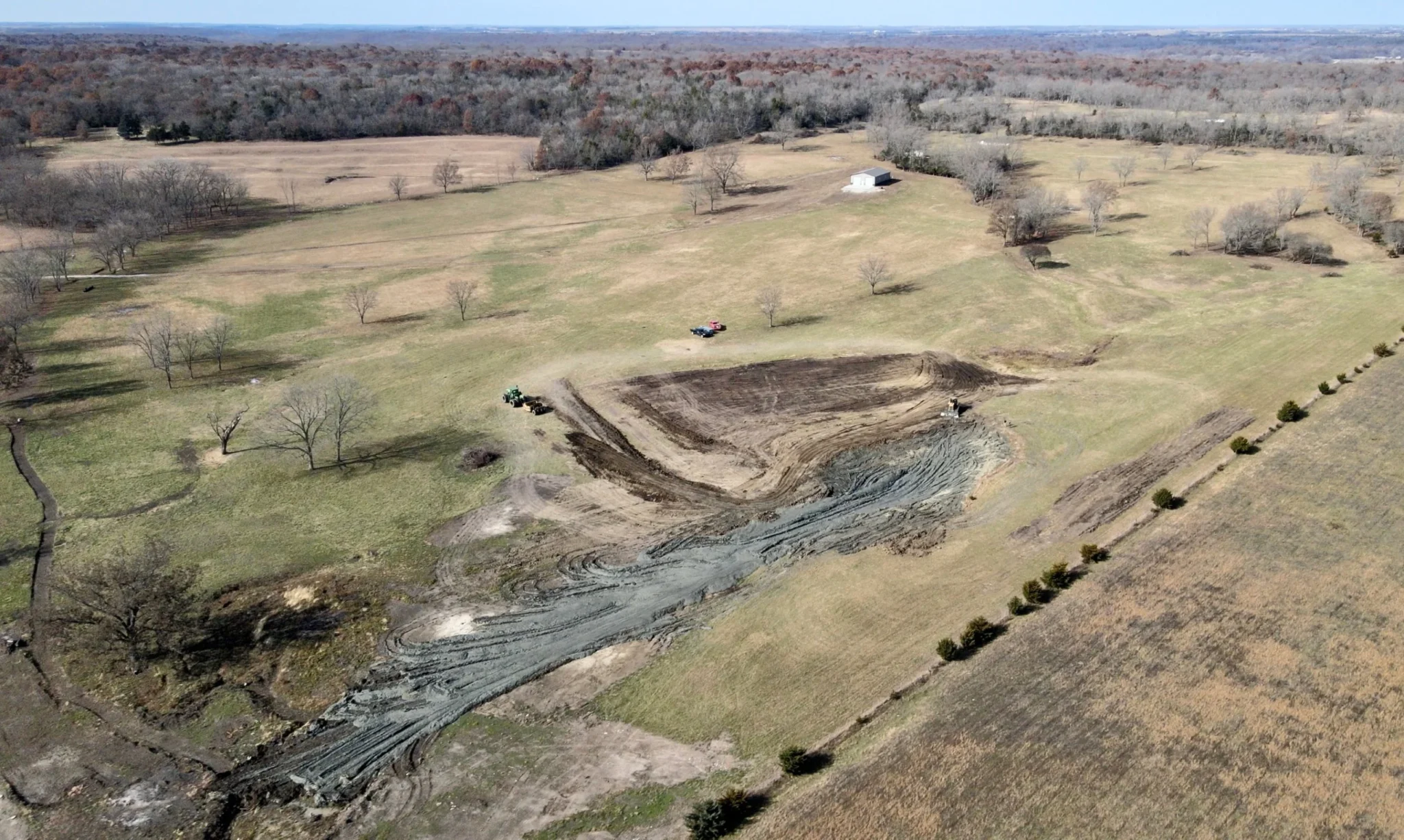
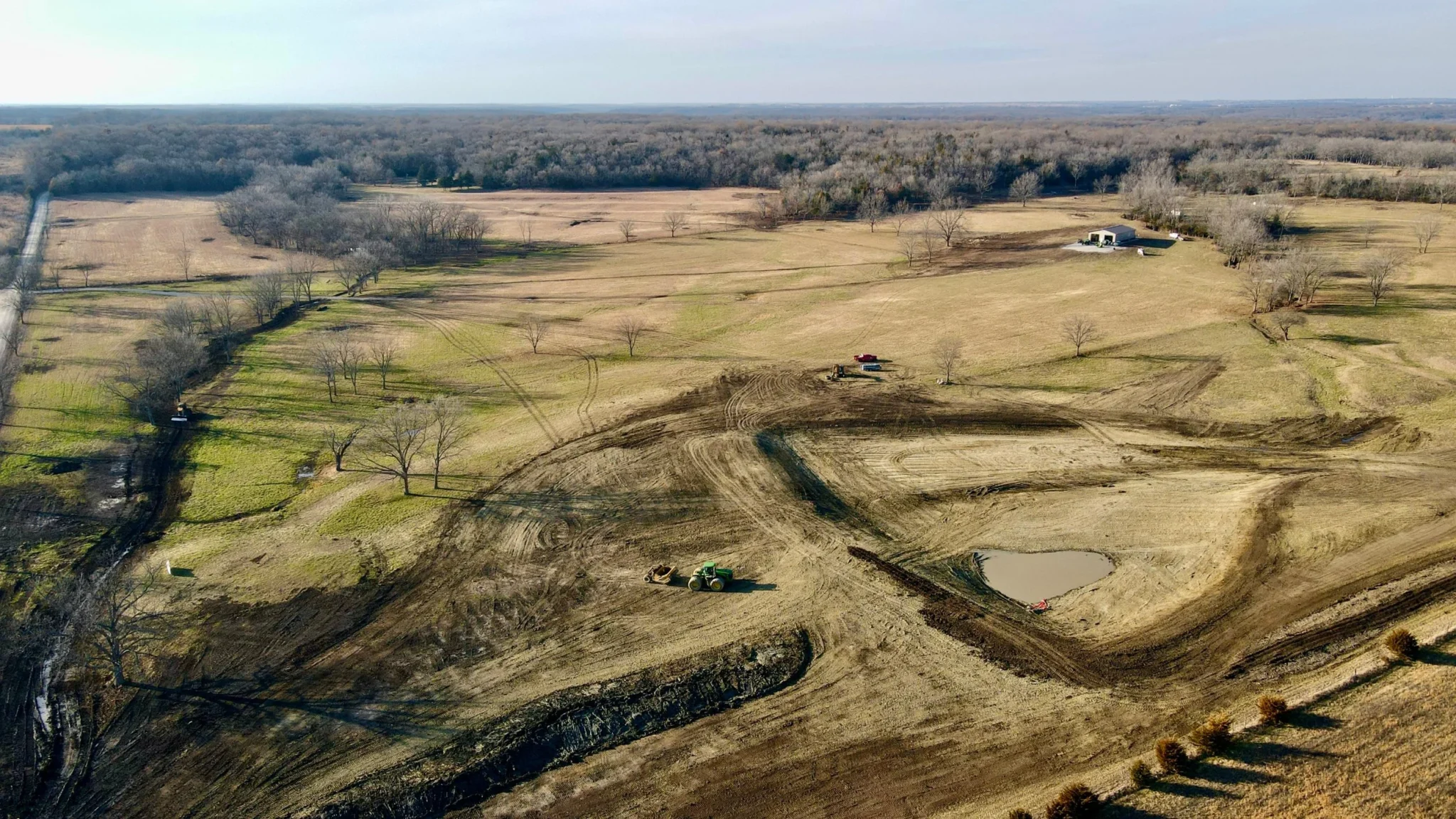
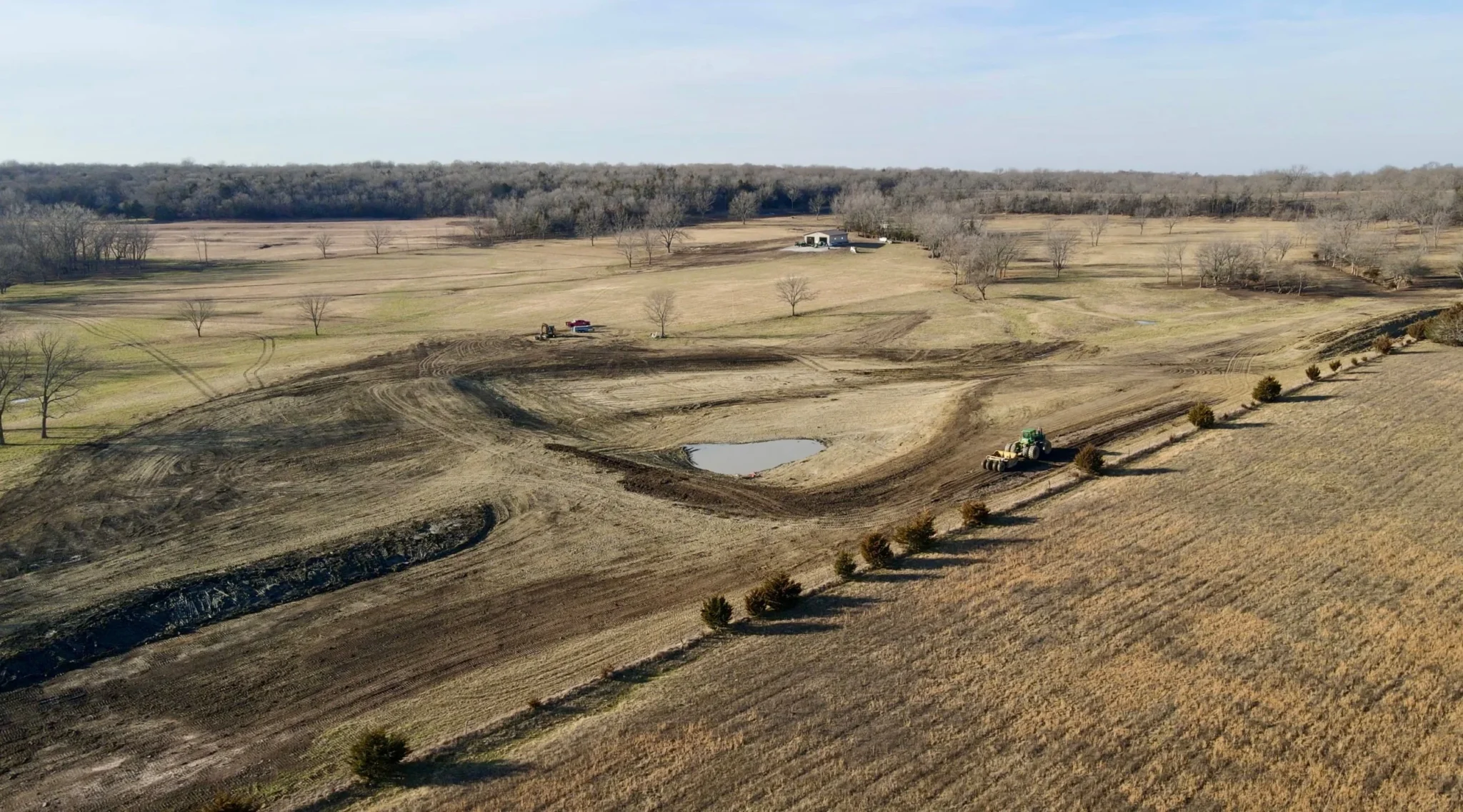
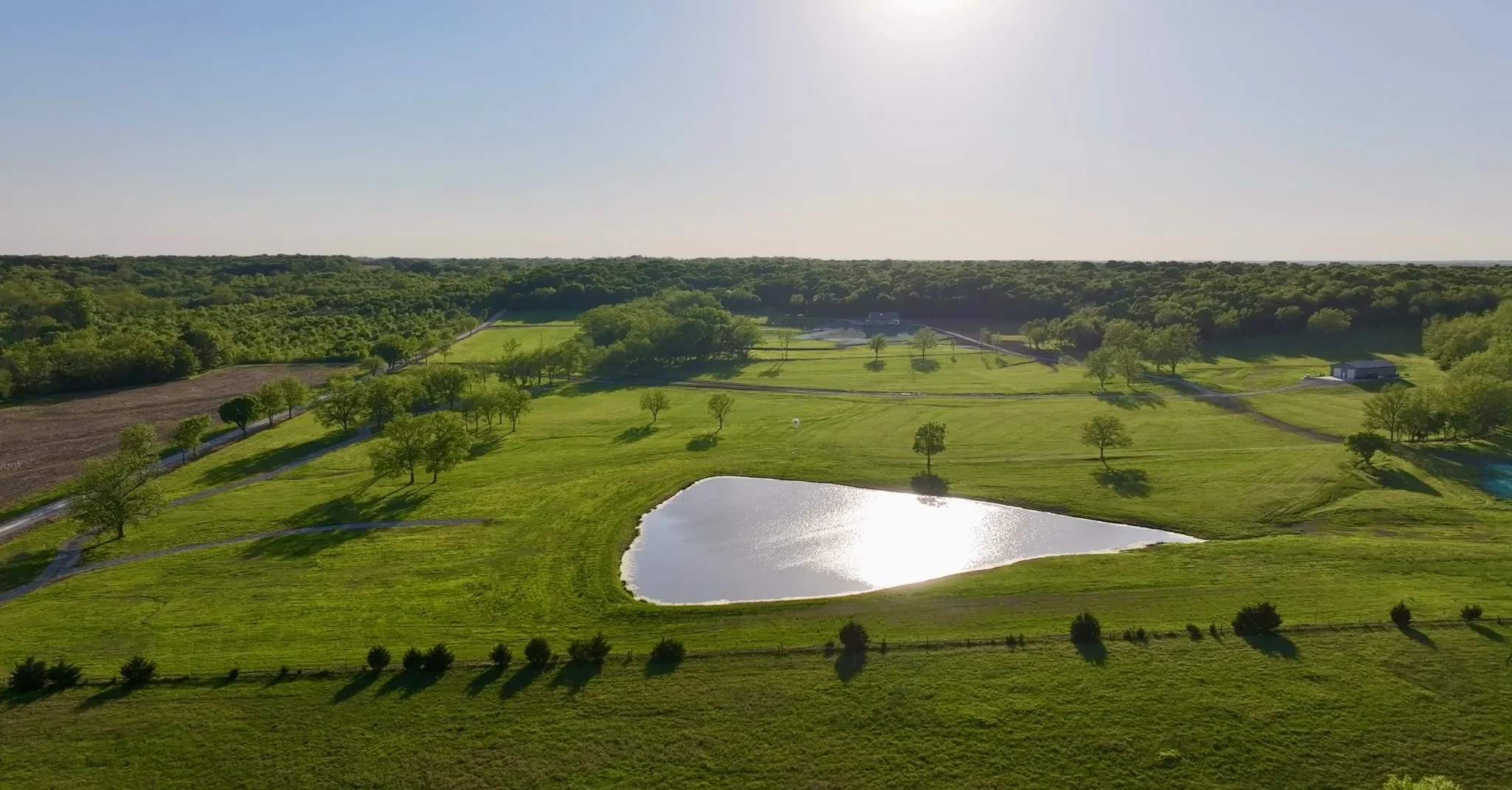
The owners are building this Centerville, Kansas property into a private countryside escape, with a new home, new buildings and more private additions still to come, all made for family and friends to slow down and reconnect with nature and with each other. Their property manager, Charles, and the crew who care for this land take real pride in it. An old farm pond sat in the middle of a mostly empty field. Years of cattle, wildlife and natural aging had filled it with silt and turned it into a muddy, uneven pit nobody wanted to look at, touch or use.
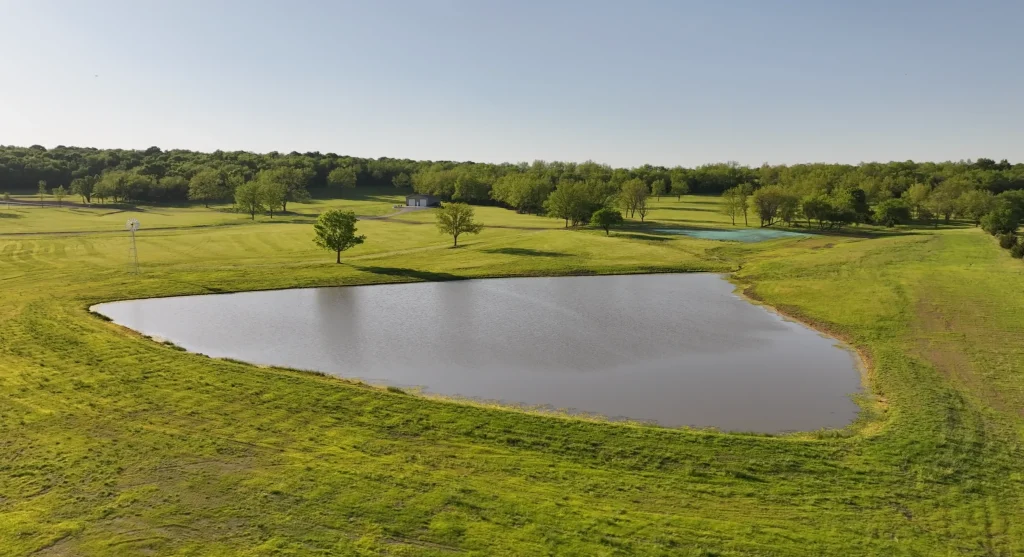
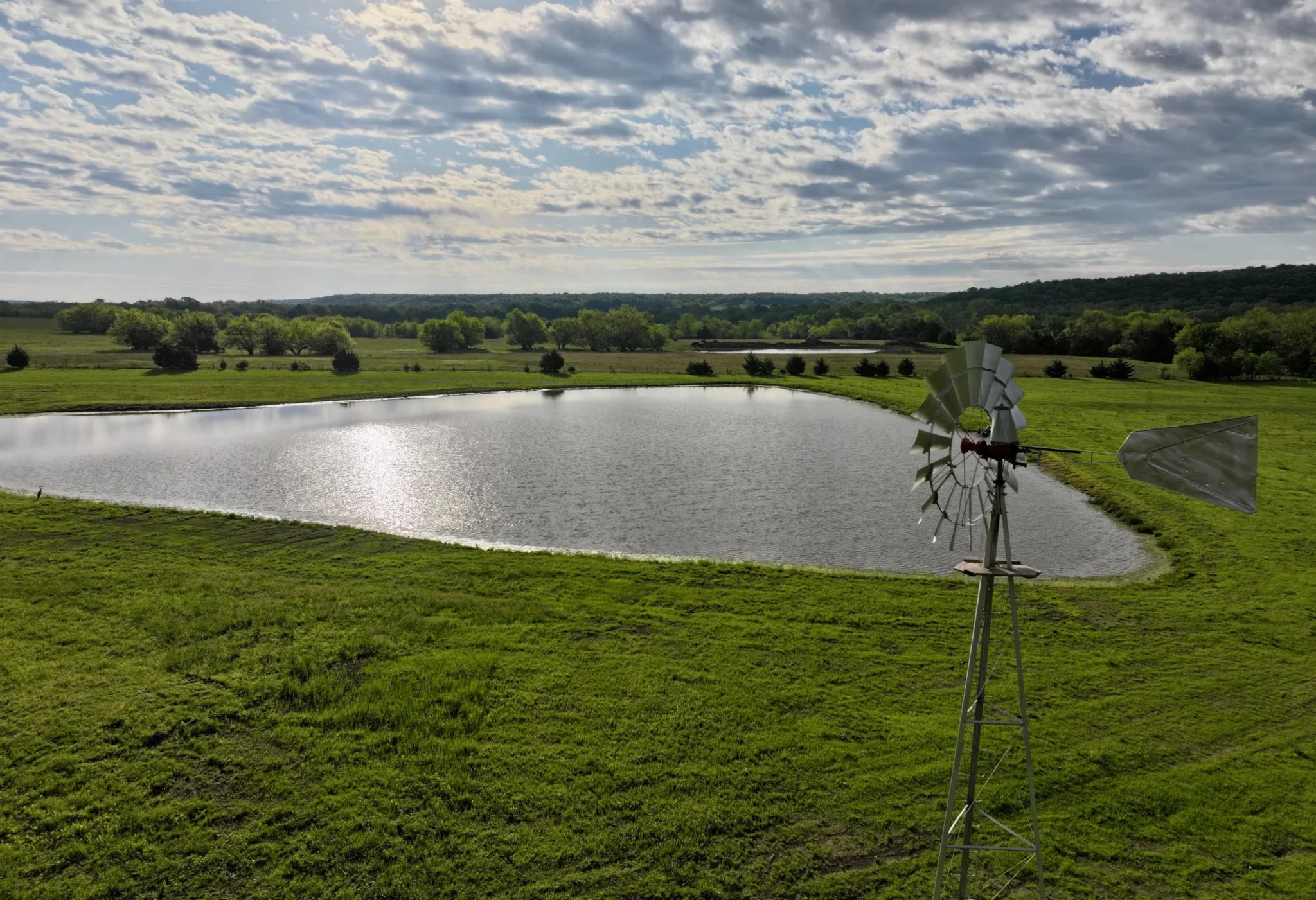
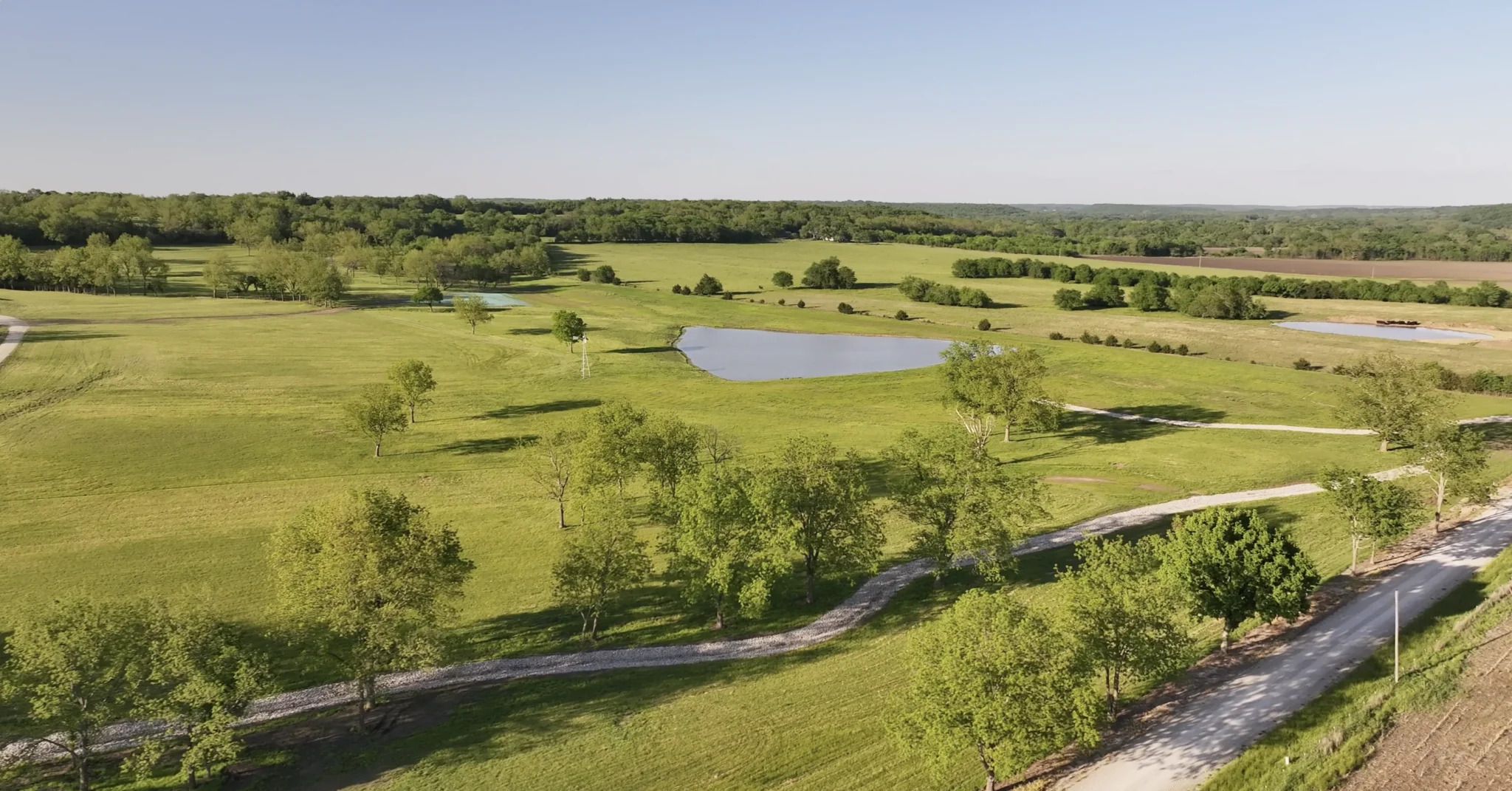
Bulletproof Pond and Lake planned, cleaned out, rebuilt and expanded it into a pond of about 2 acres, averaging about 10 feet deep. It’s now the centerpiece of the property: simple, usable, easy to mow around, and shaped to look like it has always belonged there. The property sits in Linn County, near La Cygne, Paola, Louisburg and Spring Hill.
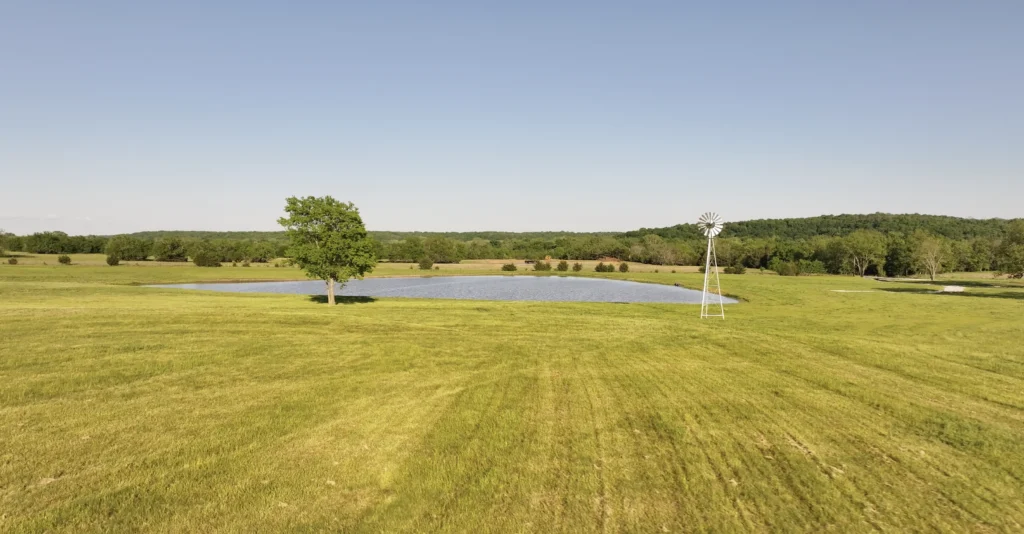
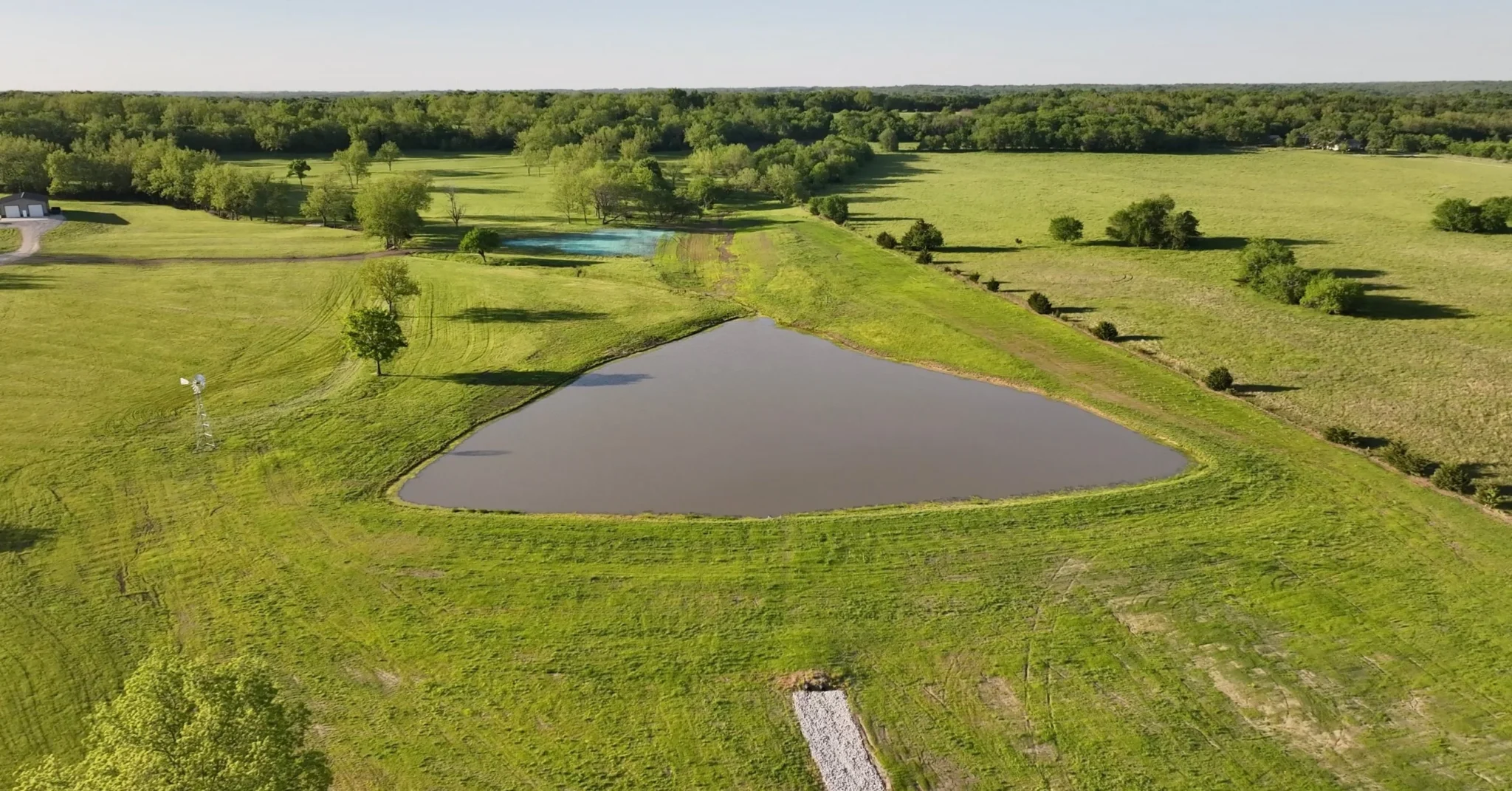
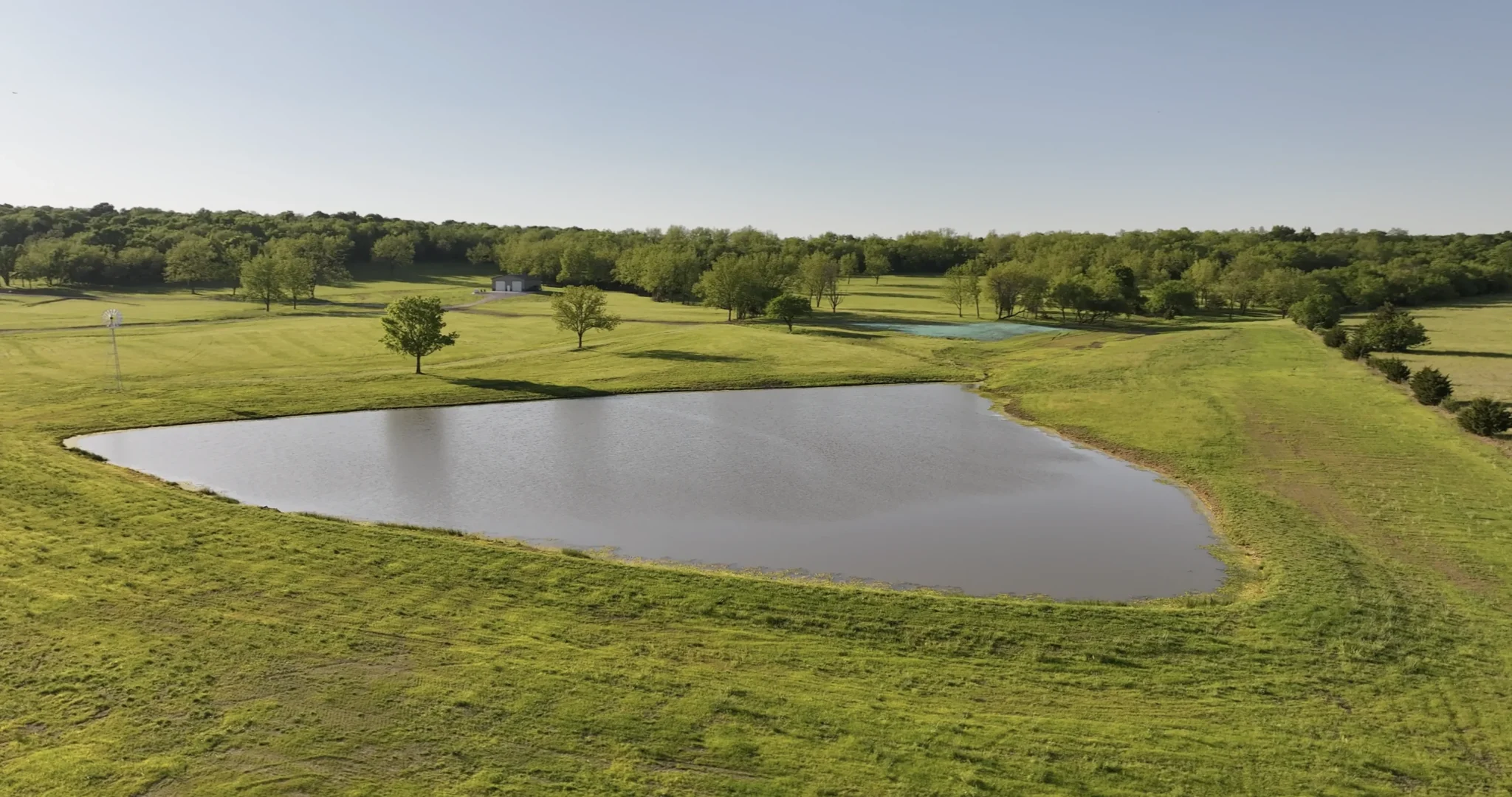
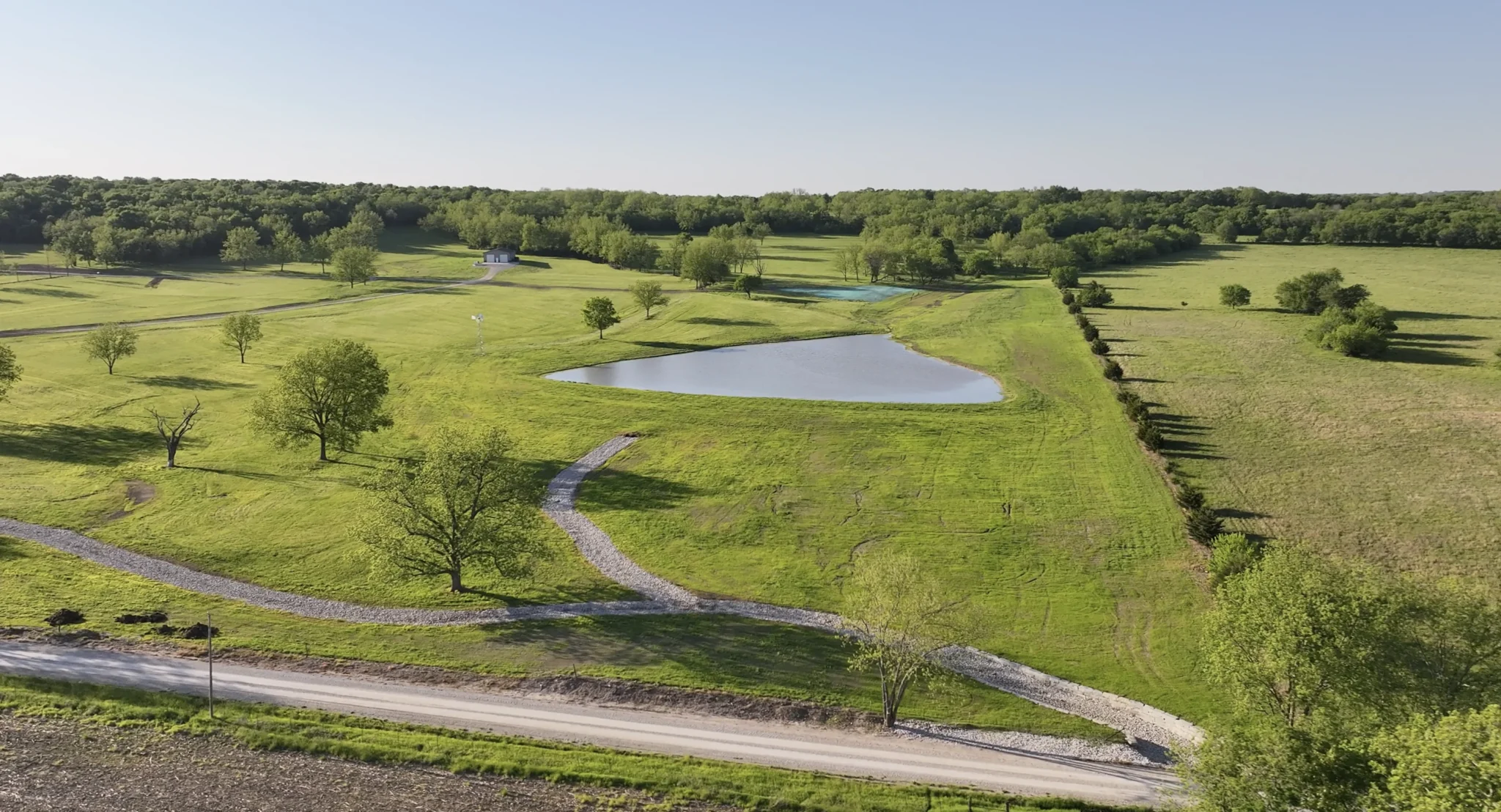
Natural, flowing contours let the pond settle into the field as if it had always been there, now taking up far more of a space that once sat empty.
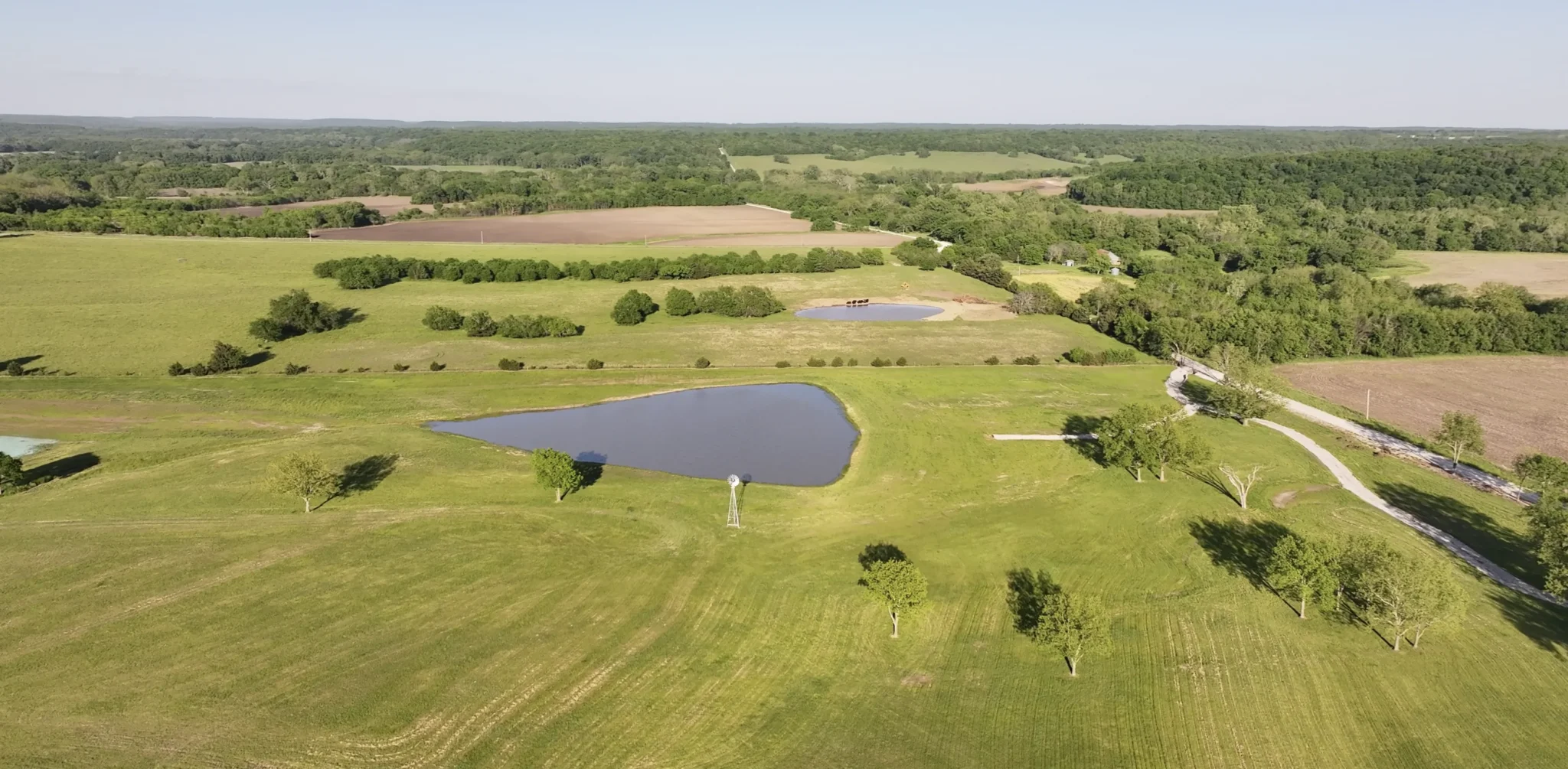
Deer, ducks, geese, turkey, rabbits, songbirds and migrating wildlife look for water they can count on, especially through dry Kansas summers, and this pond gives them refuge.
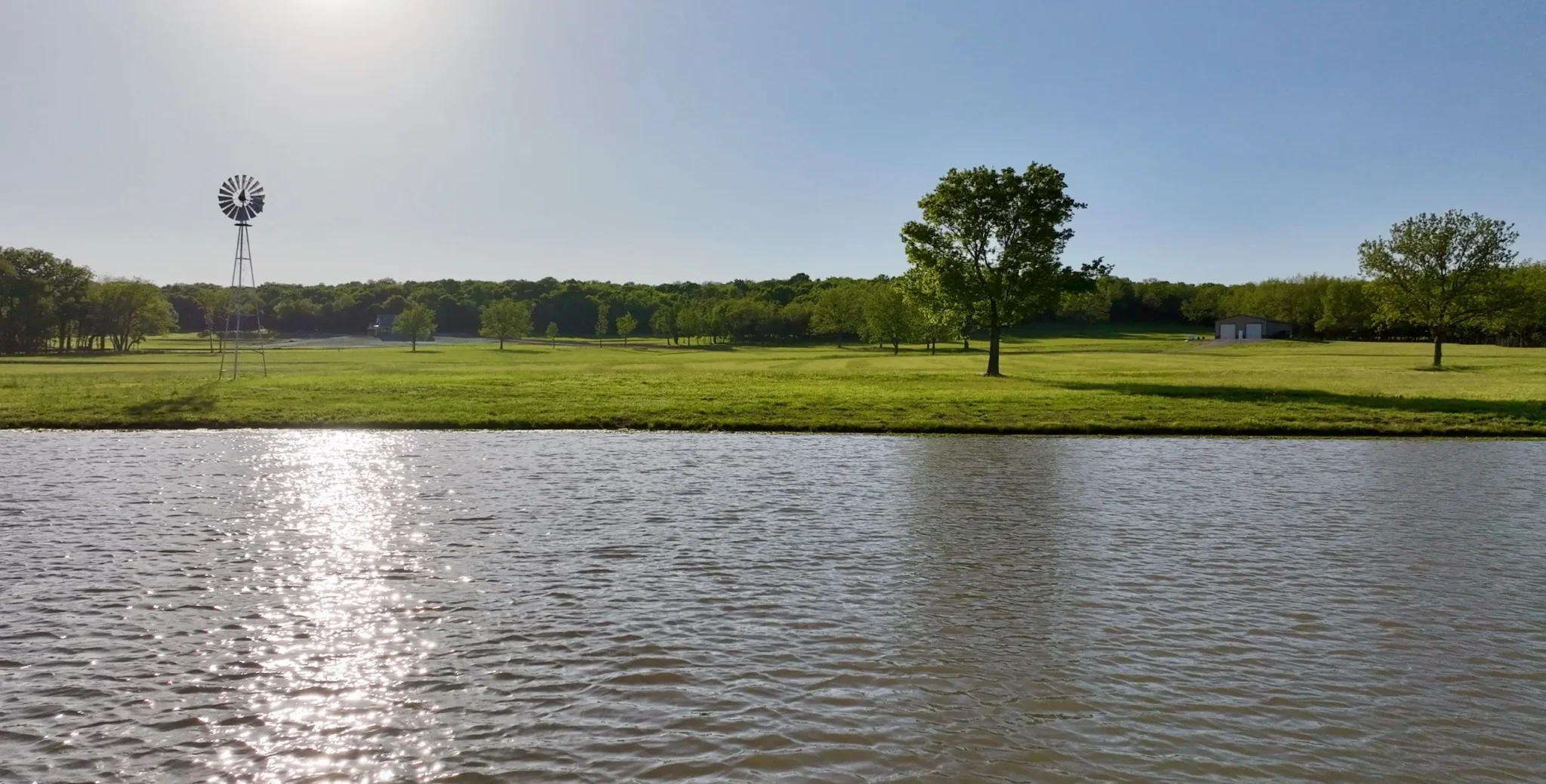
Smooth, mowable banks make it easy to walk down with a cup of coffee, cast a line or simply sit and take in the view.
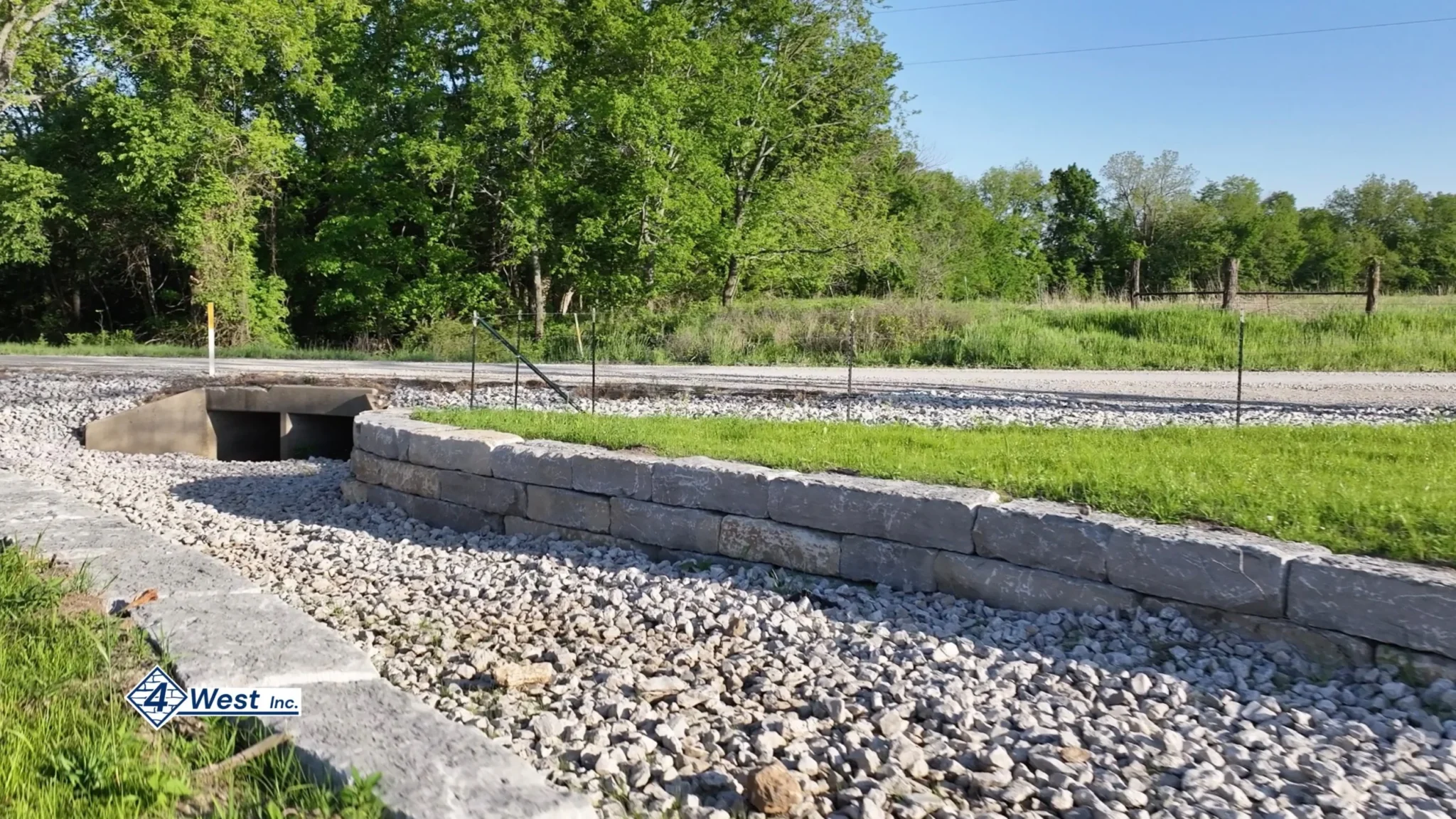
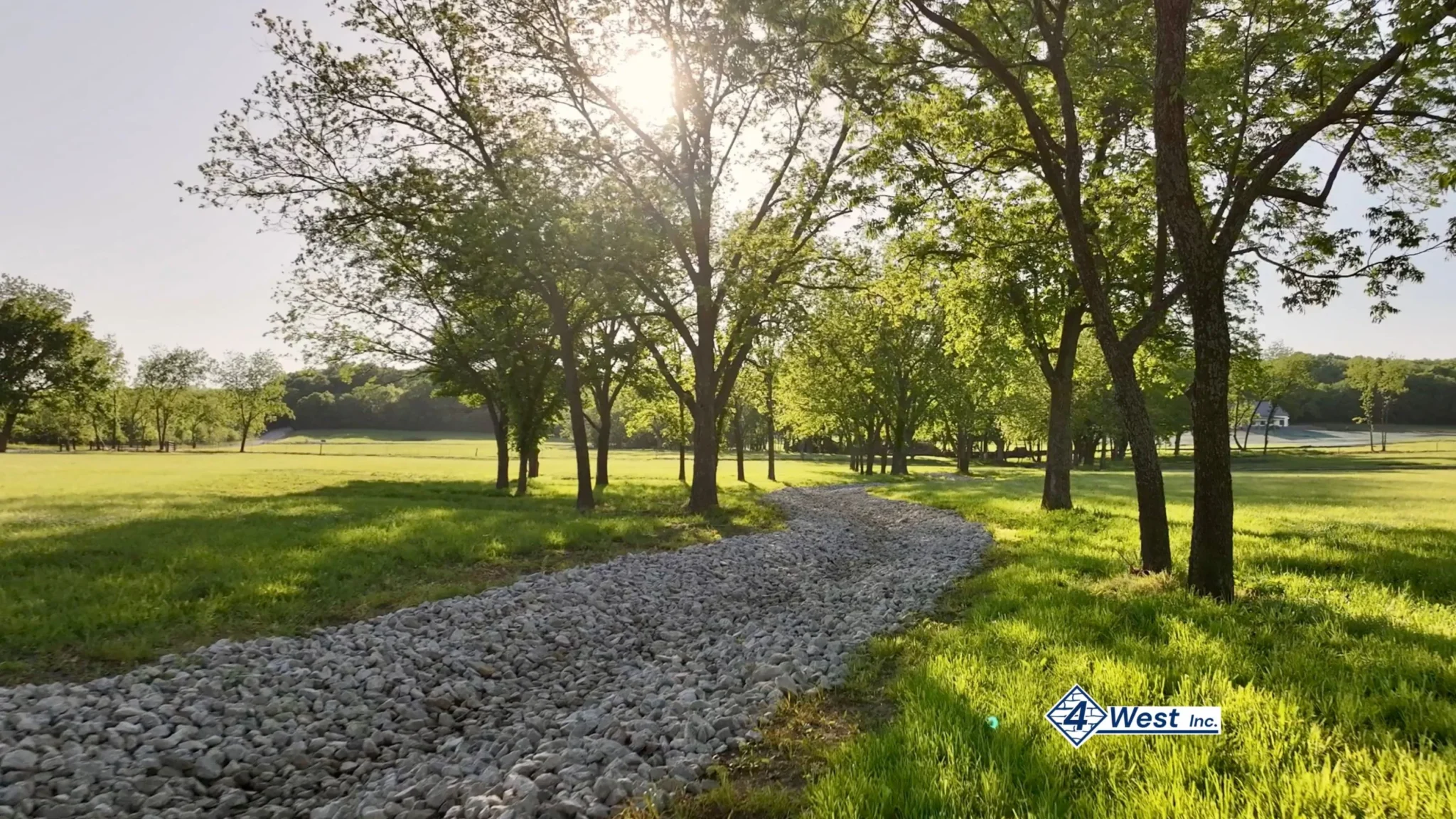
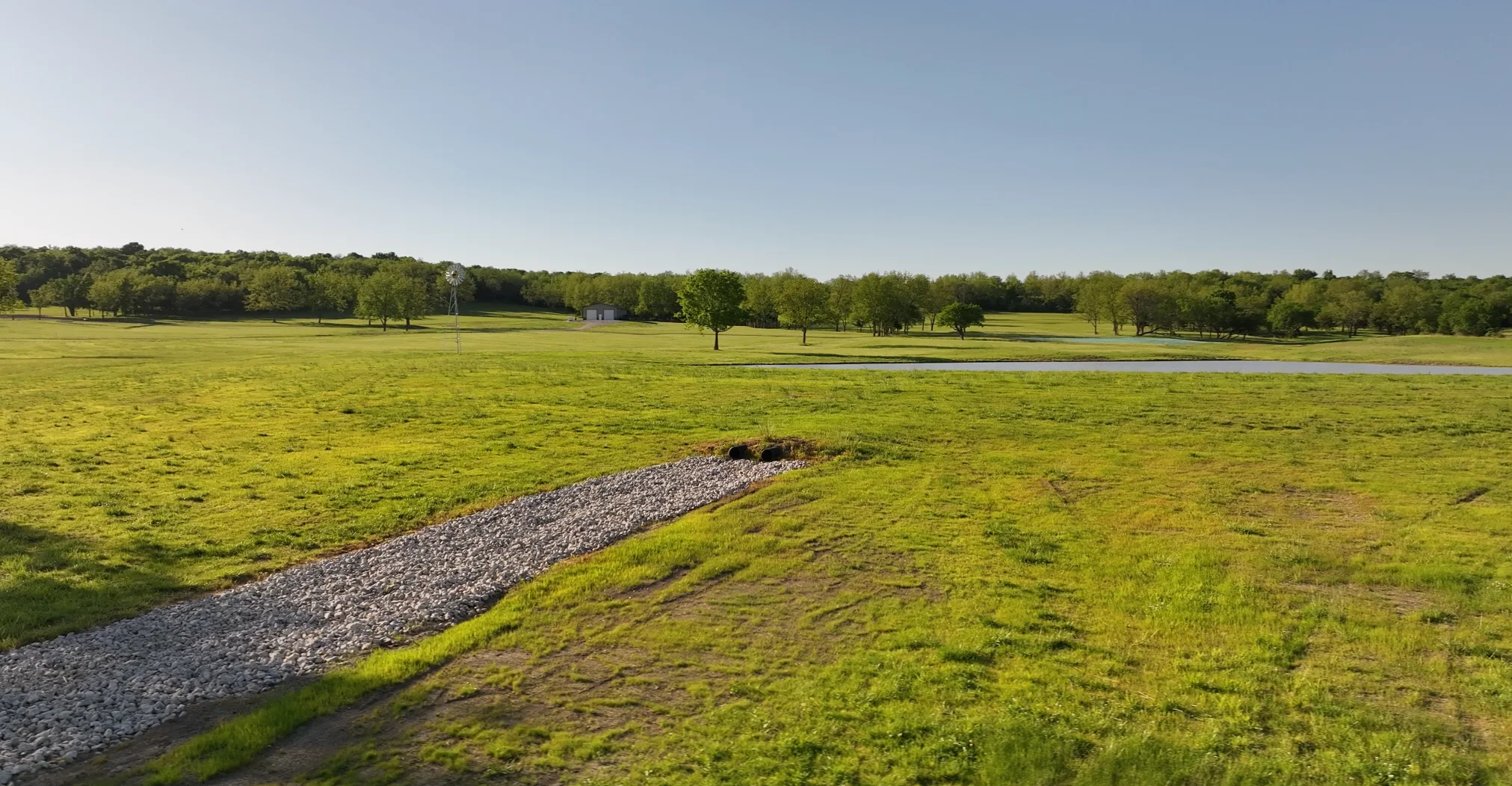
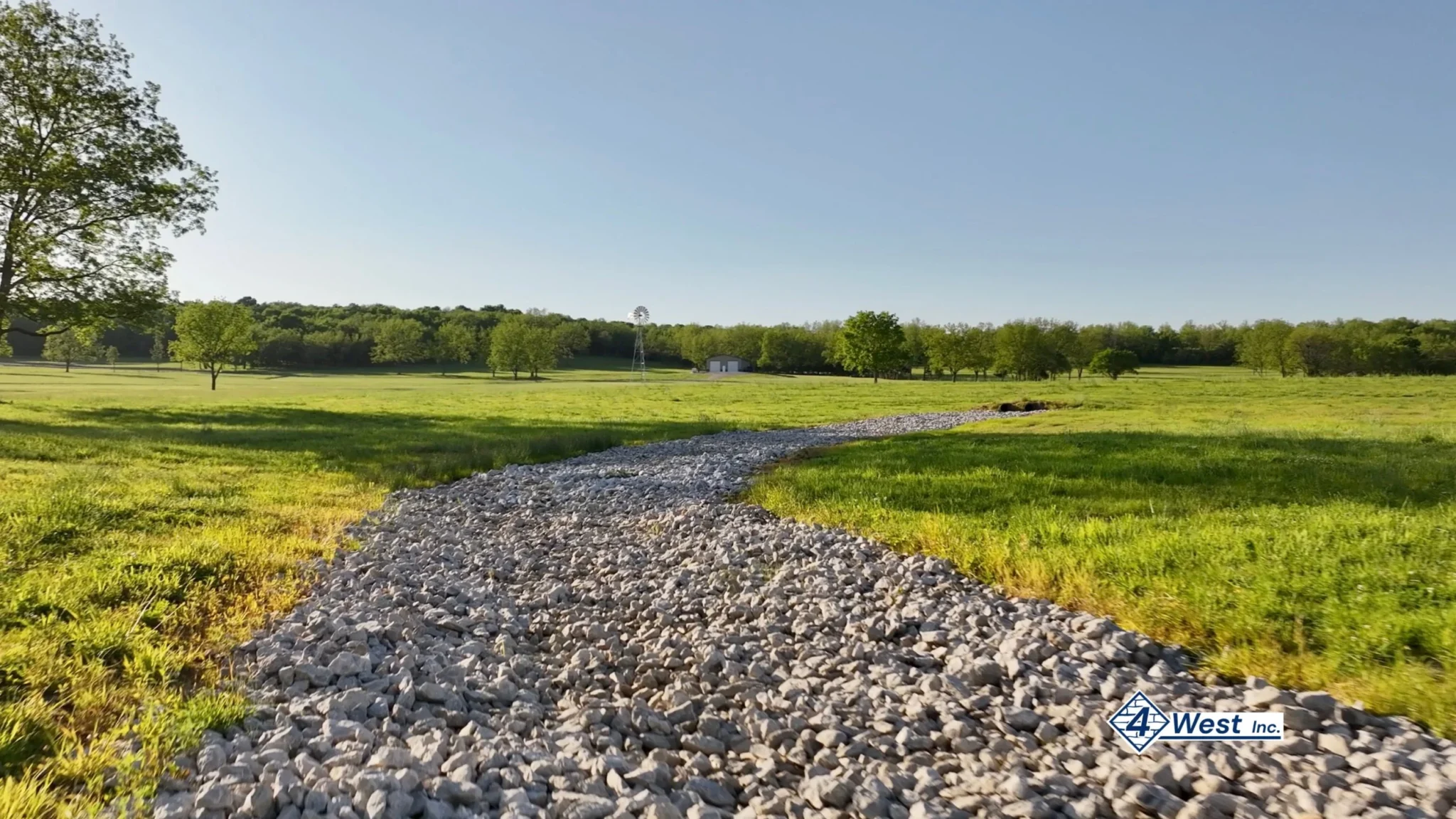
A rock-lined creek drainage along the tree line and a retaining wall at the outlet by the road carry water from the pond under the bridge and into the creek seamlessly.
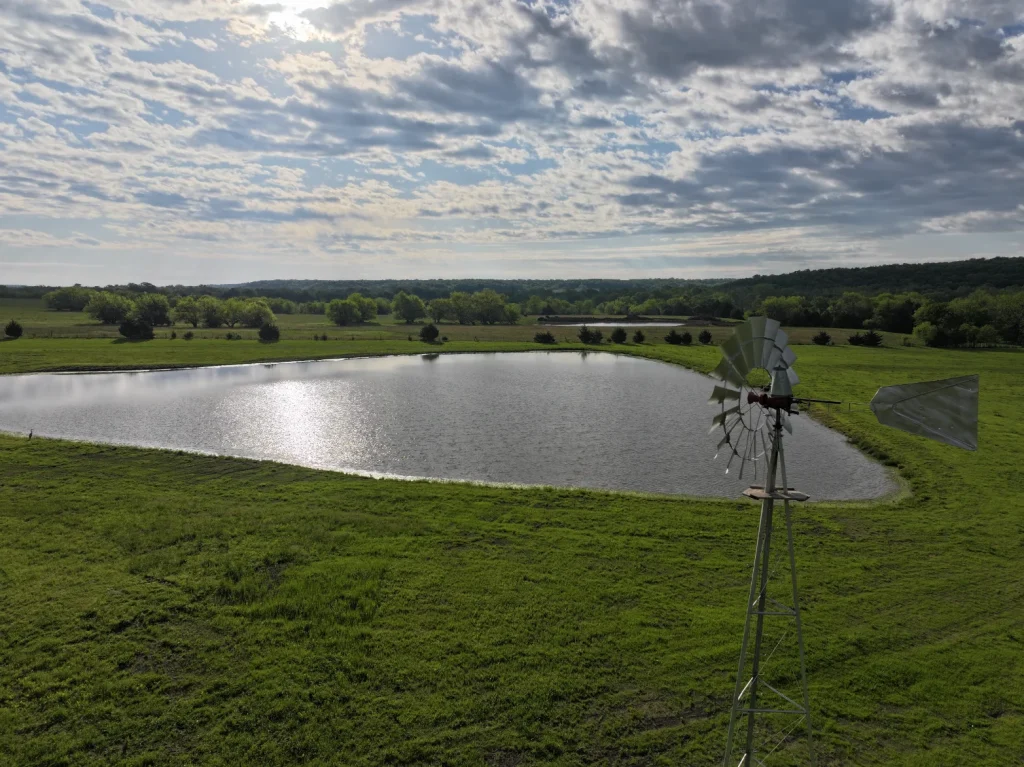
A windmill aerator keeps this pond, or should we say little lake, healthy and thriving year after year.
Stonework is something we do offer in-house, but on this project our schedule called for a trusted partner. The team at 4West, Inc., local specialists in intricate stonework and engineered walls, rock-lined the overflow and drainage, built the limestone walls, and handled several other separate projects for the owners. We trust their craftsmanship, and often recommend them when timing or project needs make it the right fit. The windmill aerator was installed by another specialist hired by the property manager.
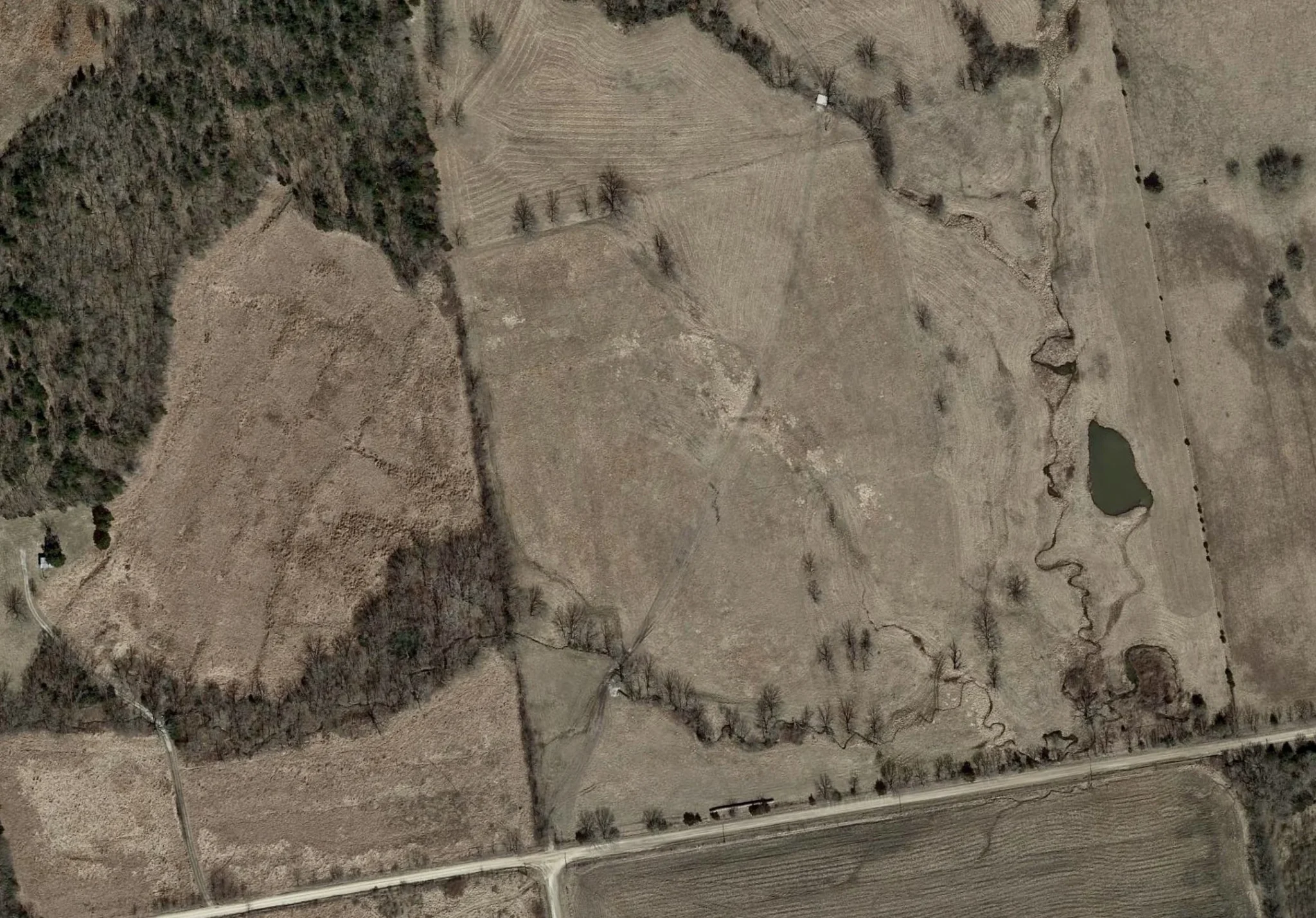
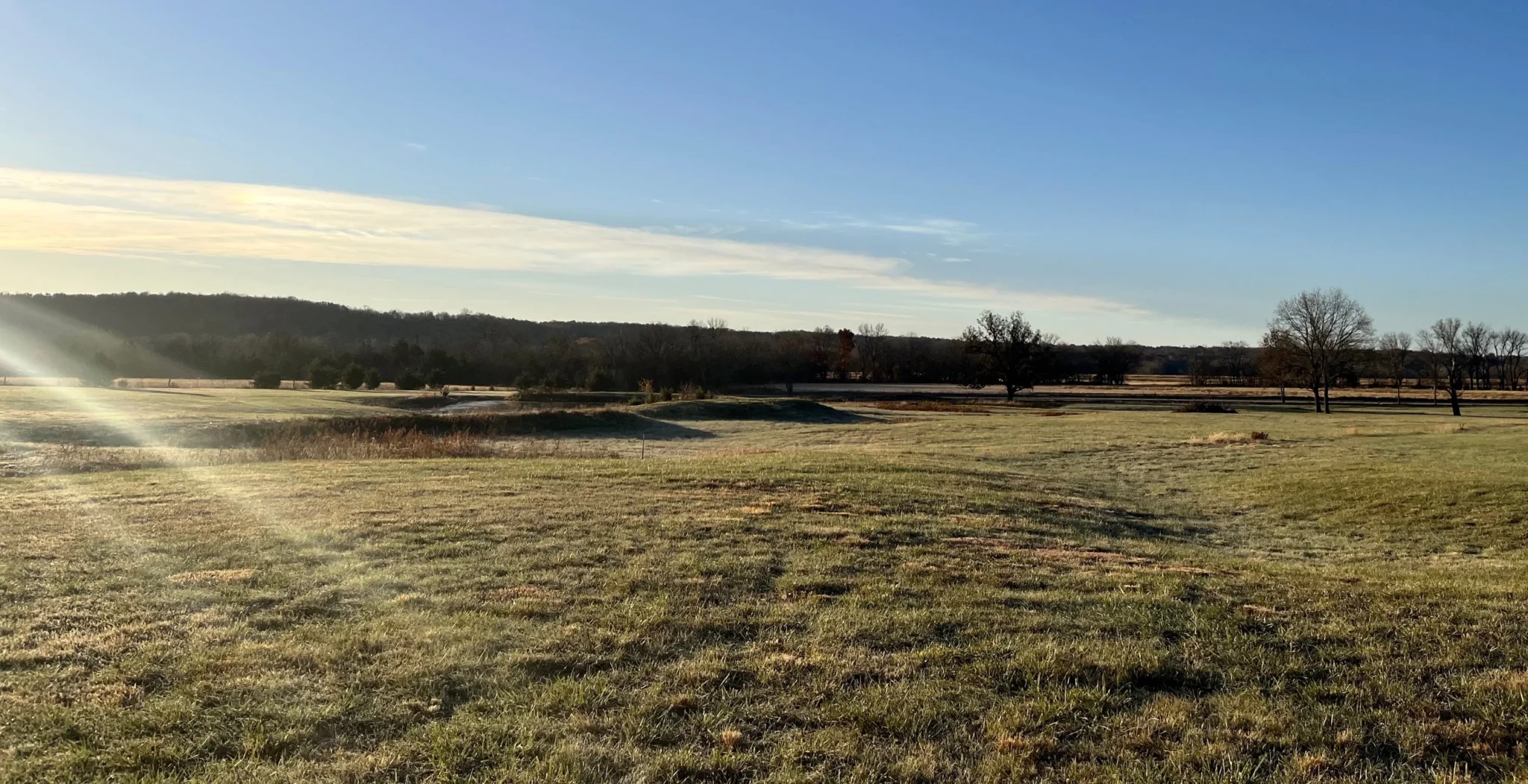
This pond had existed for many years, and it showed. Cattle, wildlife and natural aging had filled it with silt until it had almost no depth left. What remained was closer to a muddy, uneven pit than a pond. It smelled, erosion and muskrat tunnels and dens had riddled the banks, it was overgrown with vegetation and trees, and the ground around it was so uneven you couldn’t walk or mow around it.
The owners didn’t just want it cleaned up. Their vision was a pond worthy of the countryside escape they were building: substantially bigger, filling far more of an open, unused field, and the heart of the property where family and friends would gather. It needed to be usable and simple to maintain, a peaceful place for coffee or a little fishing, and a home for the wildlife that would come to depend on it. Like many owners facing a pond in this condition, they didn’t know where to begin.
Every project starts with a conversation about how the owners want to use the water. Here that meant a countryside retreat for family and friends, recreational fishing, wildlife and easy upkeep.
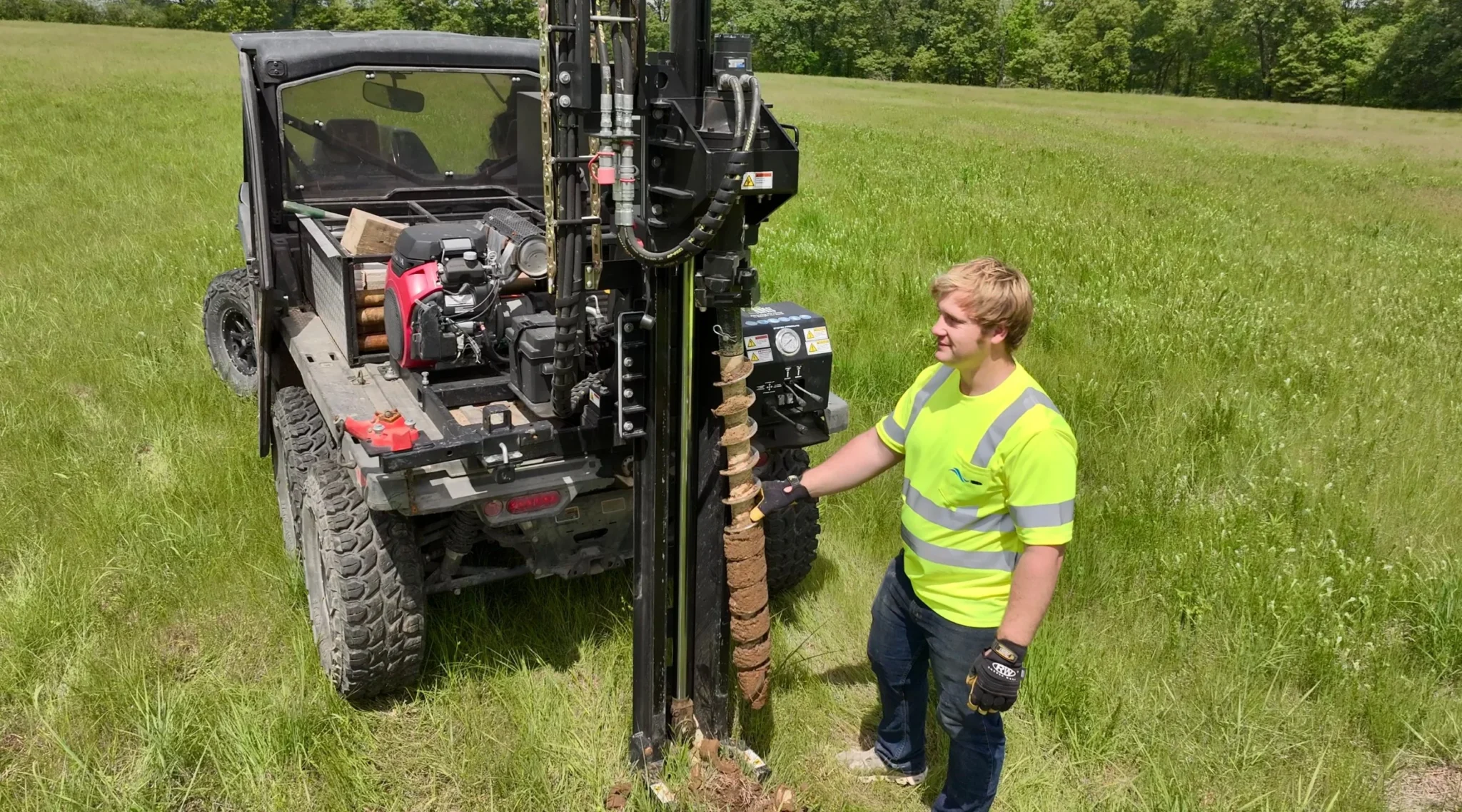
From there we planned carefully, as we do on every project. Our drill rig pulled soil borings up to 28 feet deep. It’s less invasive than excavator test holes, keeps soil layers from mixing, leaves minimal torn-up ground across the property and is usually quicker to analyze. We checked the samples on site for obvious signs like gravel and rock, and sent them to Kansas State University labs to measure the actual clay content and other variables instead of eyeballing it.
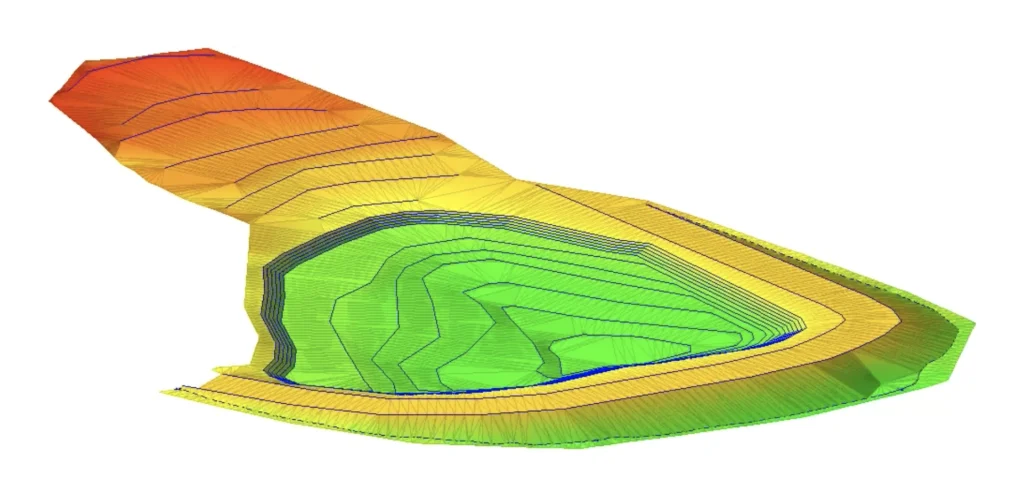
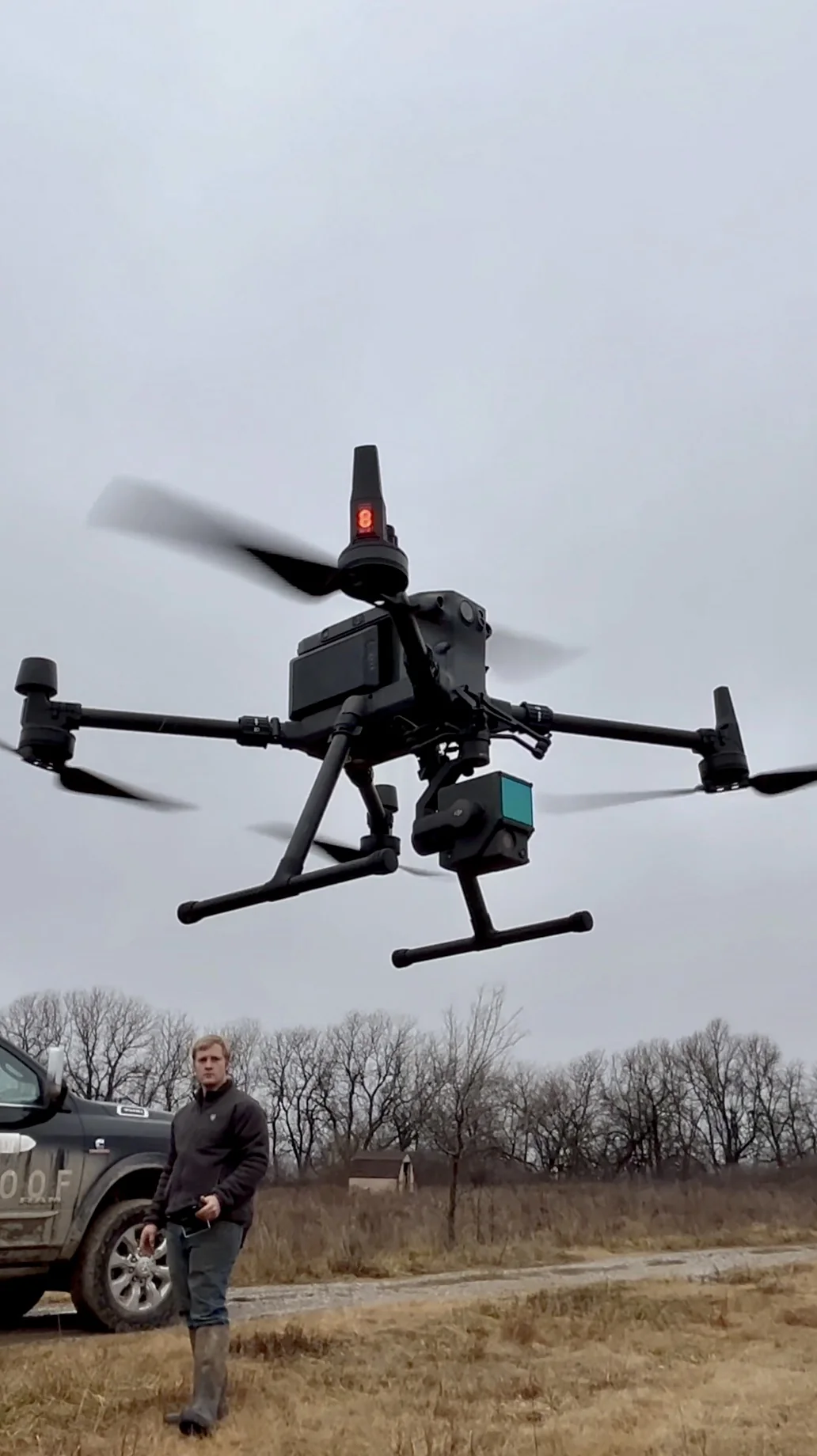
We mapped the site with LiDAR. We don’t rely on outdated or trendy apps, and we verify our surveys so the information is accurate, not just precise-looking. Online data often isn’t up to date. That survey and soil data went into AutoCAD Civil 3D, the same reliable design software trusted by civil engineers. We also completed a watershed analysis along with historical and regional research.
Together with the owners, we settled on the size, shape, depths and look: about 2 acres, averaging about 10 feet deep, with natural contours and banks that are easy to mow. The plan also covered the creek drainage along the tree line near the fence: clearing some land and mass grading it to correct the drainage slopes so the area would be easier to maintain and enjoy.
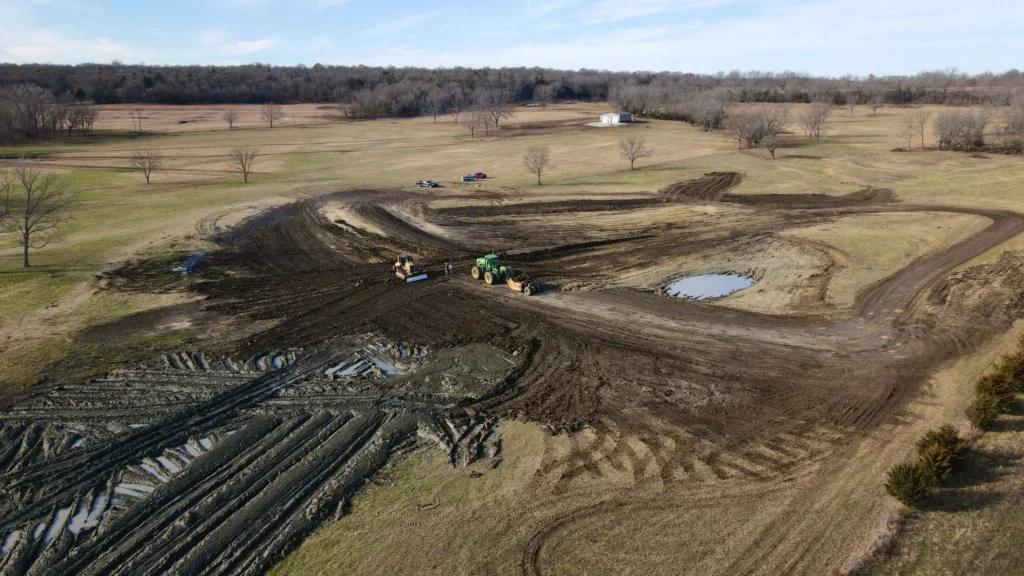
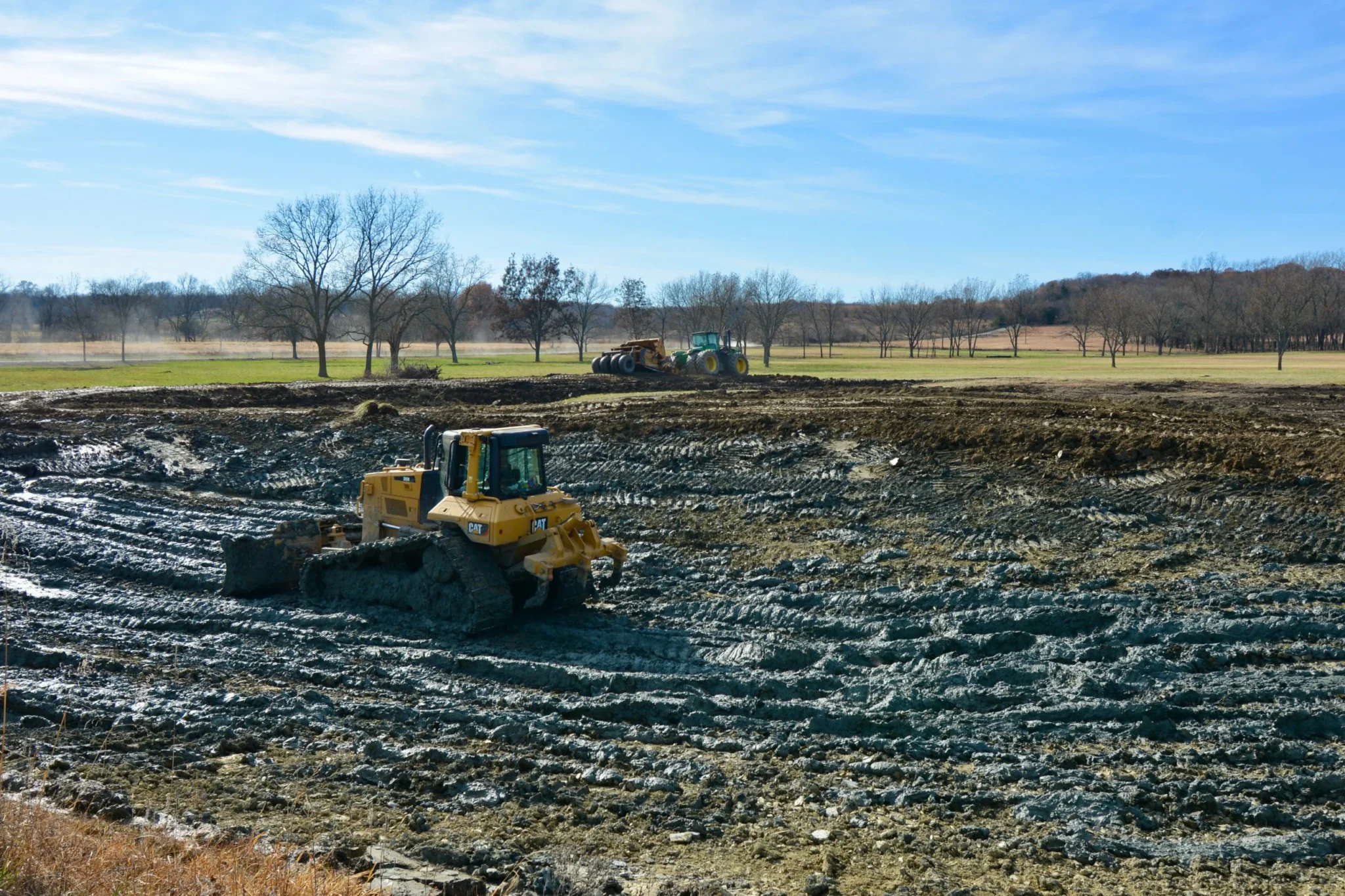
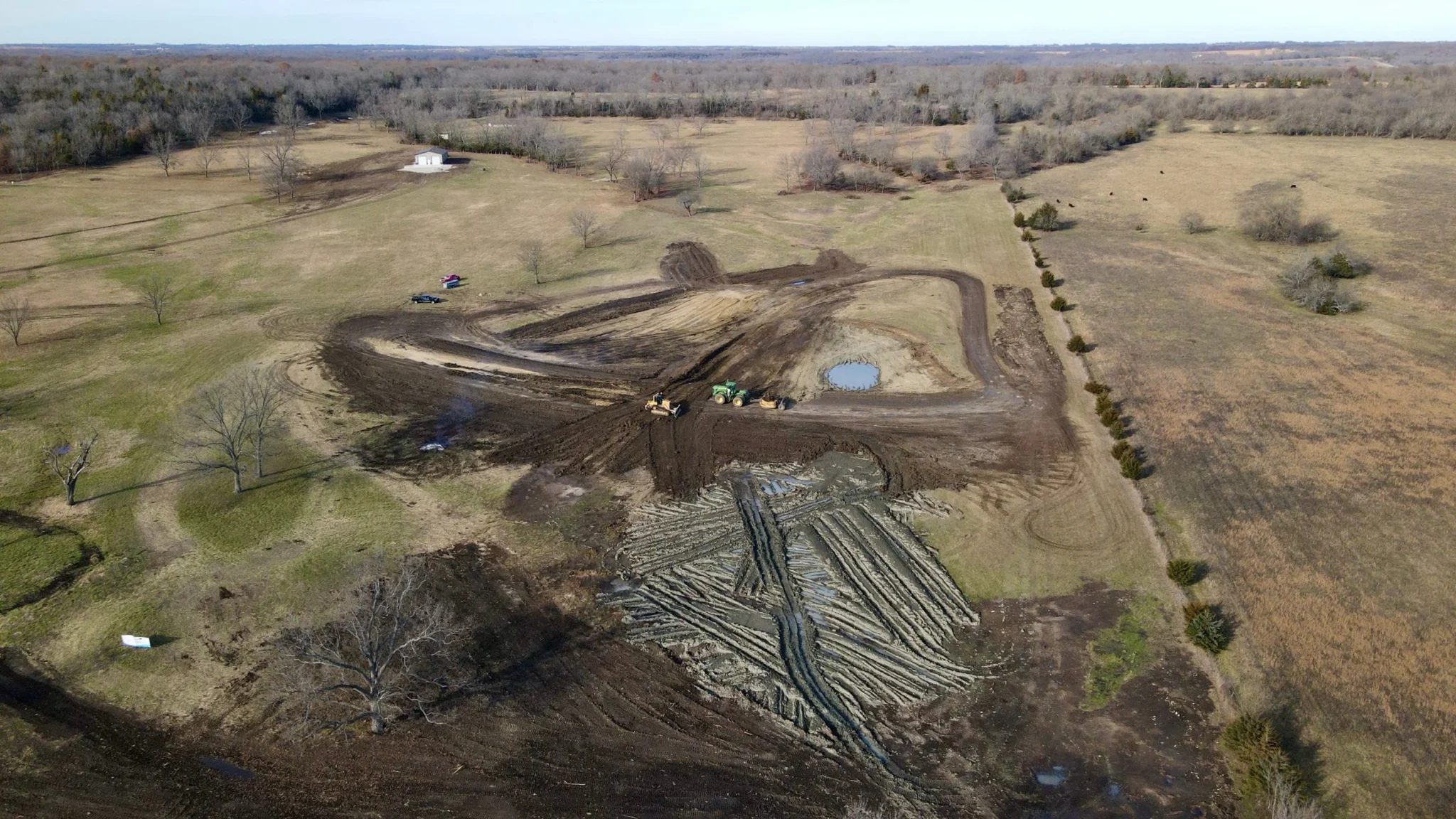
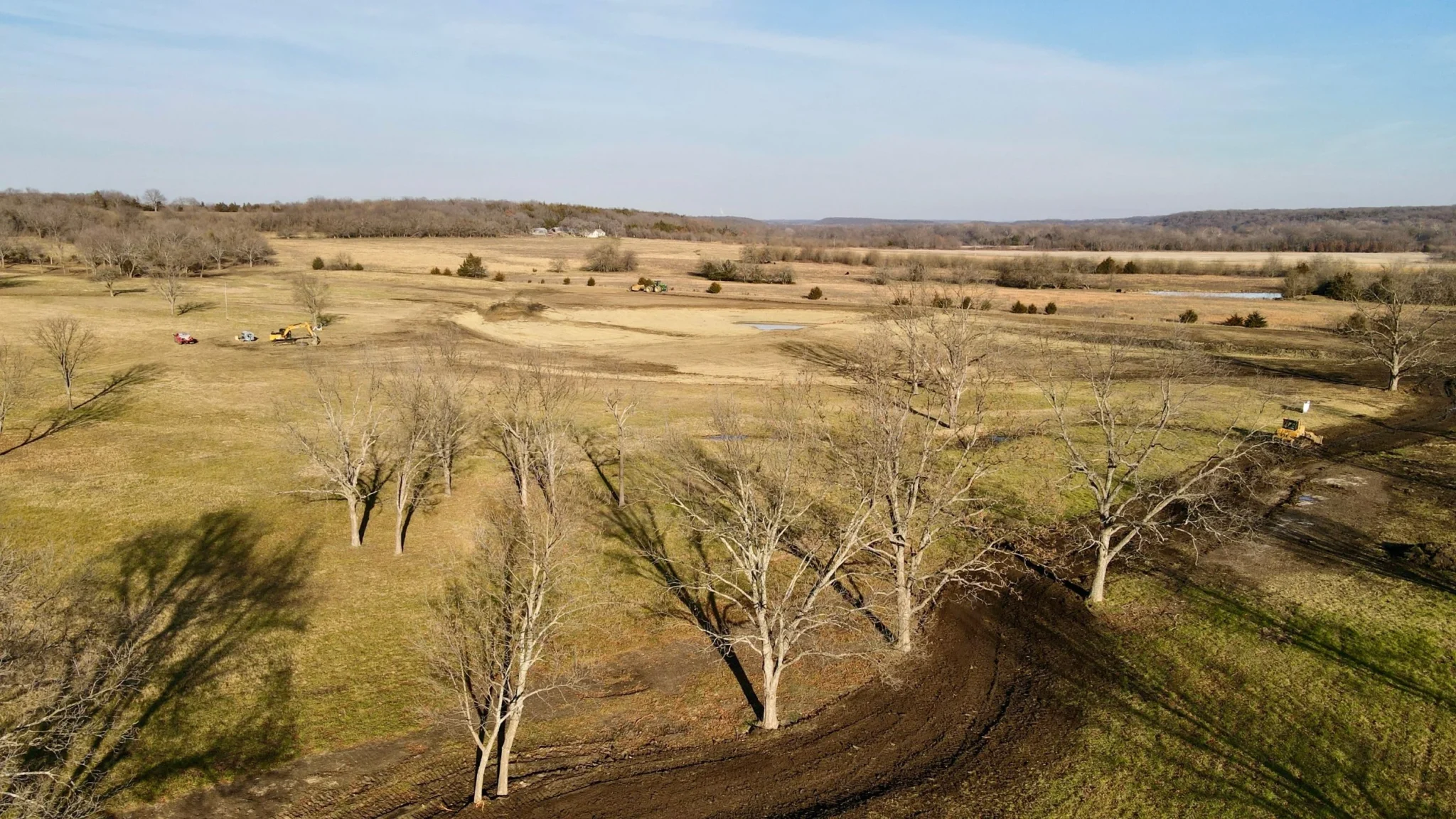
Our team drained the entire pond and removed all the muck, sediment and buildup that had accumulated over the years. It smelled about as good as you’d imagine. Rather than hauling it all off, we spread the sediment thin across the downstream pastureland to dry. We stripped the topsoil, expanded the basin, and excavated and built up the new dam and core trench. The clay on site tested suitable, which meant we could build a beautifully natural, earthen clay pond without hauling in material or going alternate, more expensive sealing routes.
We compacted both the clay core and the entire basin, as we do on every project. We often use sheepsfoot rollers, but not always. The right compaction method depends on the specific pond, its soils and its design, and it’s a common misconception that a sheepsfoot roller is required every time.
On projects like this today, our GPS-equipped machines work straight from the Civil 3D plan, so every grade is checked against the design as the work happens rather than relying on an operator never having an off day. As pond and lake specialists we can build without it, but GPS makes the work faster, more accurate and more economical in the long run.
The equipment was chosen for this site. Our tractor-and-pan scraper system moves earth fast and effectively, far more so than dozer-only or dozer-and-excavator setups on a job like this. We also brought in dozers, excavators and haul trucks. Moving earth strategically, without moving the same dirt twice, keeps a project faster and more economical. Every project is different, and we always talk through the tradeoffs.
The overflow was chosen carefully, with riprap at the outlet, an economical way to limit erosion and keep maintenance simple. Along the tree line, we cleared and regraded the creek drainage. Our partners at 4West Inc. then rock-lined the channel and built a retaining wall on the outlet side near the road, where the water passes under a bridge and into the creek. The limestone stonework, featured rock accents and dry creek beds manage runoff and prevent erosion while adding to the natural look.
To finish, we broadcast seeded the disturbed ground, the most economical option and a popular choice for rural farm pond builds. We also offer hydroseeding, drill seeding, sod, erosion control matting over seeding and other options to fit each project and budget.
The build took about a month. Over the following year, the pond filled naturally with no pumps or other help.
Today it’s the centerpiece the owners imagined. Gentle, zero-entry slopes on two sides let the water meet the grass, so it’s easy to walk right up to and around. It’s a quiet spot for morning coffee, a place to fish whenever they like, and a dependable stop for deer, waterfowl, turkey and other wildlife looking for water and refuge. A windmill aerator, added later by another specialist, keeps it healthy and thriving. The owners, Charles and the crew who maintain this land take great care of it, and the owners keep adding to their countryside escape, including a new home and new buildings.
We’ve since completed a renovation and leak repair on a second pond near their new home, and we’re planning more with the owners and their property manager, Charles.
A pond that had become an eyesore is now the 2-acre heart of a private countryside escape. It was planned from real soil data and a verified survey, built from the site’s own clay, and graded to fit the land so naturally it looks like it was always there. The creek drainage, outlet and banks were all designed to stay simple to maintain.
We’re grateful the owners and their property manager, Charles, let us document this project and share his experience working with us. If you have an old farm pond near Centerville, La Cygne, Paola, Louisburg or Spring Hill that’s silted in, overgrown or ready to become something more, we’d love to help you plan it.
About the before footage: the little before footage we had of this pond was corrupted, so the before shots in this video come from another pre-existing pond on the same property, to show the kind of conditions we started with. We do have a few true before photos of this pond, and those are included above in the Challenge section. We’ve come back to this pond in the years since the build, and it has held water successfully. We’ll keep documenting it over the coming years too. We also fixed and renovated that other pond for these landowners and their property manager, and we documented that project as well. Look for it as an upcoming featured project.
Tell us about your vision. We'll tell you what it'll take.